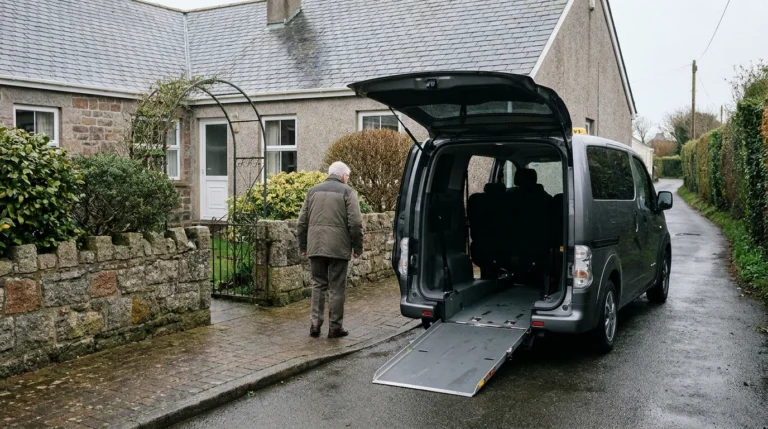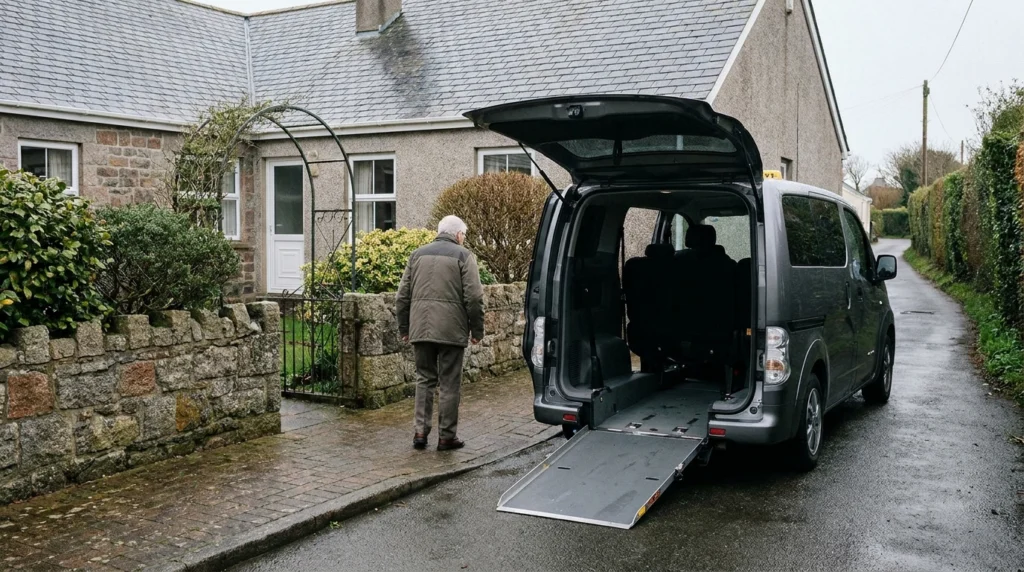
In brief: Jersey charity Les Amis, which supports adults with learning disabilities, has struck a partnership with local taxi service Ryde after being forced to sell both its wheelchair-accessible vehicles. Ryde is offering discounted fares and a simplified booking system, backed by two new fully electric wheelchair-accessible vehicles and specialist driver training.
A Charity Left Short of Options
Les Amis found itself in a difficult position after losing access to its entire fleet of adapted transport. One vehicle was no longer fit for purpose, while the other turned out to be too small for the wheelchairs used by its service users. For a charity dedicated to supporting adults with learning disabilities, that is not a minor inconvenience: reliable, accessible transport is often the difference between a service user participating in daily life and being stuck at home.
Les Amis managing director Shaun Findlay was candid about how constrained the charity’s choices were. “When using them, you need to have sufficient space around the vehicle so that it is accessible for our residents and service users along with the additional complications they have,” he told Bailiwick Express. “Ryde were extremely helpful and understanding in finding a solution that works for us.”
Finding suitable wheelchair-accessible transport in Jersey has long been a challenge. The island’s relatively small size might suggest the problem is easily solved, but the combination of specialist vehicle requirements, the need for trained drivers, and the economics of a limited market make it anything but straightforward.
Ryde Steps Up With Electric Fleet and Charity Partnership
The solution has come through Ryde, a Jersey taxi booking service, which has invested in two new, fully electric wheelchair-accessible vehicles. The arrangement with Les Amis marks Ryde’s first charity partnership, operating under the banner of Ryde Care, and the company says it intends to build on it.
Ryde co-founder and director Charlie Petulla said the investment is supported by ongoing specialist training for drivers, and framed the partnership in terms of a broader ambition. “I’ve seen first-hand how difficult it can be for people with additional mobility needs to find reliable transport in Jersey, and that’s something we’re determined to help improve,” he said.
Petulla added that the company is “incredibly proud” to welcome Les Amis as Ryde Care’s founding charity partner, describing it as “just the beginning of working more closely with Jersey’s charities and community organisations to improve accessible transport, whilst exploring ways to make these services more affordable and sustainable for the people who depend on them.”
For Les Amis care workers, the arrangement includes a simplified booking system, reducing the administrative burden that can come with coordinating transport for multiple service users with varying needs.
Why This Matters Beyond the Charity Sector
The story is a small but telling illustration of a gap in Jersey’s transport infrastructure. Wheelchair-accessible vehicles are expensive to buy, maintain and operate, and the island’s market is not large enough to make them an obvious commercial priority. When a dedicated charity cannot sustain its own adapted fleet, it speaks to a wider challenge that affects not just Les Amis service users but anyone in Jersey with significant mobility needs.
The fact that Ryde’s solution involves fully electric vehicles is also worth noting. Jersey has been pushing hard on its transition to electric transport, and this is a practical example of that shift delivering real-world benefits rather than simply ticking an environmental box.
Source: Bailiwick Express