In brief: RNLI volunteer crews from Jersey, Guernsey and Alderney are getting hands-on training with the new Shannon M2k class lifeboat this week. The relief lifeboat John Metters is visiting all three islands, and each station is due to receive its own vessel within the next 18 months.
A New Generation of Lifeboat for the Channel Islands
The BBC reports that volunteer RNLI crews across the Channel Islands have had their first glimpse of the Shannon M2k class lifeboat, the charity’s latest all-weather vessel. Alderney, St Helier and St Peter Port are each due to receive one of the new boats as part of the RNLI’s wider fleet strategy, with all three deliveries expected within the next 18 months.
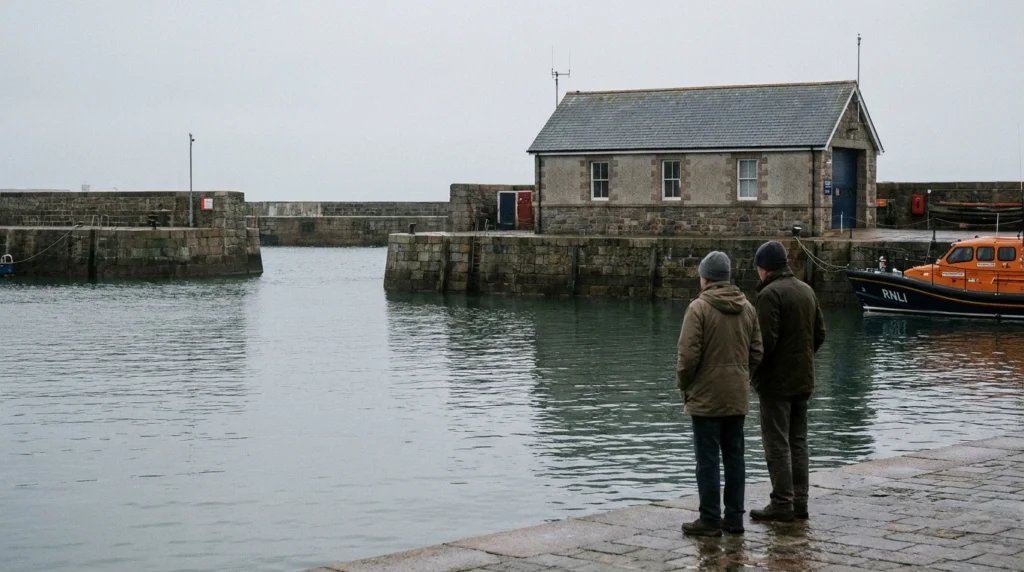
The training visit runs from Wednesday to Friday, with the RNLI relief lifeboat 13-26 John Metters calling at each island in turn to give crews practical, hands-on experience before their own boats arrive. It is the kind of preparation that makes a real difference when the weather turns nasty and someone needs pulling out of the water at two in the morning.
Jets Replace Propellers: What Makes the Shannon Different
Jersey’s current lifeboat is a Tamar-class vessel, which uses traditional propellers. The Shannon class marks a significant departure: it is propelled by water jets, which the RNLI says makes the boat “extremely manoeuvrable and agile with an ability to operate well in both deep and shallow water.” For the rocky, tidal waters surrounding Jersey, that combination of agility and shallow-water capability is no small thing.
Alex Scott, an RNLI mechanic, told the BBC that his first impressions were firmly positive. “The boat is very smooth, really manoeuvrable, and that is because it is jet-driven as opposed to propeller-driven like the Tamar is,” he said. Scott also highlighted the upgraded electronics on board, describing the new model as equipped with “the latest navigation systems, infrareds, and a next generation thermographic camera for seeing people at night time.” That last feature alone could prove the difference between a successful rescue and a tragedy in the dark winter months.
Scott was equally reassuring about the transition from the familiar Tamar. “We’ve got no concerns about the size of it,” he said, adding that “the Shannon has already proved itself around the UK coastline, and it has been in service with the RNLI for a number of years; and this is the latest version, so we are getting an even better boat.”
The RNLI said the Shannon class boats would “ensure crews are equipped to respond effectively to modern search and rescue demands,” a statement that, for once, sounds like more than just charity boilerplate.
Why This Matters for Jersey
Scott put it plainly: the lifeboat is “fundamental” to life on an island, where people will inevitably need rescuing from the surrounding water. Jersey’s coastline, with its dramatic tidal range, strong currents and mix of leisure sailors, fishing boats and commercial traffic, keeps the St Helier crew busy. A vessel that handles shallow water more confidently and can spot a casualty in the dark with a thermographic camera is a meaningful upgrade, not merely a shiny new toy.
The RNLI is, of course, a charity, funded entirely by donations and legacies rather than the public purse. Every Shannon class lifeboat that arrives in the Channel Islands represents the generosity of supporters across the British Isles, which is worth remembering next time a collection tin appears.
Source: BBC News