In brief: Jersey’s economic development minister has confirmed that removing the roof of Fort Regent is among the options on the table for the historic St Helier site. With costs already spiralling beyond an earlier £110 million estimate, and £43 million already approved for repair works, the new Council of Ministers faces some very expensive decisions about the fort’s future.
A Roof, a Ruin, or a Renaissance?
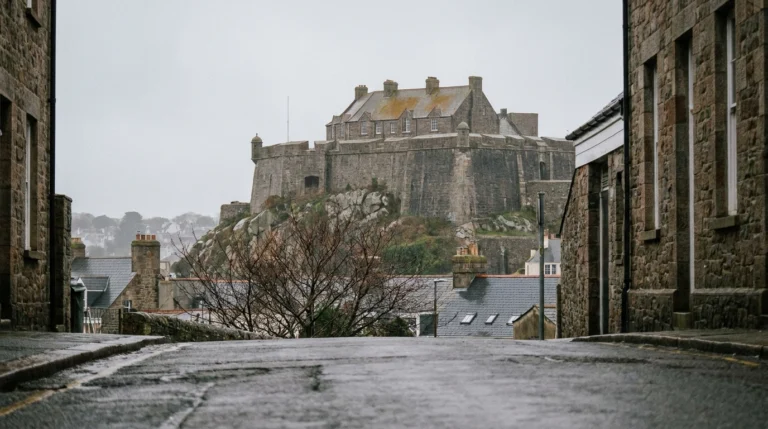
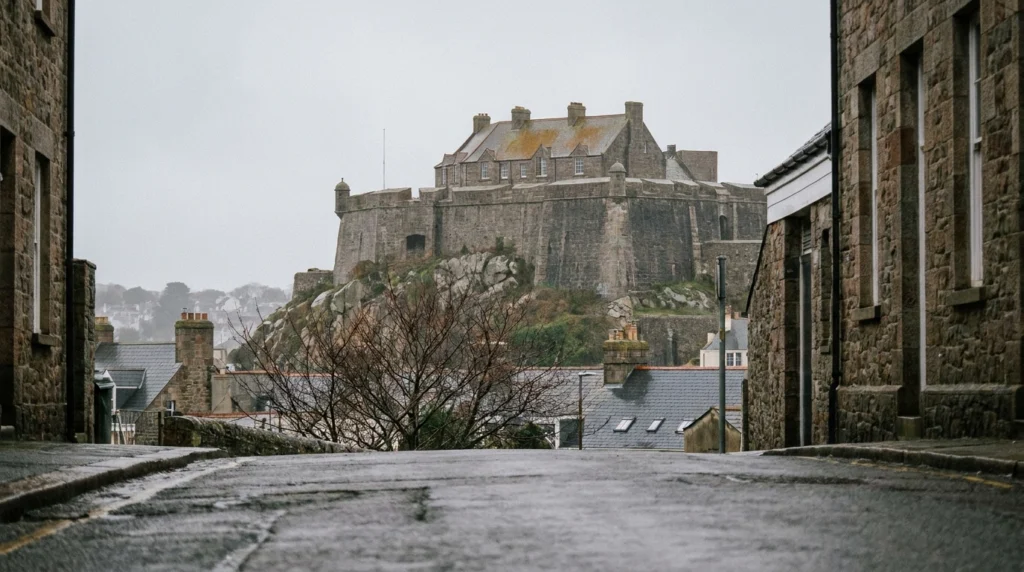
Fort Regent, the 19th-century fortification perched above St Helier that once kept Napoleon’s ambitions in check and later kept Jersey’s teenagers entertained with bowling alleys and swimming pools, is back in the headlines. Deputy Gerald Voisin, Jersey’s economic development minister, told a public scrutiny meeting that removing the roof entirely is one of several options being explored by a steering group tasked with reimagining the site.
The BBC reports that the fort, which closed in 2025 with an aim of reopening in 2028, had its redevelopment plans sent back to the drawing board after overall costs rose beyond the £110 million estimate previously announced. That figure, already eye-watering, has since been joined by a £160 million option that would include a concert area, while a more modest £110 million version would create, in Voisin’s words, “lots of activities” inside the fort. At the lower end, a repair-only option funded by the £43 million loan already approved remains on the table. And then there is the roof-removal option, which would fundamentally alter the character of the structure.
Voisin was admirably blunt about the constraints facing decision-makers: “The roof apparently needs fixing so the doing nothing option isn’t there. Because otherwise you’re going to have an awful mess.”
History, Heritage and a Hefty Bill
Fort Regent’s story is a long one. Built to defend Jersey during the Napoleonic Wars, it was later occupied by German forces during the Second World War before being purchased by the States of Jersey and converted into a leisure centre, with facilities first opening in the 1970s. It is, in short, a building that has meant a great deal to generations of islanders, which makes the current uncertainty all the more pointed.
Jersey Development Company’s plans for the revamp, as reported by the BBC, include a 2,500-seat theatre, a 12-lane bowling alley, a six-screen cinema, play areas, climbing and bouldering facilities, and places to eat and drink. It is an ambitious vision, and ambition, as any islander watching the public finances will tell you, tends to come with a price tag to match.
Minister for Infrastructure Deputy Jonathan Renouf acknowledged the uncomfortable reality of years of neglect, describing the “significant investment required after many years of under-investment in the building.” He added that the new Council of Ministers must weigh Fort Regent against “many other demands on public finances,” and that any further investment must be “affordable and provides good value for islanders.”
Kicking the Can, or Doing Due Diligence?
Renouf set out the government’s current position clearly: “Rather than committing now to one particular option, we are using the coming months to establish the actual cost of the essential works, test whether there is meaningful private-sector interest and properly assess the different options available to government. This work will ensure ministers have the information they need to make properly informed decisions about the future of Fort Regent.”
The mention of private-sector interest is significant. If government can attract commercial partners to share the financial burden, the calculus changes considerably. Whether meaningful private-sector appetite exists for a project of this complexity, on a hilltop site with a Grade One listed fortification at its heart, remains to be seen.
What is clear is that £43 million has already been approved, the roof cannot simply be ignored, and the options range from a relatively contained repair job to a £160 million transformation. Islanders, many of whom have fond memories of the fort in its leisure-centre heyday, will be watching closely.
Source: BBC News