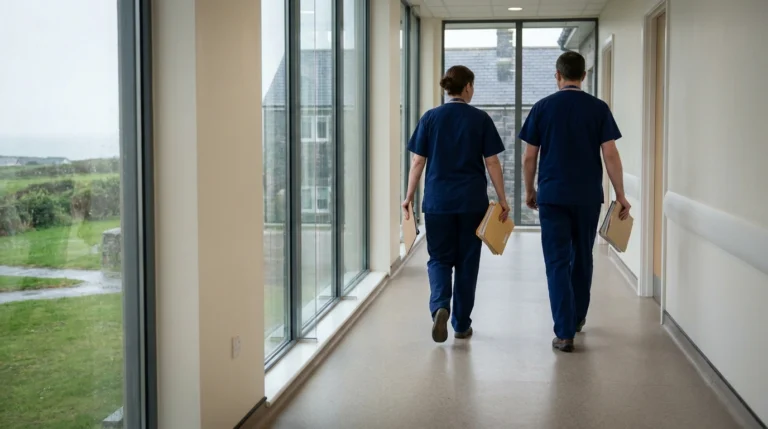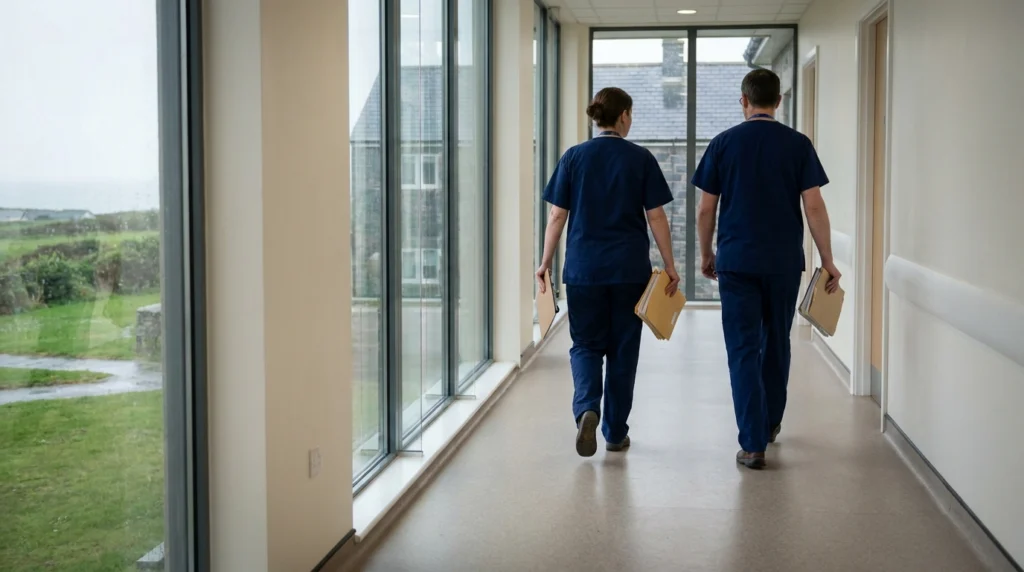
In brief: Nearly 60 healthcare students have become the first cohort to complete their training entirely in Jersey, qualifying in roles ranging from mental health nursing to radiology. Many graduates have expressed a wish to remain on the island, and the programme spans everything from apprenticeships to masters degrees. Health Minister Senator Tom Binet says the initiative is building a “skilled and resilient workforce for the future.”
A Milestone for Jersey Healthcare
It is not every day that a small island of roughly 100,000 people can boast of producing its own fully home-grown cohort of healthcare professionals, but Jersey has done exactly that. The BBC reports that nearly 60 students have graduated having trained while working for the island’s health department, qualifying across a range of disciplines including mental health nursing, midwifery and radiology. Academic levels achieved stretch from apprenticeships all the way up to masters degrees, a breadth that Hazel McWhinnie, the dean of nursing, midwifery and allied health professional education, described as “quite tremendous” for “such a small island.”
For an island that has historically relied on recruiting healthcare staff from the UK and further afield, this represents a meaningful shift. The chronic difficulty of attracting and retaining skilled medical professionals is a challenge shared by small jurisdictions everywhere, and growing your own talent from within the community is, frankly, one of the more sensible solutions available.
The Human Stories Behind the Gowns
Among the graduates, Vatsala Haydon completed a masters in advanced clinical practice, a course that took five years. She told the BBC that being able to study in Jersey made all the difference: “Being in Jersey, you have the family and tutor support, which is immense. That takes the pressure off, the stress off a lot. I wouldn’t have been able to do [the course] if it was a distance learning programme or if I had to go away.”
Pedro Cunha, who graduated with a bachelors in adult nursing, was equally enthusiastic, calling the course “exceptional” and noting with evident satisfaction that he had completed it without accumulating student loan debt. He added: “I would like to stay in Jersey because I feel like [the health sector is] something to be worked on, and the community’s really good, faculty’s really nice and I feel like it’s an awesome place to work.” One suspects the absence of a five-figure debt hanging over him may also have sharpened his fondness for the island.
McWhinnie highlighted a particularly striking aspect of the programme: a number of students worked unpaid throughout their studies. “They dedicate three years of their life unpaid to train to become nurses,” she said. “I think that kind of sums it up, doesn’t it?” It is a reminder that the people drawn to healthcare are, by and large, motivated by something rather more durable than a salary.
Retention: The Real Prize
Training healthcare workers locally is only half the battle; keeping them is the other. McWhinnie indicated that the programme is already delivering on that front, saying: “Our huge commitment within health is to grow our own talent and we’re doing that from apprenticeship all the way up, and we are really lucky that our students, that we do see succeeding, stay with us.”
Health Minister Senator Tom Binet offered his congratulations to the graduates and framed the programme in strategic terms: “By supporting people to train, learn and progress in Jersey, we are building a skilled and resilient workforce for the future. These students represent the next generation of healthcare professionals who will care for our community for years to come.”
For Jersey residents, the significance is practical as well as symbolic. A locally trained workforce is more likely to understand the specific pressures of healthcare on a small island, more likely to have roots in the community they serve, and, as the graduates themselves suggest, more likely to stay put rather than move on to larger markets.
Source: BBC News