In brief: The chair of Jersey Marine Conservation says Les Sauvages reef has the potential to be a “far more significant” no-take zone than the existing one at Portelet Bay. The Government of Jersey has published an update on progress under the Marine Spatial Plan, adopted in 2024, with the Les Sauvages designation listed as “in progress”. If the results at both sites prove positive, further no-take zones across Jersey’s waters could follow.
A reef with bigger ambitions
When Portelet Bay became Jersey’s first no-take zone in 2022, it was, by the admission of those who campaigned for it, a modest patch of seabed. Kevin McIlwee, chair of Jersey Marine Conservation, told the Jersey Evening Post that it was “a small achievement from a geographical perspective, but a big achievement from a political one,” describing it as “a giant leap, although it was still quite small.”
Les Sauvages, by contrast, is something else entirely. Mr McIlwee explains that the reef “lies geographically in the middle of this huge sea area” and functions as what he calls “a distribution site.” In plain terms, it is a place where marine species breed and then spread outwards, which is precisely the kind of location that modern marine protection thinking prizes most highly. “It’s an important place for species to breed and therefore disperse from that area,” he said, “and that’s what is seen now as a key part of any marine protection model.”
Jersey Marine Conservation was among the organisations that supplied the government with information about Les Sauvages, and Mr McIlwee believes the reef has the potential to provide “a far more significant” no-take zone than Portelet Bay.
What the Marine Spatial Plan says
The Marine Spatial Plan, adopted in 2024, sets out the framework for how Jersey manages its surrounding waters. The government’s latest update places the proposed Les Sauvages no-take zone in the “in progress” category, meaning the wheels are turning, if not yet at racing speed.
The designation, as the MSP defines it, carries “the highest possible level of protection, where all fishing and the removal of any aquatic resources (defined as any living creature, plant or seaweed) are forbidden.” That is a meaningful commitment in an island whose fishing industry and recreational anglers have a long and proud relationship with the sea.
The existing Portelet Bay no-take zone is being retained and will continue to be monitored. The MSP is clear that further no-take zones will only be considered “subject to the impacts and effects of the Portelet Bay and Les Sauvages no-take zones being found to be positive,” with any future sites targeted to achieve both social and biodiversity goals. In other words, the evidence gathered at these two locations will shape the entire future direction of marine protection in Jersey’s waters.
Why this matters for Jersey
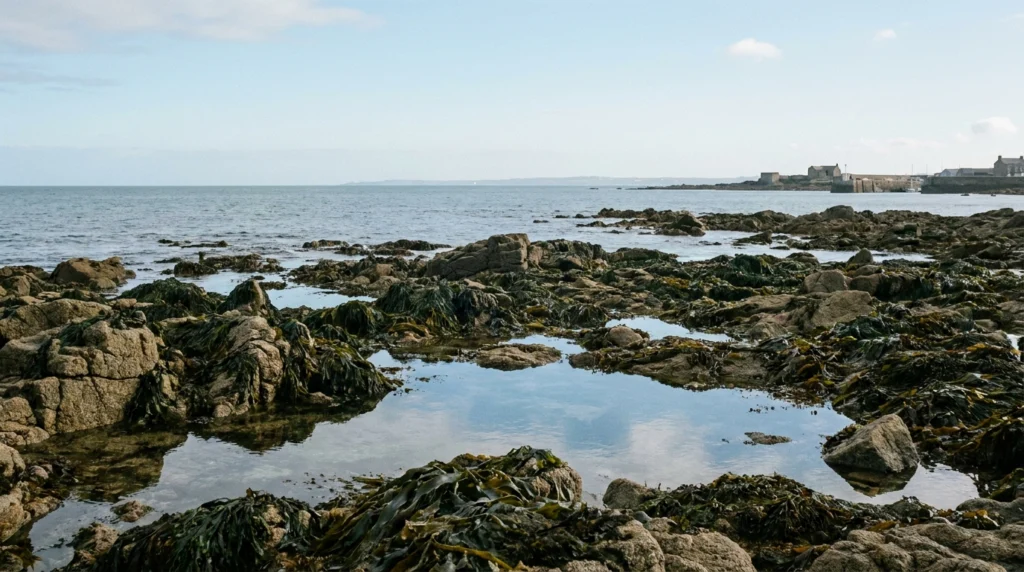
For an island whose identity is bound up with the sea, from its fishing heritage to its tourism appeal and the simple pleasure of a low-tide walk across the rocks, the health of the marine environment is not an abstract concern. A well-functioning no-take zone, particularly one positioned at a natural breeding and dispersal hub like Les Sauvages, could in theory replenish fish stocks across a much wider area of Jersey’s waters over time.
The science behind marine protected areas is broadly well-established: give species a refuge from extraction and they tend to recover, with benefits spilling over into surrounding waters. The question for Jersey is whether the political will, demonstrated tentatively at Portelet Bay, can be sustained and expanded as the evidence accumulates.
Source: Jersey Evening Post