In brief: UK inflation climbed to 3.5 per cent in September, its highest rate in almost a year, driven largely by surging fuel prices. Economists warn it could hit 4 per cent this winter, prompting expectations of Bank of England interest rate rises in November and February. For Jersey households already grappling with a high cost of living, the outlook is far from cheerful.
Inflation Hits Near-Yearly High as Fuel Costs Surge
The Office for National Statistics (ONS) has confirmed that the Consumer Price Index (CPI) rose to 3.5 per cent in September, up from 3.1 per cent in August, the Independent reports. That figure came in above the 3.4 per cent most economists had anticipated, and represents the highest CPI reading since the 3.6 per cent recorded in October last year. It also sits uncomfortably far above the Bank of England’s 2 per cent target.
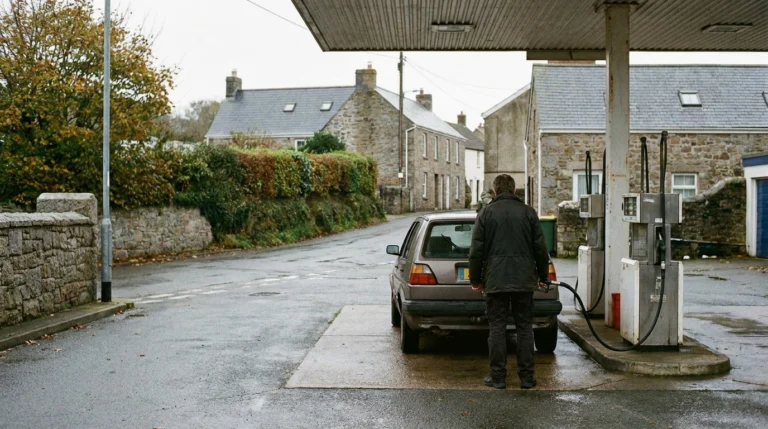
The main culprit is fuel. Motor fuels soared by 30 per cent in the year to September, up from a 23 per cent annual rise in August. Average petrol prices rose by 8.2p between August and September to reach 169.5p per litre, the highest price recorded in around four years. Diesel surged by 10.7p to 192.5p per litre, its highest level since July 2022. According to RAC figures cited by the Independent, average diesel prices surpassed 200p a litre for the first time ever at the start of October.
ONS chief economist Grant Fitzner attributed the rise primarily to fuel, noting that “the cost of diesel is the highest since July 2022.” Other upward pressures included airfares, computer games and live events, though these were partially offset by hotel stays, where price rises were more modest than a year ago. Fitzner also noted that the annual cost of both raw materials and goods leaving factories continued to rise, driven by higher crude oil and petrol prices respectively.
The underlying cause of the fuel surge is the Iran war, which the Independent reports has squeezed global oil and gas supplies.
Rate Rises on the Horizon as Budget Looms
The timing is awkward for Chancellor John Healey, whose first Budget is due next week. Healey acknowledged that “price rises from conflicts in the Middle East and Europe are hitting Britain and countries worldwide,” while pointing to the government’s decision to begin drilling in the Jackdaw gas field as investment in Britain’s energy future.
Economists, however, are less sanguine. James Smith, economist at ING, told journalists that inflation is expected to reach 4 per cent this winter, and that the Bank of England is likely to raise interest rates in November and again in February. He did suggest the situation should begin to ease after spring, describing the current episode as “energy intensive inflation” with no sign of it broadening out into the wider economy.
Suren Thiru, chief economist for the Institute of Chartered Accountants in England and Wales, warned that rising inflation is “deepening the financial squeeze on households and businesses” and turning the Budget into a “perilous high-wire act” for the Chancellor. Martin Sartorius of the Confederation of British Industry said an interest rate hike was “firmly on the table” at the Bank of England’s November meeting.
Adding to the pressure, Ofgem’s price cap on household energy bills increased at the start of October, meaning higher energy costs for dual-fuel households over the coming winter months.
What This Means for Jersey
Jersey is not insulated from any of this. The island imports virtually all of its fuel and is exposed to the same global oil price movements driving inflation in the UK. Islanders filling up at the pump will already be feeling the pinch, and if Bank of England rate rises materialise as expected, those with variable-rate mortgages or loans tied to UK base rates will face higher repayments.
The September CPI figure also has direct consequences for benefits and pensions. The Independent notes that this rate is typically used to set increases for universal credit, tax credits and disability benefits. For pensions, the triple lock means the state pension will rise by whichever is highest: September’s CPI of 3.5 per cent, average earnings growth between May and July, or 2.5 per cent. Wage growth figures are currently the highest of the three at 3.9 per cent, meaning pensioners in Jersey who receive a UK state pension can expect a 3.9 per cent increase next April.
Meanwhile, the broader Consumer Price Index including Housing (CPIH) rose to 3.6 per cent in September from 3.3 per cent in August, and the Retail Prices Index (RPI) climbed to 3.9 per cent from 3.4 per cent, according to ONS data.
Source: independent.co.uk