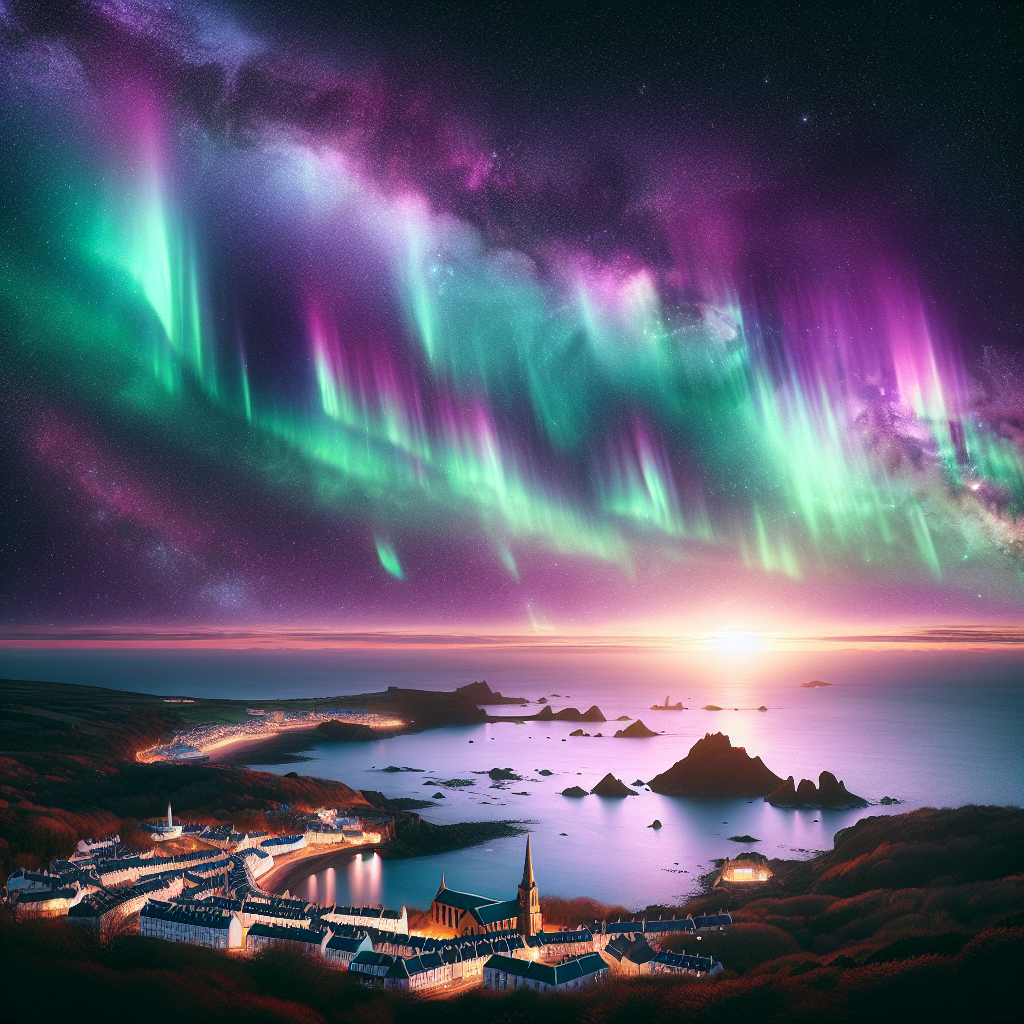
Aurora Borealis Graces Jersey Skies with a Spectacular Show
Summary: Jersey residents were recently awestruck by an extraordinary display of the Northern Lights, a rare occurrence for the island. A significant geomagnetic storm pushed the aurora borealis further south than usual, painting the night sky with vibrant hues of red and pink.
The Northern Lights: A Rare Treat for Jersey
It’s not every day that the residents of Jersey look up to find the heavens adorned with a light show that rivals the best of New Year’s Eve fireworks. But that’s precisely what happened when a major geomagnetic storm took a detour, bringing the Northern Lights, typically a staple of the Arctic Circle, to the doorstep of the Channel Islands.
The phenomenon, also known as the aurora borealis, occurs when charged particles from the sun interact with the Earth’s magnetic field, resulting in a celestial ballet of light that dances across the sky. While this natural wonder is common in high-latitude regions, it’s a rare guest in the more temperate climes of Jersey.
Why This Display Was Different
Geomagnetic storms of this magnitude are not a frequent occurrence. The storm that brought the aurora to Jersey was the result of a particularly energetic solar flare, which hurled a cloud of magnetically charged particles towards Earth. As these particles collided with the Earth’s atmosphere, they created the stunning display of light that left islanders gazing skyward in wonder.
The vibrant reds and pinks that illuminated the night sky are typically less common than the more familiar green aurora. These colours are produced at higher altitudes and require a more forceful geomagnetic event, making this display all the more special for its rarity and beauty.
Jersey’s Reaction to the Celestial Spectacle
The unexpected light show was met with excitement and fascination across the island. Social media was abuzz with photographs and videos, as locals and tourists alike shared their experiences of the event. Amateur astronomers and stargazers set up camp along the north coast, hoping to catch a glimpse of the elusive aurora, which is often only visible in the island’s darkest skies.
For many, the experience was a poignant reminder of nature’s capacity to surprise and delight, even in an age where technology often overshadows the simple pleasures of looking up at the night sky.
The Science Behind the Beauty
Understanding the science of the aurora borealis adds a layer of appreciation to the spectacle. The sun’s activity follows an 11-year cycle, with solar flares and sunspots waxing and waning in intensity. During periods of high solar activity, the chances of witnessing the Northern Lights at lower latitudes increase.
Scientists monitor this solar activity closely, as it can have significant impacts on satellite communications, navigation systems, and even power grids. While the aurora itself is harmless, the geomagnetic storms that bring it can be disruptive, making it a beautiful but potent reminder of our planet’s place in the wider cosmos.