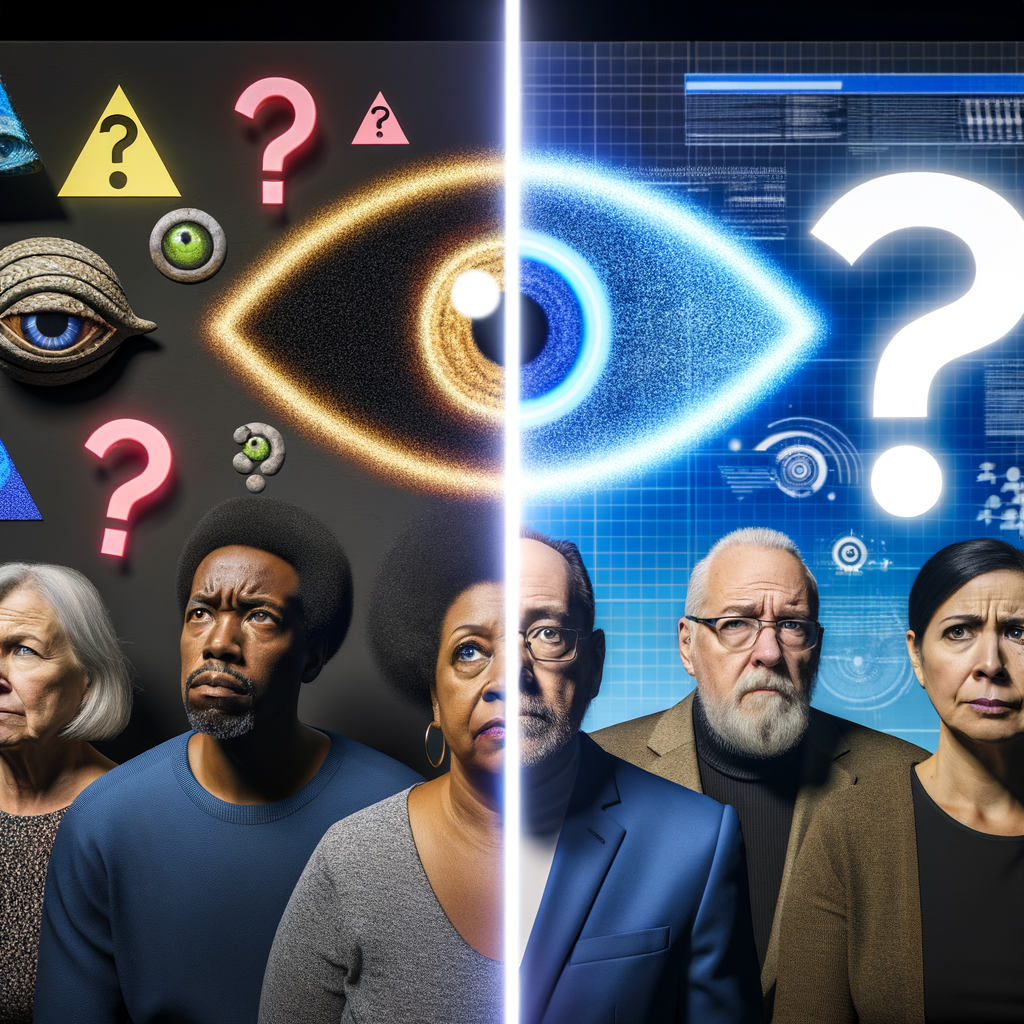
# Could a Debunkbot Change Your Mind?
In an age where misinformation spreads faster than a seagull can snatch a chip, the emergence of “debunkbots” has sparked a lively debate. These automated systems are designed to counter false claims and provide factual information, but can they genuinely change our minds? In this article, we’ll explore the concept of debunkbots, their potential impact on public discourse, and what it means for us here in Jersey and beyond.
## The Rise of the Debunkbot
### What is a Debunkbot?
A debunkbot is essentially a digital watchdog, programmed to identify and refute false information circulating on social media and other platforms. These bots scour the internet, flagging misleading claims and providing users with verified facts. Think of them as the digital equivalent of a well-informed friend who’s always ready to correct your misconceptions—albeit without the charm and wit.
### The Need for Debunkbots
With the proliferation of social media, misinformation has become a significant concern. From conspiracy theories about vaccines to dubious claims about climate change, the internet is rife with falsehoods. According to a study by the Pew Research Centre, nearly 64% of Americans believe that misinformation is a major problem in society. If that statistic holds true for our friends across the pond, it’s likely that Jersey isn’t immune to the same issues.
## Can Debunkbots Change Minds?
### The Science of Persuasion
Changing someone’s mind is no easy feat. Psychological studies suggest that people are often resistant to information that contradicts their beliefs, a phenomenon known as cognitive dissonance. So, can a debunkbot really penetrate that mental fortress?
Research indicates that simply presenting facts isn’t enough. People tend to cling to their beliefs, even in the face of overwhelming evidence. However, when debunkbots engage users in a more interactive manner—such as through quizzes or gamified content—they can foster a more open-minded approach to information.
### The Jersey Perspective
For the conservative readership in Jersey, the implications of debunkbots are twofold. On one hand, they could serve as a valuable tool in combating the spread of misinformation that could affect local policies or public health initiatives. On the other hand, there’s a valid concern about the potential for bias in the algorithms that power these bots. If they’re programmed with a particular ideological slant, they could inadvertently reinforce existing biases rather than challenge them.
## The Risks of Debunkbots
### Algorithmic Bias
One of the most significant concerns surrounding debunkbots is the risk of algorithmic bias. If the data used to train these bots is skewed, the information they provide may also be biased. This could lead to a situation where certain viewpoints are systematically dismissed, while others are amplified. For a community like Jersey, where diverse opinions are essential for a healthy democracy, this could be problematic.
### The Echo Chamber Effect
Another risk is the potential for debunkbots to create echo chambers. If users only engage with content that aligns with their beliefs, they may become even more entrenched in their views. This could lead to a situation where the bots are merely reinforcing existing biases rather than fostering genuine dialogue and understanding.
## The Role of Government and Public Funds
### Scrutinising Government Spending
As we consider the implementation of debunkbots, it’s essential to scrutinise how public funds are allocated for such initiatives. The Jersey government has faced criticism in the past for its spending habits, and any investment in technology must be justified with clear benefits to the community. Are we investing in tools that genuinely enhance public discourse, or are we simply throwing money at a digital solution without a clear strategy?
### A Call for Transparency
Transparency is key when it comes to government-funded projects. If debunkbots are to be integrated into our information ecosystem, the public deserves to know how they operate, what data they use, and how they are monitored for bias. Without this transparency, we risk creating a system that could do more harm than good.
## NSFW Perspective
In conclusion, while debunkbots present an intriguing solution to the problem of misinformation, their effectiveness in changing minds remains uncertain. For the conservative audience in Jersey, the potential benefits must be weighed against the risks of bias and the echo chamber effect. As we navigate this digital landscape, it’s crucial to maintain a healthy scepticism towards any automated system that claims to have all the answers.
Ultimately, the responsibility lies with us as individuals to seek out diverse perspectives and engage in meaningful conversations. After all, no debunkbot can replace the value of a good old-fashioned debate over a pint at the pub. So, let’s raise our glasses to informed discourse—may it always prevail over misinformation, one witty retort at a time!



