In brief: A new midge-borne livestock disease called Shamonda virus has been identified on two Jersey farms, marking the first time it has been found anywhere in the British Isles. The virus can cause fever, diarrhoea and reduced milk production in cattle, and raises concerns about potential birth abnormalities in calves. Authorities say there is no evidence of any risk to human health or food safety.
A British Isles First, and Jersey Is It
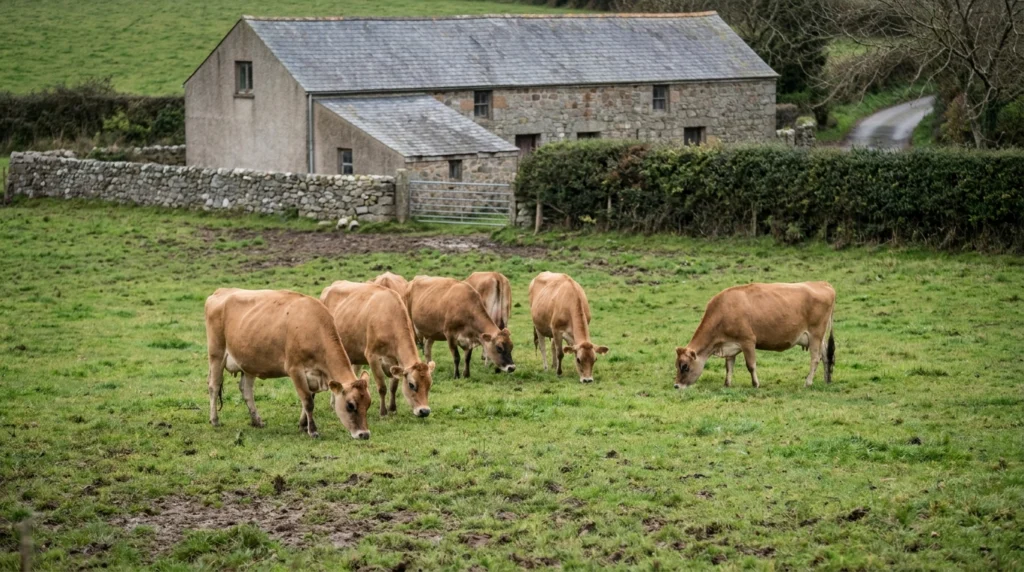
Jersey has, over the centuries, earned a reputation for producing some of the finest dairy cattle in the world. Now, rather less proudly, the Island has another distinction: it is the first place in the British Isles where Shamonda virus has been detected. According to the Jersey Evening Post, the virus first appeared in Europe earlier this year and was discovered in Jersey in August, with two farms having animals test positive.
Shamonda virus belongs to the same group as Schmallenberg virus, a pathogen that caused significant concern among European livestock farmers when it emerged over a decade ago. Like its relative, Shamonda is spread by Culicoides midges, tiny biting insects that transfer the virus into the bloodstream of livestock. It has been found not only in cattle but also in horses, sheep and goats.
For affected cattle, the symptoms include fever, diarrhoea, lethargy and reduced milk production. The concern that goes beyond the immediate illness is the possibility that calves born to infected cows could suffer congenital abnormalities, a prospect that will understandably focus the minds of Jersey’s pedigree dairy farmers.
No Panic, But Vigilance Required
States vet Susana Ramos was measured in her response, telling the Jersey Evening Post: “There is currently no evidence that Shamonda virus poses a risk to human health or food safety.” That will come as a relief to consumers, though the Island’s farming community will be watching developments closely.
Ms Ramos noted that because the symptoms of Shamonda virus are similar to those of other cattle diseases, its identification “highlights the importance of the Island’s disease surveillance and monitoring programmes.” She urged livestock keepers and horse owners to “remain vigilant and to contact their veterinary surgeon if they observe unusual illness, reproductive problems, abortions, congenital abnormalities, or neurological signs in their animals.”
The fact that the virus was caught and identified at all is, in a sense, a testament to Jersey’s biosurveillance infrastructure. In a small island with a globally celebrated dairy herd, the ability to detect novel pathogens quickly is not a luxury but a necessity.
Industry Calm, Relationships Strengthened
Andrew Le Gallais, owner of Cowley Farm in Maufant, offered a notably composed assessment. Speaking to the Jersey Evening Post, he said: “It’s not a serious issue for the industry or the future of our pedigree cattle.” He praised the “significant involvement” of the States vet in working alongside dairy farmers to understand the disease, and noted that farmers had met with Ms Ramos where “frank questions” were asked. His conclusion was a positive one: “The relationship between the dairy industry and the States vet has never been better.”
That kind of constructive dialogue between regulators and the farming community is exactly what is needed when a novel pathogen arrives unannounced. Jersey’s dairy industry is not merely an agricultural concern; it is a cornerstone of the Island’s identity and heritage, and the pedigree Jersey cow is an internationally recognised breed. Any sustained threat to herd health would have consequences well beyond the farm gate.
Source: Jersey Evening Post