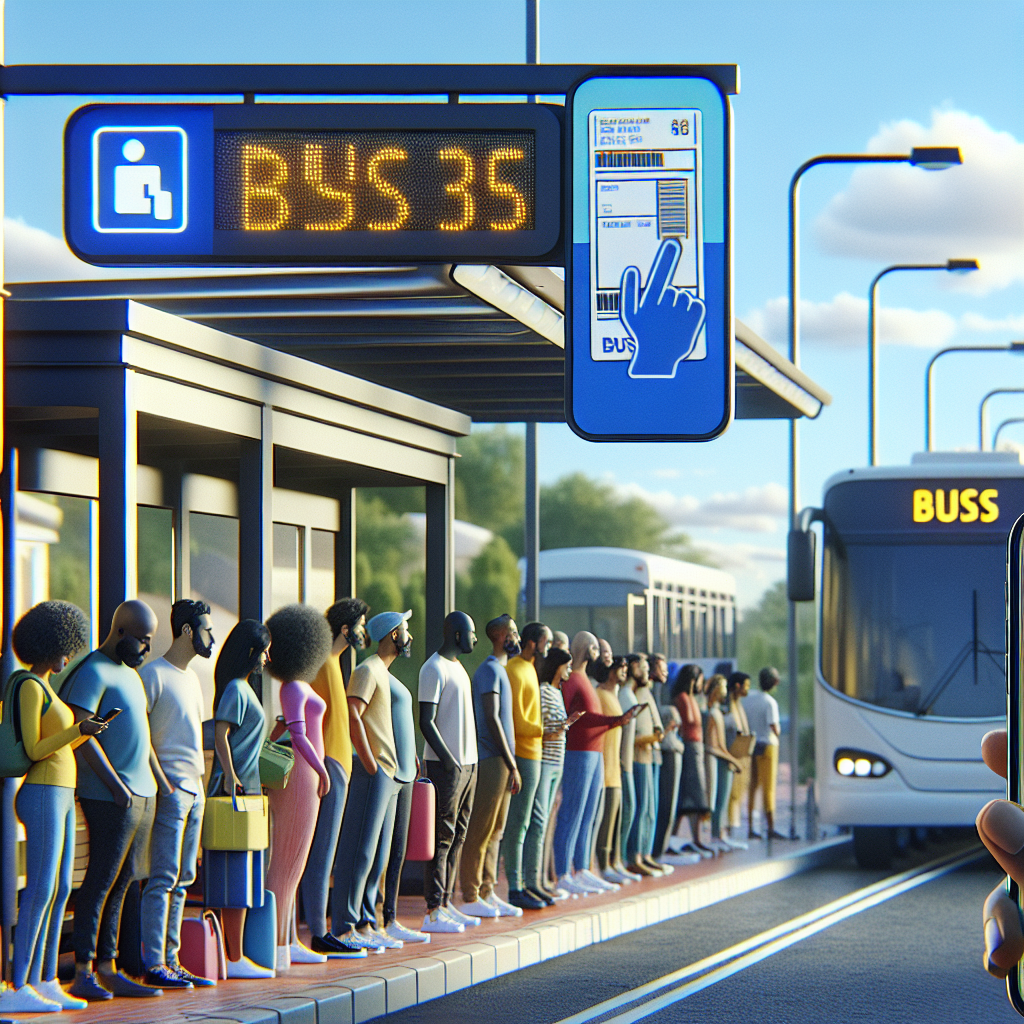
Jersey’s LibertyBus App Hits 20,000 Downloads: A Sign of the Times or a One-Stop Shop to Nowhere?
In an age where there’s an app for everything from counting your steps to ordering a pint of milk, Jersey’s own LibertyBus has not missed the bus on this digital trend. The transport provider has proudly announced that its mobile application has been downloaded by over 20,000 users. This milestone begs the question: is this a testament to the app’s utility or a mere reflection of our app-obsessed culture?
Key Points:
- LibertyBus app reaches 20,000 downloads in Jersey.
- The app’s features and its impact on public transport efficiency.
- Analysis of the app’s role in Jersey’s transport policy and potential areas for improvement.
LibertyBus App: A Digital Leap Forward?
LibertyBus, the name synonymous with public transport in Jersey, has given its passengers a reason to rejoice—or at least, a reason to look down at their smartphones. With 20,000 downloads clocked, the app is shaping up to be more than just a digital timetable. It offers real-time updates, ticket purchasing, and journey planning, all at the swipe of a finger. But as we navigate through the app’s interface, one must ponder if it truly enhances the commuter experience or if it’s merely a shiny toy in the hands of tech-savvy islanders.
Features That Drive Success
The app’s features are undeniably geared towards making public transport more accessible and user-friendly. The ability to check bus schedules in real-time and receive notifications about service disruptions can turn the tide in favour of public transport usage. Moreover, the convenience of purchasing tickets through the app eliminates the need for that frantic search for loose change as the bus approaches your stop.
Impact on Public Transport and Governmental Efficiency
While the app’s popularity is commendable, it’s crucial to assess its impact on the broader transport policy in Jersey. Does the app encourage more residents to leave their cars at home, thereby reducing traffic congestion and carbon emissions? Or is it simply a digital band-aid on the underlying issues of public transport reliability and coverage?
Room for Improvement?
Despite the app’s success, there are murmurs of discontent among the populace. Some users report glitches and inaccuracies in real-time updates, leading to missed buses and frustration. Others point out that while the app serves the tech-savvy, it does little for those without access to smartphones, potentially widening the digital divide.
NSFW Perspective: The Road Ahead for Jersey’s Public Transport
From the NSFW vantage point, the LibertyBus app’s milestone is a double-edged sword. On one hand, it’s a step towards modernising Jersey’s public transport system, aligning with the digital age’s demands. On the other, it’s a stark reminder that an app alone cannot carry the weight of a comprehensive transport policy.
For the app to be more than a digital novelty, it must be part of a broader strategy that addresses the core issues of public transport. This includes expanding routes, improving punctuality, and ensuring that the buses themselves are up to the task—both mechanically and in terms of capacity.
Moreover, the government’s role in supporting digital initiatives like the LibertyBus app must be scrutinised. Are public funds being used effectively to enhance the overall transport infrastructure, or are they merely fuelling a drive towards a ‘digital-only’ solution that neglects the non-digital natives?
In conclusion, while the LibertyBus app’s 20,000 downloads is a milestone worth noting, it’s the journey ahead that will truly test its mettle. It’s not just about moving with the times but moving the people efficiently and inclusively. As Jersey’s residents navigate through their daily commutes, one hopes that the LibertyBus app is not just another stop on a long road to a truly integrated transport system.
For now, we’ll keep an eye on the app’s updates—both in the digital and policy sense—and hope that it’s not just another case of ‘there’s an app for that’ syndrome, but a genuine step towards a greener, more efficient Jersey.