Jersey’s Fungal Surprise: A Mycological First for the British Isles
Summary: In a mycological twist that has both amateur and professional fungi enthusiasts intrigued, a mushroom species never before recorded in the British Isles has been discovered in Jersey. Local fungi aficionado Charlotte Shenkin stumbled upon this biological novelty, marking a significant addition to the island’s natural history records.
The Discovery of a Lifetime
Charlotte Shenkin, whose hobby might typically involve more tramping through underbrush than making headlines, has found herself at the center of a mycological marvel. While the untrained eye might dismiss a mushroom as just another part of the forest floor’s furniture, Shenkin’s keen observation has led to a discovery that’s a first for the British Isles.
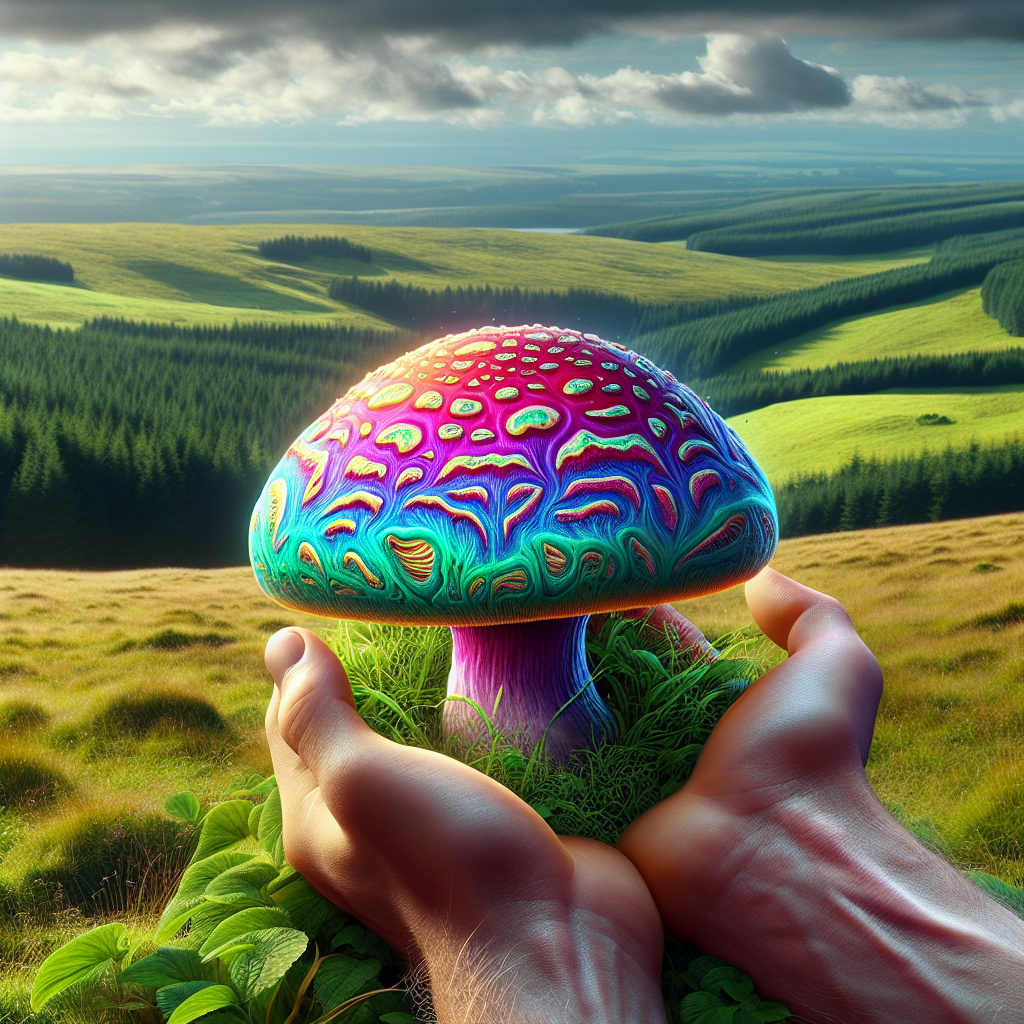
It’s not every day that Jersey makes a splash in the world of fungi, but Shenkin’s find is a reminder that our small island is full of surprises. The mushroom, which has yet to be named in a manner that rolls off the tongue, is causing quite the stir. It’s the kind of story that has both the scientific community and local foragers buzzing with excitement—and perhaps a touch of envy.
What’s in a Mushroom?
Now, for those of you who might be thinking, “It’s just a mushroom, what’s the fuss?”—let’s delve a bit deeper. The discovery of a new species, or in this case, a first record for a region, is akin to finding a hidden treasure in your own backyard. It’s a reminder of the rich biodiversity that exists, often unnoticed, and the importance of preserving our natural habitats.
For Jersey, this fungal find is more than just a scientific curiosity; it’s a testament to the island’s unique ecological niche. The presence of this mushroom could provide insights into local environmental conditions, migration patterns of species, and even potential applications in fields like medicine and agriculture.
Implications for Jersey and Beyond
While the discovery is undoubtedly exciting, it also raises questions about environmental monitoring and conservation efforts in Jersey. How many other undiscovered species might be lurking in our midst? And what does this say about the state of our local ecosystems?
Moreover, this event places Jersey on the mycological map, potentially attracting more naturalists and scientists to our shores. The island could see a boost in eco-tourism, with mushroom hunters and nature lovers eager to explore our diverse landscapes.
Conservative Considerations
From a conservative perspective, the discovery of this mushroom in Jersey is a reminder of the value of our natural heritage. It underscores the importance of stewardship of the environment, a principle that aligns with conservative values of preservation and responsible management of resources.
However, it’s also a moment to reflect on governmental efficiency and the use of public funds. Are we investing enough in our natural spaces to ensure they are protected and can continue to yield such fascinating discoveries? Or are there areas where the government could streamline its efforts to better support environmental initiatives?