Jason Butler’s Artistic Lens: A Vivid Tapestry of Island Life
Summary: Jason Butler’s latest exhibition presents a kaleidoscope of Jersey’s social fabric, capturing the essence of Island life with a depth that both locals and art aficionados can appreciate. His work, while aesthetically pleasing, also invites viewers to ponder the subtleties of our daily existence.
The Art of Observation
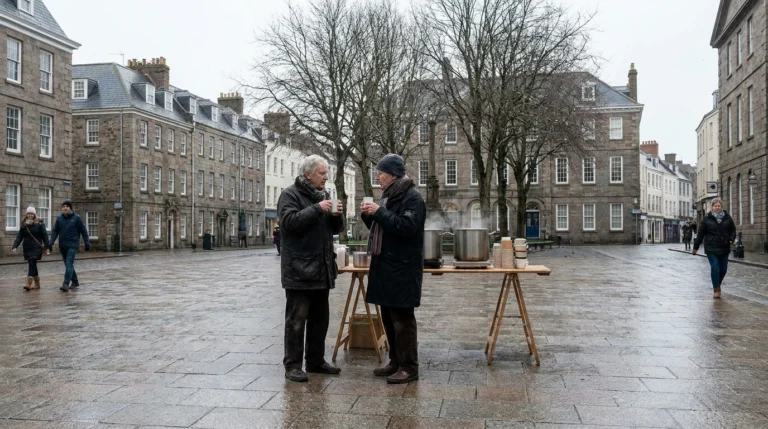
Jason Butler, a name synonymous with capturing the quintessence of Jersey through his art, has once again graced the local galleries with his latest oeuvre. His exhibition, which could be mistaken for a visual encyclopedia of Jersey, delves into the rich tapestry of the Island’s day-to-day scenes. From the fisherman hauling in the day’s catch to the corporate tycoon lost in thought, Butler’s brush strokes tell a thousand stories.
Butler’s work is not just a feast for the eyes; it’s a full-course meal for the soul. Each painting is a vignette, a snapshot that invites the viewer to step into the frame and become part of the narrative. It’s as if Butler has distilled the essence of Jersey life and bottled it up on canvas for all to experience.
More Than Meets the Eye
Butler’s exhibition is not merely a collection of pretty pictures. There’s a depth here that goes beyond the surface. His paintings are like onions, with layers upon layers of meaning waiting to be peeled back by the discerning observer. The artist has a knack for highlighting the mundane and transforming it into something extraordinary, encouraging us to look at our surroundings with fresh eyes.
Take, for instance, his depiction of the St. Helier markets. At first glance, it’s a bustling scene of commerce. But linger a little longer, and you’ll notice the subtle interplay of light and shadow, the expressions of the market-goers, each telling a silent story of their own. It’s this attention to detail that elevates Butler’s work from mere representation to a form of visual poetry.
Reflections on Society
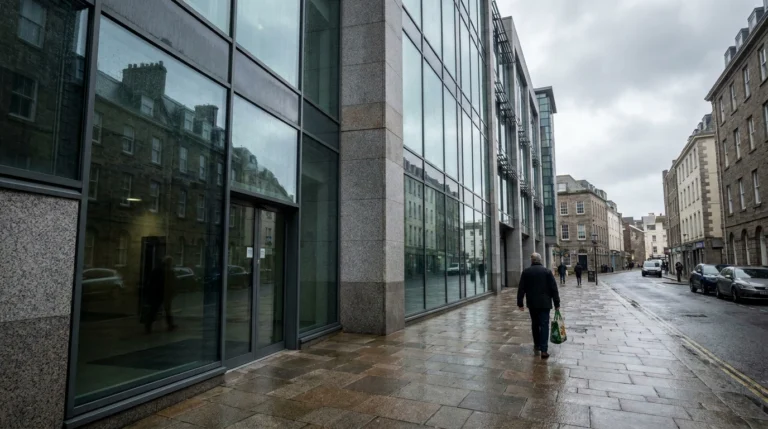
Butler’s art also serves as a mirror, reflecting the diverse facets of Jersey society. In one corner, you might find a painting of a traditional Jersey bean crock, a nod to the Island’s culinary heritage. In another, a stark, almost brutalist portrayal of a finance office, a commentary on the ever-growing influence of the financial sector on Island life.
It’s this duality, the celebration of tradition alongside the acknowledgment of modernity, that makes Butler’s work so compelling. He doesn’t shy away from the contrasts and contradictions that make up our Island; he embraces them, presenting a body of work that is as complex and multifaceted as Jersey itself.