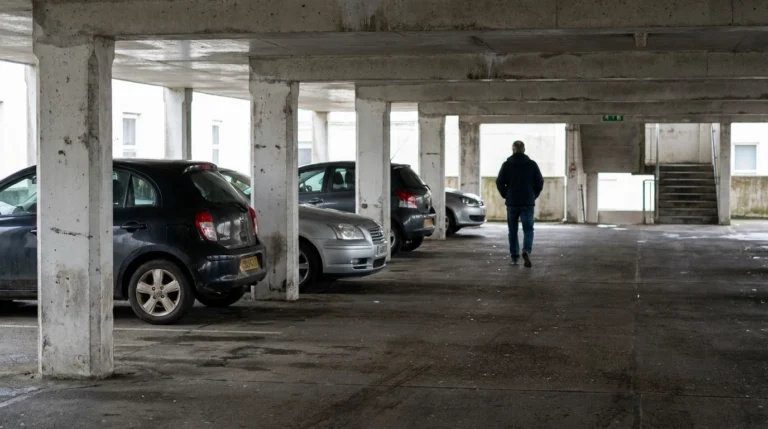
In brief: Reports of malicious damage to vehicles in Jersey’s car parks have risen in 2026, with police recording more incidents by October than in the whole of 2025. Freedom of Information figures show investigations are up too, though prosecutions remain rare. The data also reveals a separate category of damage caused by manoeuvring vehicles, none of which led to an investigation.
The Numbers: A Reversal of a Falling Trend
For five consecutive years, reports of suspected malicious damage to parked vehicles in Jersey were heading in the right direction. According to figures released under the Freedom of Information Law and reported by the Jersey Evening Post, incidents fell from 46 in 2021 to 37 in 2022, then 34 in 2023, 22 in 2024, and 21 in 2025. It looked like a genuine success story.
Then came 2026. By 20 October, police had already recorded 22 reports, matching and then surpassing the entire previous year’s total with more than two months still to go. It is the first rise in the six-year period covered by the figures, and it will be little comfort to anyone who has returned to a car park to find their vehicle keyed, dented, or otherwise interfered with.
Police opened investigations into 20 of this year’s 22 reports, compared with 17 last year, suggesting officers are taking the uptick seriously. Across the full six years, police received 182 reports in total, opened 125 investigations, and recorded just six prosecutions. No prosecutions were recorded for 2026 in the FOI response, while three were recorded in 2025.
When Is Damage Actually a Crime?
The FOI response also shed light on the legal framework governing car park incidents, and the picture is rather more nuanced than many drivers might assume.
Under Jersey’s road traffic law, a driver who strikes a parked vehicle on a public road must report the collision to police if the owner is absent and details cannot be exchanged. However, the Jersey Evening Post reports that those duties generally do not apply in car parks. Leaving the scene of a car park bump without providing details “does not, of itself, establish an offence”, according to the FOI response.
Officers may still investigate if there are reasonable grounds to suspect an offence, including malicious damage where there is evidence of intentional or reckless harm, or careless or dangerous driving. Purely accidental damage with no evidence of wrongdoing is, in practice, a matter for vehicle owners and their insurers rather than the police.
Drivers who do report an incident can be given a police reference number for insurance purposes, even where no investigation is opened. That is a useful practical point worth knowing if you ever return to find a fresh scrape and no note on the windscreen.
The Separate Problem of Manoeuvring Damage
Alongside the malicious damage figures, the FOI response revealed a separate and striking statistic. Police received 29 reports this year of parked vehicles being damaged by other vehicles manoeuvring in car parks. Not one of those reports led to an investigation.
That figure, taken together with the legal position outlined above, underlines a gap that many Jersey motorists will find frustrating. If someone clips your car while reversing out of a space and drives away, the chances of any official action are, on the available evidence, essentially nil. The matter lands squarely with you and your insurer.
Source: Jersey Evening Post