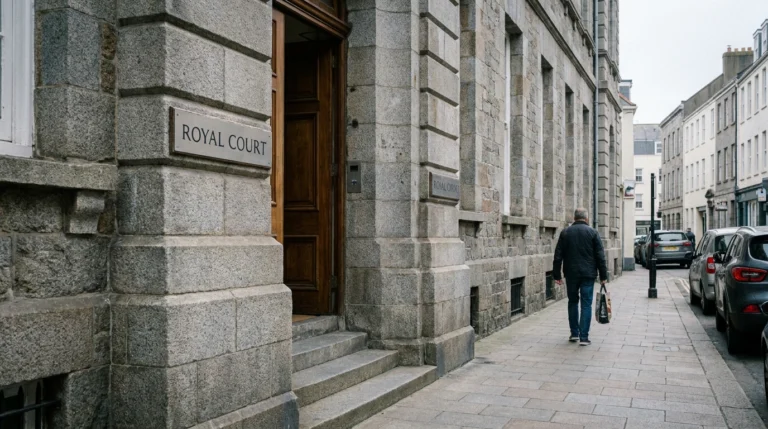
In brief: Island Energy has been found guilty of a health and safety offence after a gas explosion at a family home in Mont Pinel injured two parents and caused serious damage to the property. The Royal Court found the company had no proper system for disconnecting redundant gas pipes after meters were removed. Reporting restrictions had prevented publication of the verdict until after a separate trial concluded.
The Explosion and Its Consequences
At 10.50pm on 26 June 2024, a gas explosion tore through 1 Elizabeth Villas, Mont Pinel, while the owners and their two young children were at home. The Jersey Evening Post reports that the children escaped injury, but both parents suffered fractures and required weeks in hospital. The property sustained considerable damage, and neighbouring occupied premises were also put at risk.
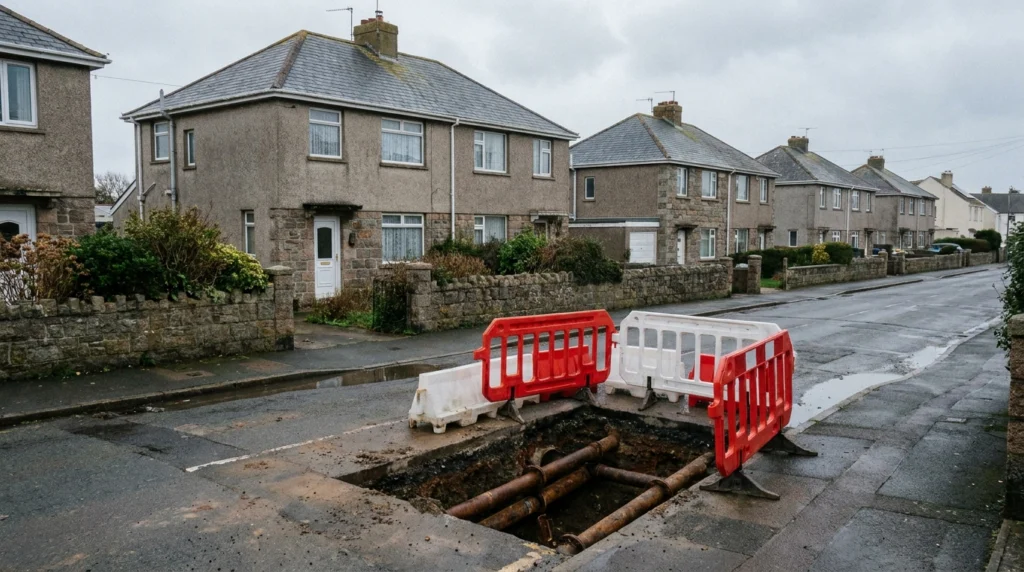
The family’s gas meter had been removed at their request on 8 December 2021. While the supply into the property was shut off at that point, a steel pipe remained connected to the mains, still containing gas despite serving no useful purpose. Extensive corrosion developed at a bend in the pipe beneath the floorboards. The court found the pipe had probably been in poor condition for a prolonged period, though it likely only began leaking shortly before the explosion.
As the judgment noted: “While there were serious injuries caused, it could have been a great deal worse.”
A System That Simply Was Not There
Jersey’s gas safety code, which came into force in February 2021, required redundant pipework to be disconnected as near as reasonably practicable to the mains once a meter had been removed for 12 months. That 12-month grace period was designed to allow customers to change their minds or new owners to request reconnection.
Island Energy had not only been consulted on the code but had itself suggested strengthening its wording. The company also had its own internal policy for disconnecting redundant pipes dating from February 2019. Despite all of this, the court found that no order scheduling the disconnection at Elizabeth Villas had ever been created.
The company argued that poor data recording across the gas industry more broadly provided some excuse for the failure. The court was having none of it. “The fact that dealing with data is not good in the gas industry in the UK, if that be the case, is not a reasonable excuse for the failure to create necessary documents in this case,” the judgment stated.
The court did acknowledge mitigating context. It accepted that the risk of a leak from redundant pipework was relatively low compared with other risks the company faced, and that the Haut du Mont explosion in December 2022 had caused “considerable disruption” for Island Energy. More customers sought to disconnect from gas in the aftermath, while the company lost staff and struggled to recruit replacements. The judgment accepted that Island Energy “would have been more concerned as a priority with its higher rated risks as a result of this shocking event.”
Crucially, the court could not be certain that, even with proper paperwork in place, disconnecting the Elizabeth Villas pipe before the explosion would have been “reasonably practicable.” The conviction therefore centred specifically on the company’s failure to have a proper system for arranging disconnections within a reasonable period after the initial 12-month window had passed.
Signs of Improvement, Too Late
The court did find some cause for measured optimism about Island Energy’s current practices. Operation Sapphire, established in 2024 to disconnect redundant steel pipes, was found to appear efficient and to maintain better records. However, as the judgment observed, “unhappily, this was not sufficient to prevent the explosion at 1 Elizabeth Villas.”
The court added pointedly: “There seems to be no reason why such a system could not have been in existence” when Jersey’s gas safety code first took effect in February 2021. In other words, the tools and knowledge were available. The will, or the administrative rigour, was not.
Reporting restrictions had prevented publication of the verdict until after the conclusion of the separate Haut du Mont trial, with the full details only revealed in a recently published judgment.
Source: Jersey Evening Post