In brief: A blind member of Jersey’s Electoral Authority says current election law forces blind voters to rely on polling station staff to mark their ballot papers, stripping them of the right to a secret vote. Johannes Martinson visited 14 of the island’s 19 polling stations during June’s election to assess accessibility, after no budget was allocated for a formal survey. A new accessibility survey is now open until 15 November.
A Fundamental Right, Quietly Removed
The secret ballot is one of the cornerstones of democratic life. You walk in, you mark your paper, nobody knows what you did. Except, it turns out, if you are blind and living in Jersey, Channel Islands, that cornerstone has a rather large crack in it.
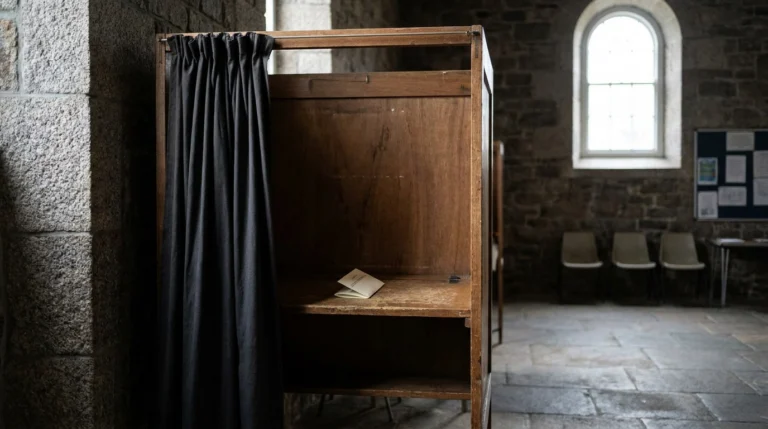
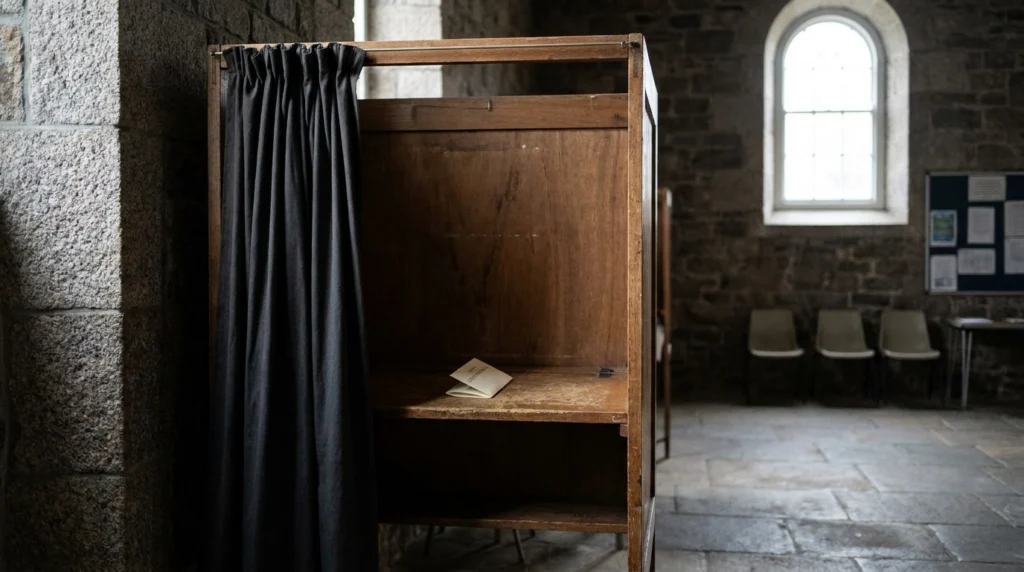
Johannes Martinson, a blind member of the Jersey Electoral Authority, has told the BBC that the island’s current election law requires blind voters to have a polling station worker physically assist them in marking their ballot paper. Crucially, Martinson says, voters have no right to bring their own trusted assistant instead. “Currently the law states that I must use a person working at the polling station to assist me,” he told the BBC. “I don’t have a choice to actually get somebody on my own to help me.”
The consequence is stark. “Somebody knows what I voted,” Martinson said, describing the situation as “unacceptable.” He is, of course, entirely correct. A vote that is not secret is not truly free, and a democratic system that tolerates this for any group of citizens has some explaining to do.
No Budget, No Survey, One Man and 14 Polling Stations
What makes this story particularly telling is how Martinson came to be raising it at all. According to the BBC, no budget was made available for a formal survey into the barriers facing voters during June’s election. So Martinson, a member of the very authority responsible for overseeing elections, took it upon himself to visit 14 of the island’s 19 polling stations personally to assess accessibility.
That is, to put it charitably, a rather creative approach to public administration. One man, walking around polling stations on election day, doing the work that a properly funded accessibility review would have done. The Government of Jersey might wish to reflect on whether leaving a blind Electoral Authority member to conduct an informal, self-funded accessibility tour is quite the standard of democratic oversight the island should be proud of.
Martinson acknowledged that efforts had been made to improve physical access to polling stations, but said that for blind voters, the fundamental problem of independent ballot-marking remained entirely unresolved.
Solutions Already Exist Elsewhere
This is not an intractable problem. The BBC reports that authorities in Wales and Scotland have already introduced tactile voting guides, including cardboard overlays that align with ballot papers and audio support, allowing blind voters to mark their ballots independently and privately. These are not expensive, high-technology solutions. They are cardboard and audio. Jersey, an island that prides itself on its governance and its quality of life, is behind Wales and Scotland on cardboard.
A new survey into voting accessibility has now been launched, open to disabled people, voters aged over 65, carers, and people who chose not to vote in June’s election. The survey closes on 15 November. It is a welcome step, though one might note it arrives after the election rather than before it.
Source: BBC News