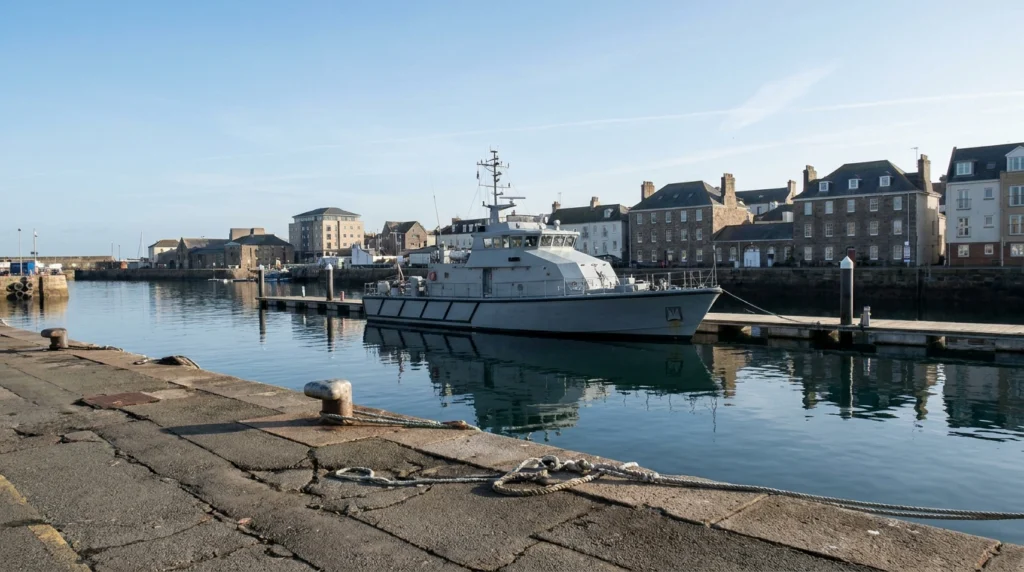
In brief: Jersey’s new fisheries protection vessel, Gardienne, has arrived in St Helier, replacing the Norman Le Brocq, which had been in service since 1997. Built in Anglesey to a bespoke design, the 17-metre vessel will handle enforcement, scientific research and Jersey’s international maritime obligations.
A New Guardian for Jersey Waters
After nearly three decades of service, the Norman Le Brocq has been stood down. Its replacement, Gardienne, has completed its build programme and sea trials and is now berthed in St Helier, ready to get to work. The name, for those whose French is a little rusty, means “guardian” or “keeper” in French, which is either a pleasingly apt choice or the most on-the-nose naming decision since someone called a rescue helicopter “Rescue Helicopter”.
The vessel was built by Holyhead Marine in Anglesey, to a design developed by Camarc and supported by independent naval architects Keel Marine. The Jersey Evening Post reports that the design was developed specifically to meet the operational requirements of Jersey’s waters, which, given the island’s notoriously complex tidal ranges and currents, is no small engineering consideration.
What Gardienne Will Do
Operated by Marine Resources, Gardienne measures 17 metres in length and is capable of speeds in excess of 25 knots. That combination of size and pace makes it well suited to its primary roles: fisheries protection and enforcement, support for scientific research, and helping Jersey fulfil its international obligations within the island’s territorial waters.
Fisheries protection is no abstract bureaucratic exercise for Jersey. The island’s fishing grounds sit at the intersection of competing interests, with French and British fleets both active in the area and post-Brexit fishing rights having generated considerable political heat in recent years. Having a modern, purpose-built vessel on patrol sends a clear signal that Jersey takes the management of its marine environment seriously.
The Norman Le Brocq, which entered service in 1997, served for nearly 30 years. That is a respectable lifespan for a working patrol vessel, but technology, operational demands and the condition of ageing hulls all have a way of making the case for replacement rather forcefully over time.
Source: Jersey Evening Post