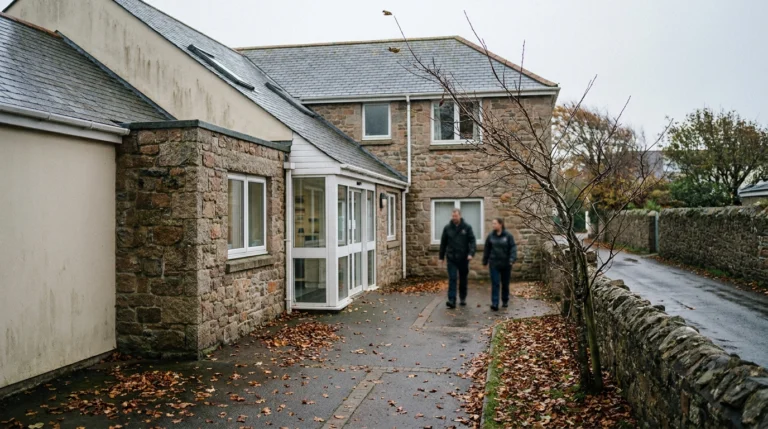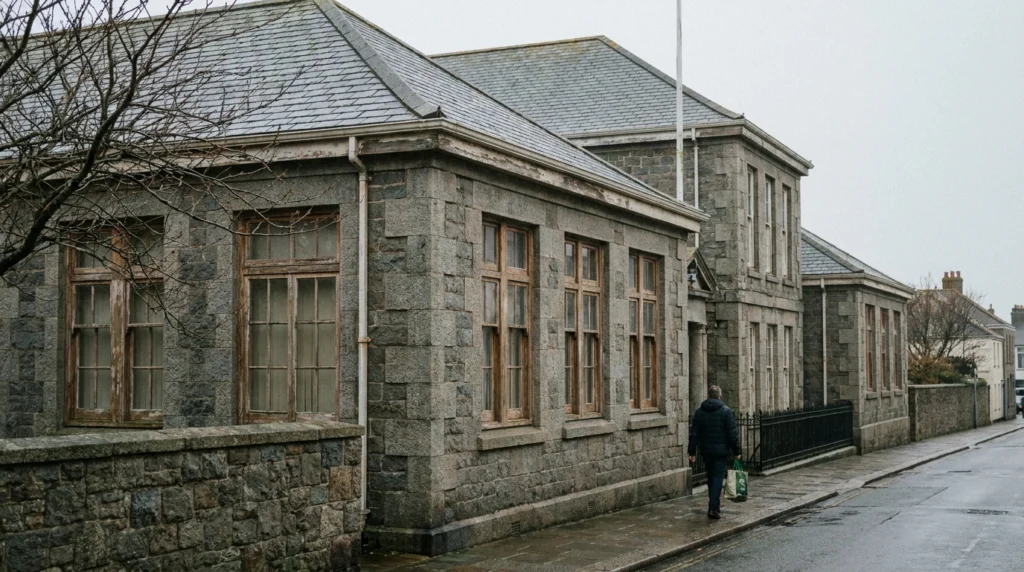
In brief: Infrastructure Minister Deputy Jonathan Renouf has outlined how £5.11 million earmarked in the proposed Budget will be spent on Jersey’s public buildings in 2027. The money will fund both reactive and preventative maintenance across a government estate he describes as suffering from years of insufficient investment. He acknowledges it is only part of a longer-term solution.
A Backlog Years in the Making
If you have ever wondered why some of Jersey’s public buildings look as though they last saw a lick of paint during a previous century, Deputy Jonathan Renouf has an answer for you: historic underfunding. The Infrastructure Minister told the Jersey Evening Post that many buildings and facilities within the Island’s public estate had suffered from years of “insufficient investment”, leading to a growing backlog of maintenance and refurbishment needs.
The proposed Budget includes £5,110,000 earmarked specifically for “estates refurbishment and upgrades” in 2027. According to the Budget documents, this covers “priority refurbishment and maintenance across the government estate, informed by recent condition surveys”, as well as providing “flexibility to address urgent property issues that could otherwise disrupt public services”.
In plain terms: the government has been kicking the can down the road on its buildings for some time, and now it is trying to pick it up before the can disintegrates entirely.
Reactive and Preventative: A Balancing Act
Deputy Renouf explained that the £5.11 million would be split between two types of maintenance. Reactive maintenance addresses urgent issues as they arise, while preventative maintenance aims to reduce future deterioration and extend the life of public assets. He told the JEP that “the allocation between these areas will be managed throughout the year to ensure resources are directed where the need is greatest and where they can deliver the best value for taxpayers”.
The minister was candid that this injection of funds, while welcome, would only “tackle some of the most pressing maintenance issues” and was “only part of the solution”. For the longer term, he pointed to the Capital Investment Fund, a ringfenced mechanism approved by the States Assembly in March, which is intended to protect infrastructure investment from short-term budget pressures and ensure resources are set aside for maintaining and renewing public assets on a sustainable basis.
Deputy Renouf added that his department would “take a strategic approach to prioritising projects that address the greatest risks, deliver the greatest public benefit and, where appropriate, support future revenue generation”, while continuing to build the case for sustained investment in Jersey’s public estate.
Questions of Value for Taxpayers
The minister’s own admission that his department has been contending with historic underfunding raises an obvious question: how did Jersey’s public estate reach this state in the first place? Years of governments choosing to defer maintenance rather than fund it properly is a pattern familiar to anyone who has watched public sector property management, in Jersey or elsewhere. Deferred maintenance does not disappear; it compounds, and the bill that eventually lands is invariably larger than the one that was avoided.
The £5.11 million figure, while significant, must be viewed in the context of a portfolio of ageing buildings accumulated over decades. The Capital Investment Fund, approved earlier this year, represents a structural attempt to prevent the same problem recurring, by ring-fencing money so that future governments cannot quietly raid infrastructure budgets to balance the books elsewhere. Whether that discipline holds in practice will be worth watching.
Source: Jersey Evening Post