In brief: Jersey Electricity has officially opened the Green Skills Academy at Highlands College, backed by a £3 million investment over five years. The facility, described as among the most advanced of its type in Europe, will train apprentices and existing professionals in low-carbon heating technologies. The first cohort of eight apprentices has already begun training.
A New Workshop With Big Ambitions
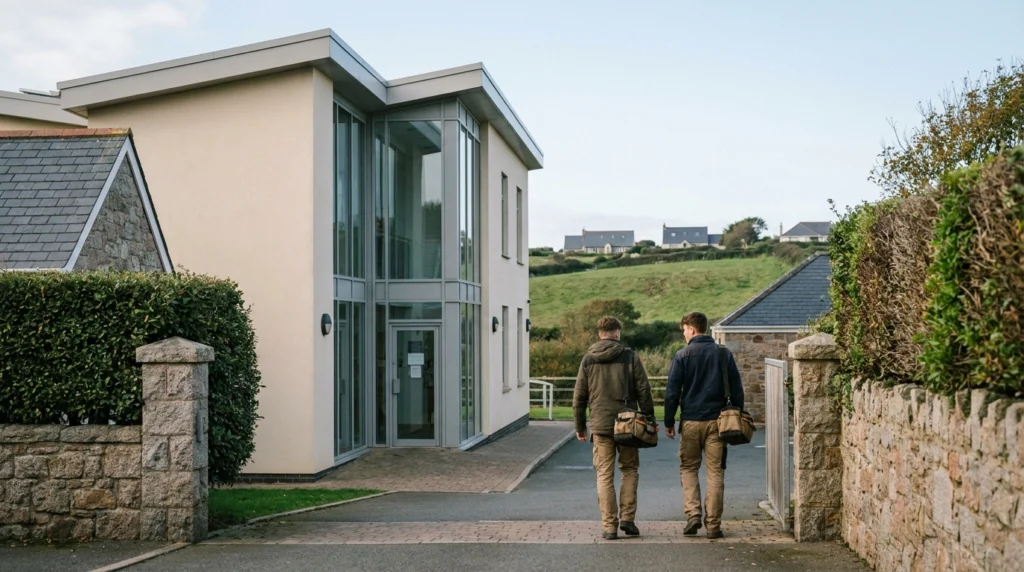
Jersey’s push towards a low-carbon future took a concrete step forward this month with the official opening of the Green Skills Academy at Highlands College. The Lieutenant Governor, Vice Admiral Sir Jerry Kyd KBE, formally opened the dedicated workshop at a ceremony attended by apprentices, teaching staff, government ministers and representatives from the construction and energy sectors.
The facility has been designed to train apprentices in the installation, maintenance and servicing of low-carbon heating technologies, with what Bailiwick Express describes as industry-leading equipment and realistic training environments providing hands-on experience. Jersey Electricity’s chief executive, Chris Ambler, was characteristically bullish about what has been built: “This workshop is a state-of-the-art facility that stands comparison with the very best training centres in Europe and gives Jersey a learning environment that will benefit generations of apprentices to come.”
Bold words, but the investment behind them is real enough. The academy forms part of a £3 million commitment by Jersey Electricity over five years, which will support the training of 36 apprentices and establish what the company calls a long-term skills pipeline for the Island.
Who It Is For and How It Works
The academy is not solely aimed at school leavers looking for their first career break. Lance Chatfield, principal of Highlands College, was keen to stress its broader reach: “The academy is not solely for those beginning their careers, it will support people of all ages and stages of life, whether they are apprentices entering the profession, existing professionals looking to upskill or adults seeking to retrain and pursue new career opportunities.”
That is a sensible approach. Jersey’s construction and energy sectors have long faced skills shortages, and retraining existing workers is often a faster route to plugging gaps than building an entirely new workforce from scratch. The academy brings together education, industry and government, combining classroom-based learning with practical experience alongside local trade partners.
The inaugural cohort includes Corie Smith, Diogo Couto Dos Santos, James Diggle, Lewis Wharton-Edwards, Oscar Thompson, Roman Collins, Rowan Whitford and Tiago Emanuel Faria Camacho, who began training this month. Mr Smith said he was “really proud to be part of a group of amazing young adults who have been given a great opportunity to drive a greener future for Jersey.”
Why This Matters for Jersey
The practical case for this kind of investment is straightforward. As Jersey moves away from fossil-fuel heating, someone has to install, maintain and service the replacement systems. If those skills are not available locally, islanders will either pay a premium for imported labour or simply find they cannot get the work done at all. Neither outcome is attractive.
Chris Ambler put it plainly: “The transition to low carbon heating depends on having the right skills available locally. By investing in people, training and partnerships, we are ensuring Jersey has the capability to meet that challenge.” The academy’s aim of creating new routes into skilled employment is also worth noting for a community that sometimes struggles to offer young people compelling career paths without leaving the Island.
More information about the Green Skills Academy, including how to apply for future years, is available on its website.
Source: Bailiwick Express