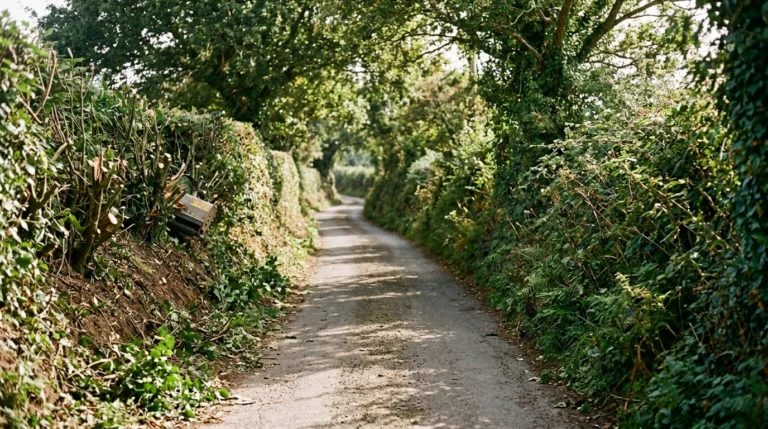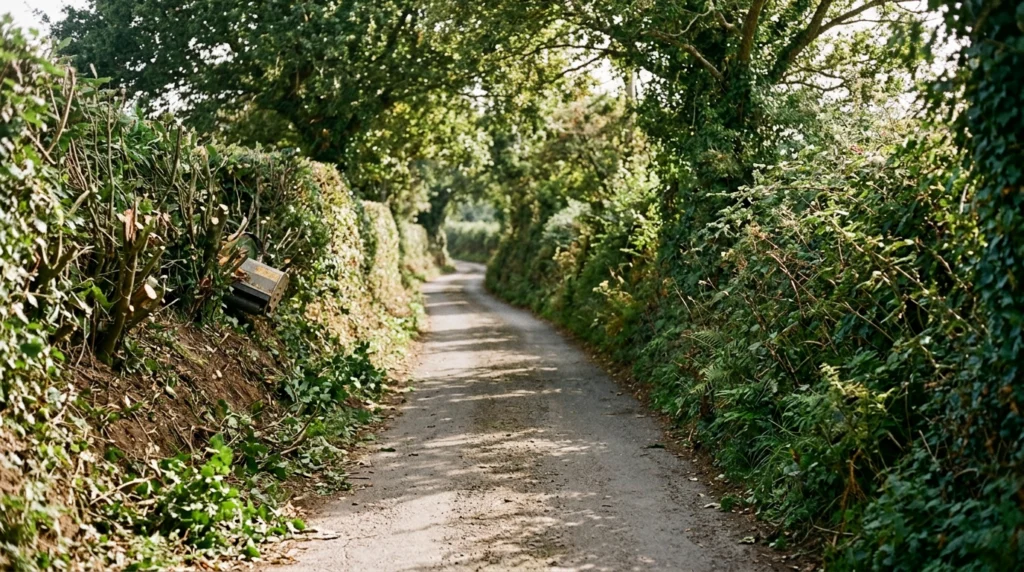
In brief: Jersey’s branchage law, in place since 1914, is under review, with fines potentially being introduced for landowners or contractors who cut hedges excessively or cause lasting damage. The Constables’ Committee says it will consult environmental groups as part of the review, and has confirmed that wildlife and bird-nesting seasons are already taken into account during inspections.
A 111-Year-Old Law Gets a Trim
Jersey’s branchage tradition — the twice-yearly obligation on landowners to cut back vegetation encroaching on public roads — has been keeping the island’s lanes passable since 1914. The rules require a 12ft (3.6m) clearance over main roads and by-roads, and an 8ft (2.4m) clearance over footpaths, with inspections taking place in the three weeks following 24 June and 1 September each year. It is, by any measure, one of the more charmingly old-fashioned corners of Jersey law. But, as the BBC reports, it may be about to get a modern makeover.
In response to a written question from Deputy Hilary Jeune, Constable Andy Jehan — chair of the Constables’ Committee — confirmed that the review of the branchage law would consider introducing fines for landowners or contractors who cut hedgerows or banks “excessively” or cause “lasting damage.” At present, the law only penalises those who fail to cut — not those who go at their hedges with what one might charitably describe as excessive enthusiasm.
Deputy Jeune had specifically criticised this gap in the legislation, pointing out the somewhat paradoxical situation in which a landowner can hack a hedgerow to within an inch of its life without any legal consequence, while their neighbour faces sanction simply for letting things grow a little wild.
Ecology, Drought and the Bird-Nesting Question
The review comes against a backdrop of genuine environmental concern. Last month, an organic farmer raised the alarm that enforced cutting dates were causing unnecessary damage to trees following what was described as a “brutal summer” of drought in 2026 — a season in which, as Constable Jehan noted, “vegetation growth was minimal and any cut backs completed were within the branchage requirements.”
Jehan also clarified that individual constables have flexibility in setting the precise day of inspections within the three-week windows, and that dates could be “changed if required” — a degree of local discretion that may go some way to addressing concerns about rigid scheduling in unusual weather conditions.
Deputy Jeune pressed further, asking whether the committee had engaged with environmental groups or the Jersey Biodiversity Centre on building “greater ecological flexibility” into the law. Jehan confirmed that the committee “welcomes the engagement of all environmental groups during law amendment consultations” and that members of the Environment Department had already been invited to attend the next committee meeting.
On the question of wildlife protections, Jehan confirmed that constables and roads inspectors already take wildlife and bird-nesting seasons into consideration when conducting branchage. He also pointed out that the Wildlife (Jersey) Law 2021 — which identifies March to July as “high risk” for disturbances to nesting birds — “itself contains sanctions for breaches,” suggesting there is already a legal backstop for the most egregious cases.
What Changes Could Look Like
The direction of travel seems clear: a law that has for over a century concerned itself purely with whether vegetation was cut is now being asked to consider how it is cut. Fines for excessive or damaging work would represent a meaningful shift in the legal philosophy underpinning branchage — from a blunt instrument ensuring road safety to a more nuanced framework balancing access, ecology and responsible land management.
No timeline for the law amendment has been announced, and the review is still at the consultation stage.
Source: BBC News