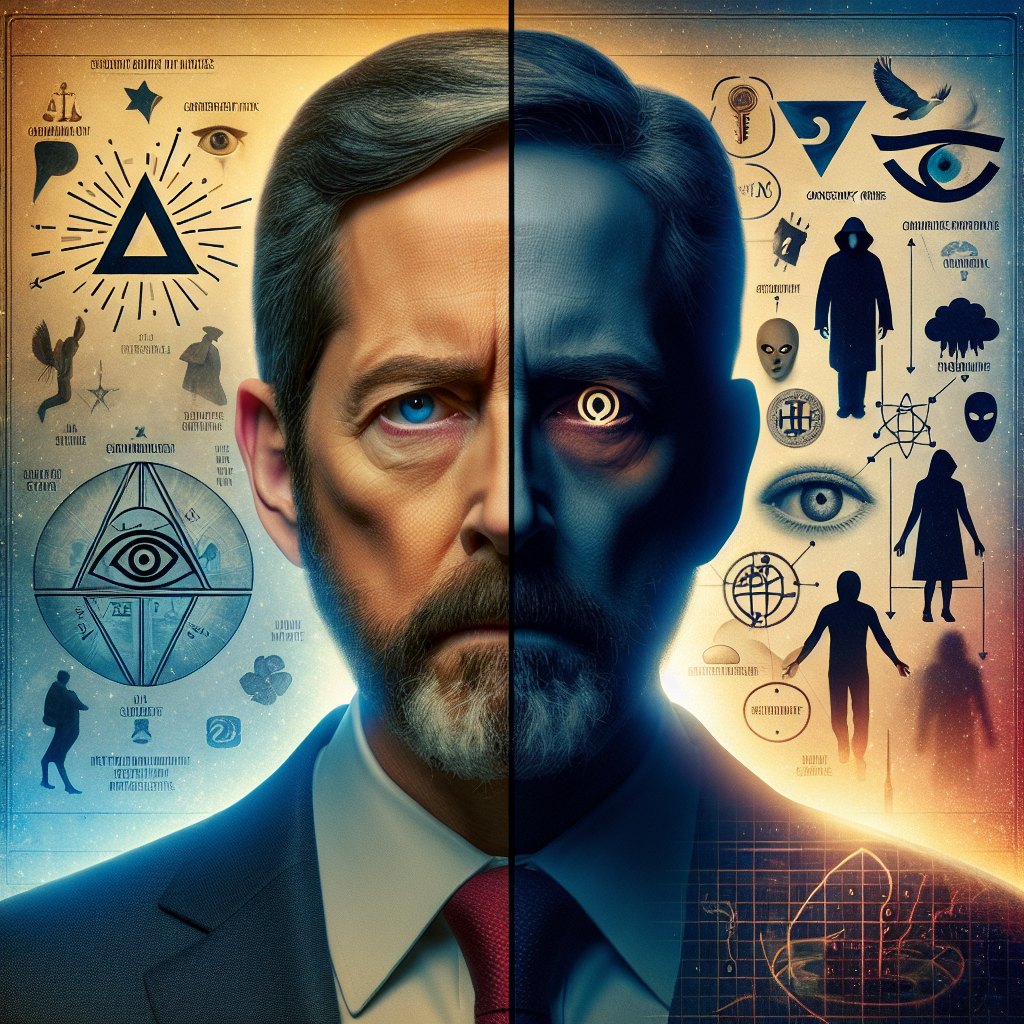
Unravelling the QAnon Quagmire: A Look at the Persistent Conspiracy Theorist Group
Summary: QAnon, a conspiracy theory group that gained traction during the presidency of Donald Trump, continues to churn out far-fetched narratives about the former president’s adversaries. Despite numerous debunkings, the group’s influence persists, raising questions about the impact of such theories on public discourse and the political landscape.
The Rise and Resilience of QAnon
Like a modern-day Hydra, the QAnon conspiracy group has proven that cutting off one head only seems to sprout another two in its place. Born in the digital underbelly of the internet, QAnon first emerged as a fringe movement during Donald Trump’s tenure in the White House. Its followers believe in a world where Trump is waging a secret war against a global cabal of Satan-worshipping paedophiles—a narrative as outlandish as a plot from a B-movie, yet alarmingly sticky among its adherents.
The group’s resilience is a testament to the power of the internet in sustaining and spreading unorthodox beliefs. Despite efforts by social media platforms to clamp down on QAnon content, the group’s rumours and ideologies continue to find a home online, often rebranded or repackaged to evade detection.
QAnon’s Impact on Public Discourse
The persistence of QAnon raises significant concerns about the influence of conspiracy theories on public discourse. The group’s ability to generate and disseminate false narratives has not only sown division but also, in some instances, incited real-world violence. The storming of the Capitol on January 6th, 2021, underscored the potential for such beliefs to translate into action, with QAnon flags and slogans prominently displayed during the riot.
For Jersey, the Channel Islands, and indeed any community valuing the sanctity of truth and the rule of law, the QAnon phenomenon serves as a cautionary tale. It highlights the need for vigilance against the spread of misinformation and the importance of fostering a well-informed electorate.
Jersey’s Stake in the Global Misinformation Battle
While QAnon may seem like a distant problem, the tentacles of misinformation have a way of reaching across the pond. Jersey, with its reputation for financial stability and governance, must remain alert to the dangers posed by such conspiracy groups. The spread of baseless rumours can undermine trust in institutions and destabilise the social fabric that is essential for the island’s prosperity.
Moreover, the international finance sector, a cornerstone of Jersey’s economy, relies on factual accuracy and rational decision-making. The kind of irrationality peddled by QAnon could, if left unchecked, have ripple effects that impact financial markets and regulatory environments far beyond American shores.
Combatting Conspiracy with Critical Thinking
Combatting the spread of conspiracy theories like QAnon requires a commitment to critical thinking and media literacy. Educational initiatives that teach individuals to question sources, seek evidence, and differentiate between credible news and sensationalist content are vital. For a conservative readership that values tradition and stability, such skills are not just academic—they are a bulwark against the chaos that unfounded rumours can unleash.
It is also incumbent upon responsible media outlets and individuals to challenge and correct misinformation. In Jersey, this means fostering a culture of open dialogue and debate, where ideas are scrutinised, and facts are held in high esteem.
The NSFW Perspective
In conclusion, while QAnon may be an American export, its implications are international. The group’s dogged spread of baseless claims serves as a reminder of the ongoing battle against misinformation—a battle that Jersey, too, must fight. As a publication, NSFW remains committed to upholding the values of truth and reason, providing our readers with analysis that cuts through the noise with the precision of a surgeon’s scalpel (albeit with a touch more humour).
Let us not forget that in the age of information, our greatest weapon is our discernment. So, as we navigate the murky waters of conspiracy theories, let’s do so with a healthy dose of scepticism and a commitment to the facts. After all, in a world where fiction often seems stranger than truth, it’s our shared reality that must ultimately prevail.
And remember, dear readers, while it’s always prudent to question the narratives presented to us, let’s ensure we’re not replacing them with tales more suited to the Loch Ness Monster than to legitimate political discourse. In the end, it’s not just about being conservative or liberal; it’s about being sensible, something that never goes out of style.