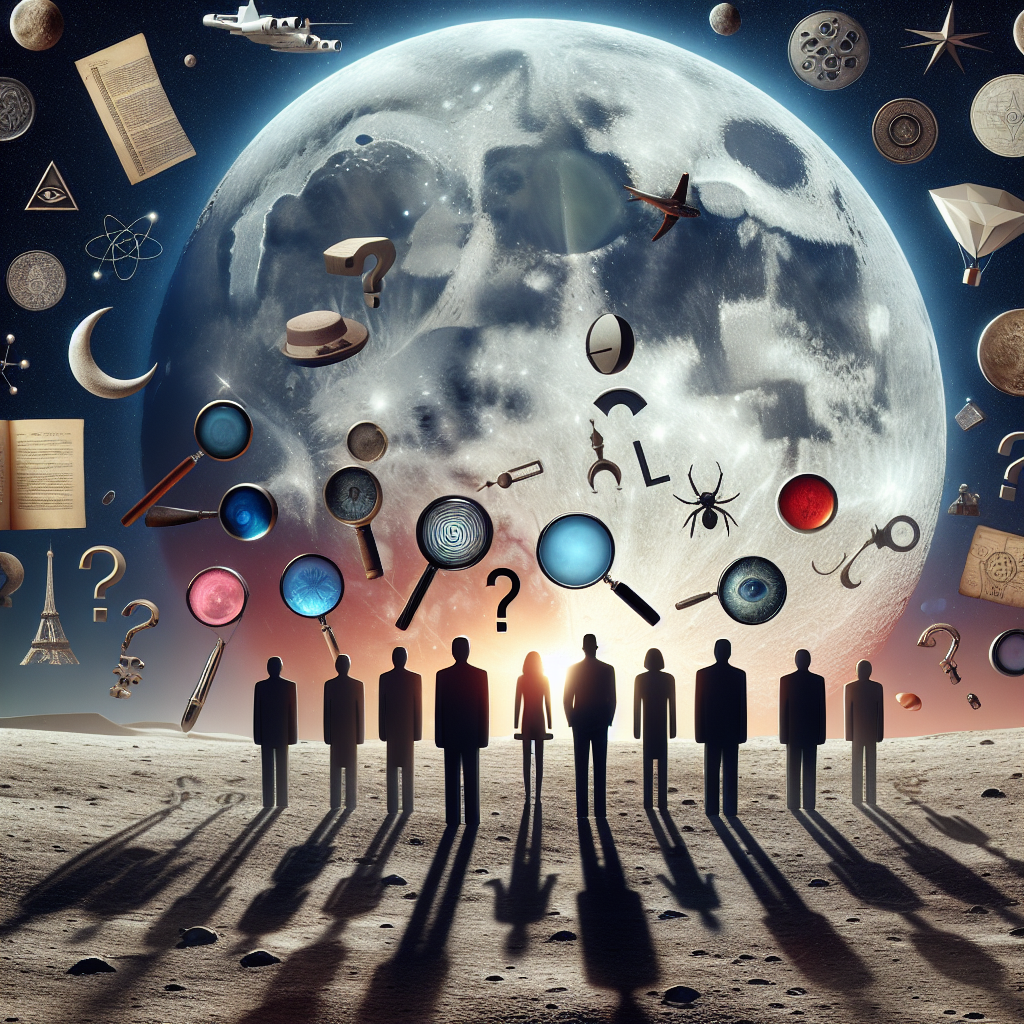
Lunar Landing Skepticism: Why Some Americans Deny the Moonwalk
In an era where conspiracy theories can spread faster than a wildfire in the Californian summer, it’s perhaps not entirely surprising that a significant number of Americans remain unconvinced about mankind’s giant leap on the lunar surface. A recent survey has revealed that one in eight Americans believe that the Apollo moon landings were a Hollywood-style fabrication, a myth perpetuated by the government for reasons that vary from the plausible to the downright outlandish.
The Roots of Lunar Doubt
The seeds of this skepticism were sown almost as soon as Neil Armstrong’s boots crunched into the moon dust. Questions arose: Why does the flag ripple when there’s no wind on the moon? Where are the stars in the photos? Why haven’t we been back recently? These queries have been addressed by scientists and experts time and again, but for some, the answers remain as unsatisfactory as a decaffeinated brew.
Technological Triumph or Elaborate Hoax?
The moon landing, a technological marvel of its time, was a Cold War victory, a symbol of American ingenuity and determination. Yet, the deniers argue that it was all too convenient, a distraction from domestic turmoil and a bankrupting arms race. They suggest that the U.S. government, in cahoots with Hollywood, orchestrated an elaborate ruse to claim victory in the space race against the Soviet Union.
Why the Moon Hoax Theory Persists
The persistence of the moon hoax theory can be attributed to a cocktail of distrust in government, a misunderstanding of physics, and the seductive allure of a good conspiracy. It’s human nature to question, to poke at widely accepted truths, especially in a time when misinformation can be more viral than the truth.
The Power of Misinformation
In the digital age, misinformation has found fertile ground in the echo chambers of social media, where algorithms feed users a steady diet of content that reinforces their existing beliefs. The moon landing deniers have communities where they can share “evidence” and support each other’s skepticism, insulated from opposing views.
Impact on Jersey and Beyond
While the moon landing debate might seem a distant concern for the residents of Jersey, Channel Islands, it’s a poignant reminder of the broader challenges we face in the information era. In a small community, the spread of misinformation can have amplified effects, influencing public opinion and potentially swaying decisions on local governance and policy.
Lessons for Jersey
Jersey, with its tight-knit society, must remain vigilant against the tides of misinformation that could undermine trust in local institutions and governance. It’s a cautionary tale that even the most outlandish beliefs can take root if left unchallenged by facts and reason.
NSFW Perspective: A Step on the Moon or a Leap of Faith?
From the NSFW vantage point, the moon landing skepticism is a fascinating study in human psychology and the power of narrative over evidence. It’s tempting to chuckle at the notion that the moonwalk was directed by Stanley Kubrick, but it’s also a sobering reflection of the trust deficit that plagues our institutions.
In Jersey, we pride ourselves on our common sense and community spirit. We may not have rockets launching from St. Helier, but we do have a responsibility to promote critical thinking and media literacy. By fostering an environment where facts are valued over fiction, we can ensure that our island doesn’t become a breeding ground for the next generation of moon landing deniers.
In conclusion, while it’s easy to dismiss moon landing skeptics as fringe thinkers, their existence serves as a reminder of the ongoing battle for truth in the age of misinformation. For Jersey, it’s a call to bolster our defenses against the viral spread of unfounded theories, ensuring that our decisions are grounded in reality, not in the weightless realm of space-age skepticism.



