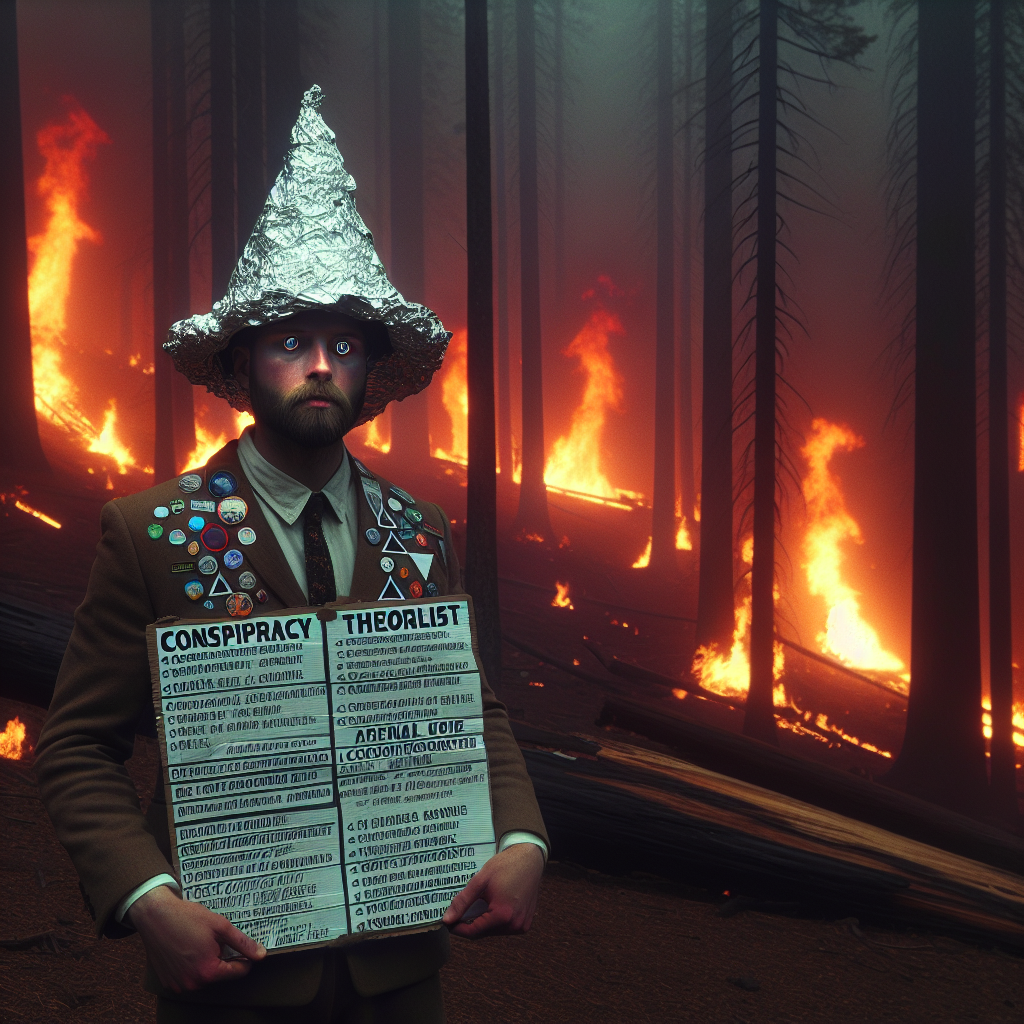
Wildfire Conspiracies: A Hot Topic in Jersey and Beyond
Summary: In a recent social media flare-up, Brian Paré ignited controversy by claiming that wildfires are a government conspiracy. This statement has sparked a blaze of reactions both locally in Jersey and internationally, raising questions about the credibility of such claims and their potential impact on public perception of environmental crises.
The Spark That Lit the Fire
Brian Paré, a name that may not ring a bell for many in Jersey, has fanned the flames of conspiracy theories with a single social media post. His claim that wildfires are not natural disasters but rather a government plot has set the internet ablaze. While Paré’s influence may not extend to our shores, the ideology behind such statements has a way of spreading like, well, wildfire.
Assessing the Smoke
Conspiracy theories are not a new phenomenon, and they often take root in times of uncertainty and fear. The suggestion that wildfires, which have caused devastation and loss on a massive scale, are orchestrated by shadowy government figures is not only sensational but also deeply concerning. It undermines the serious environmental and climate issues facing our planet.
Jersey’s Perspective on Environmental Crises
While Jersey is not prone to wildfires, the island is not immune to environmental challenges. Rising sea levels and coastal erosion are tangible threats that could reshape our landscape. The spread of misinformation, such as the wildfire conspiracy, can distract from the real issues at hand and hinder constructive dialogue and action.
Combating Misinformation
It’s crucial for communities, including ours in Jersey, to remain vigilant against the spread of misinformation. Educating the public about the science behind environmental disasters and promoting critical thinking are key steps in this ongoing battle.
The NSFW Perspective
At NSFW, we understand the allure of a good conspiracy theory – it’s the narrative equivalent of a spicy curry on a Friday night. However, we also recognize the importance of separating fact from fiction, especially when it comes to matters that affect our environment and safety. Brian Paré’s claims are a reminder that we must always approach such statements with a healthy dose of skepticism and a commitment to the truth.
For our readers in Jersey, rest assured that while wildfires may not be part of our immediate concerns, the underlying issue of misinformation is a global blaze that requires our attention. Let’s continue to foster a community that values evidence over speculation and action over idle gossip.
In conclusion, while Brian Paré’s wildfire conspiracy theory may not hold water, the conversation it ignites about the spread of misinformation is one that Jersey should pay attention to. After all, only when we clear the smoke of false narratives can we truly see the path to a more informed and proactive society.



