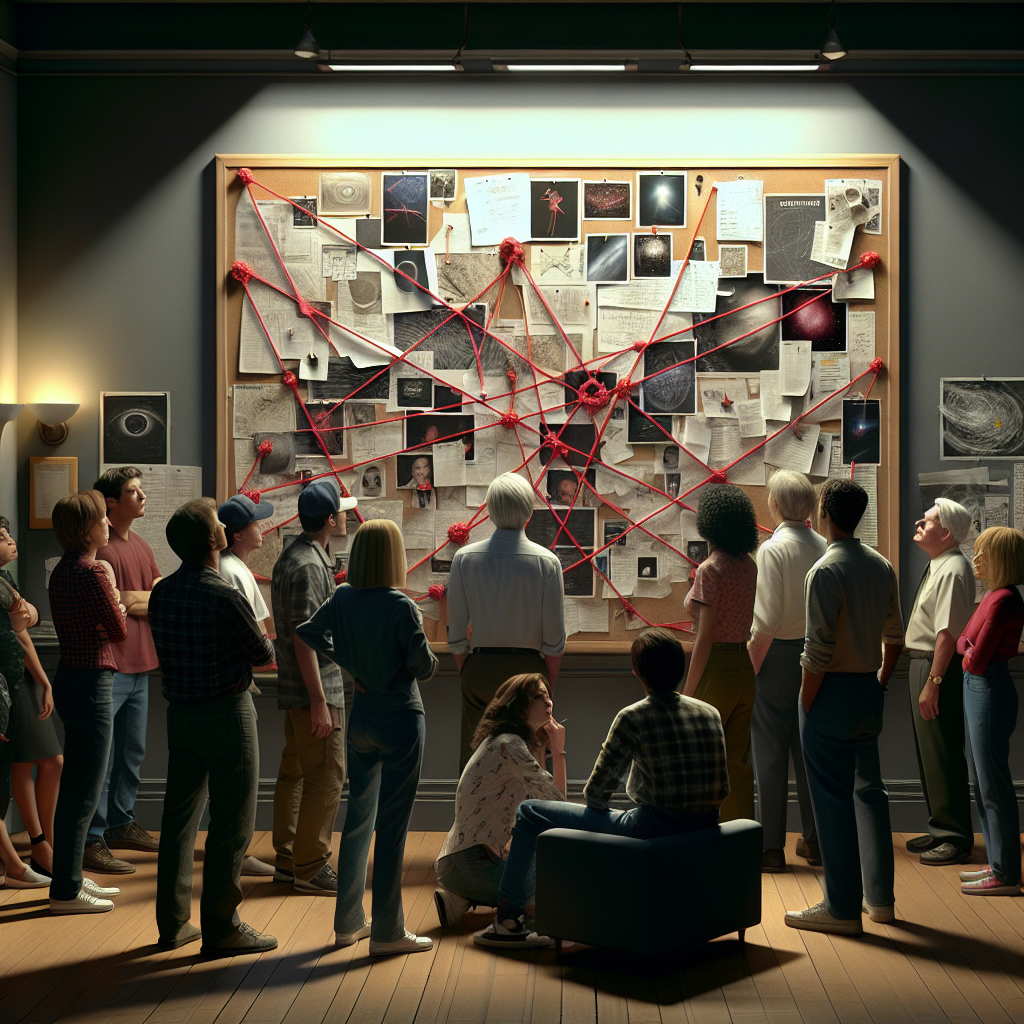
Stranger Than Fiction: The Montauk Project’s Influence on Pop Culture Phenomenon
Summary: The Duffer Brothers’ hit series, inspired by the shadowy Montauk Project conspiracy, has become a cultural touchstone. This article explores the origins of the conspiracy theory and its impact on the show, while considering the broader implications of such narratives on public perception and pop culture.
The Origins of the Montauk Conspiracy
It’s no secret that the world of entertainment often draws inspiration from the deep well of conspiracy theories. One such theory, the Montauk Project, has captured the imaginations of the Duffer Brothers, leading to the creation of a show that has enthralled audiences worldwide. The Montauk Project, a supposed series of secret United States government projects conducted at Camp Hero or Montauk Air Force Station on Long Island, purports to delve into psychological warfare techniques and exotic research including time travel.
The theory, which emerged in the 1980s, has been the subject of books, documentaries, and now, thanks to the Duffer Brothers, a fictional world that has captivated millions. The narrative claims that kidnapped youths were subjected to a range of experiments, from mind control to cross-dimensional travel – themes that resonate strongly in the series.
From Conspiracy to Screen
The transition from conspiracy theory to the screen is a fascinating journey. The Duffer Brothers have taken the core elements of the Montauk Project and woven them into a narrative that, while fantastical, feels eerily plausible to a willing suspension of disbelief. The series’ setting, originally intended to be Montauk, was shifted to the fictional town of Hawkins, Indiana, but the essence of the conspiracy remains intact.
Characters in the show deal with government cover-ups, supernatural events, and the emotional turmoil of lost and manipulated children, echoing the dark themes of the Montauk narrative. The show’s success lies in its ability to blend these elements with relatable characters and a nostalgic nod to 1980s culture.
Impact on Public Perception and Pop Culture
The influence of the Montauk Project on the series has done more than just provide a backdrop for storytelling; it has brought the conspiracy theory into the mainstream. This has a dual effect: while it entertains, it also introduces a new generation to the concept of questioning official narratives and the potential for hidden truths behind government actions.
However, the blending of fact and fiction can sometimes blur the lines for the audience, leading to a proliferation of conspiracy theories in real life. The show’s popularity demonstrates the public’s appetite for such stories, but it also raises questions about the responsibility of creators in how they present and interpret conspiracy theories.
The NSFW Perspective
While Jersey may be miles away from Montauk or the fictional Hawkins, the fascination with the Montauk Project and its influence on popular culture is a testament to the universal appeal of a good mystery. The Duffer Brothers have tapped into a vein of storytelling that resonates with our innate curiosity and skepticism of authority.
For our conservative readership in Jersey, the series’ exploration of government overreach and the abuse of power may strike a particular chord. It serves as a reminder of the importance of transparency and accountability in governance – a topic that hits close to home, considering the ongoing scrutiny of our own government’s efficiency and use of public funds.
In conclusion, while the Montauk Project remains a conspiracy theory, its impact on pop culture is undeniable. The Duffer Brothers have created a world that not only entertains but also encourages viewers to think critically about the world around them. And in today’s climate, where the line between truth and fiction is increasingly blurred, that’s a power that should be both celebrated and handled with care.
As we enjoy the thrills and chills of the series, let’s also remember to keep one foot firmly planted in reality, and our eyes open to the very real issues of governance and authority that continue to challenge us, in Jersey and beyond.



