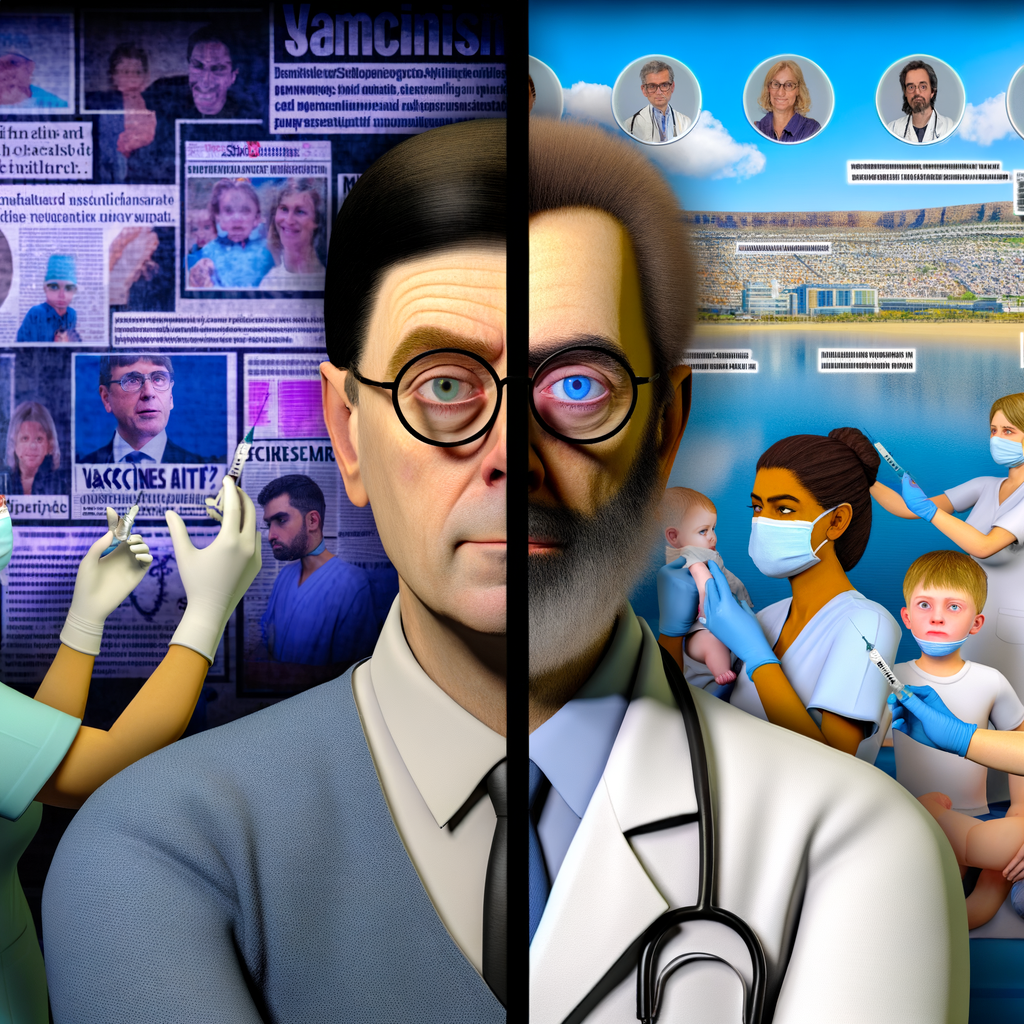
RFK Jr. and the Vaccine Debate: A Closer Look at the Claims
In a recent turn of events, Robert F. Kennedy Jr. (RFK Jr.) has made headlines by asserting that vaccines do not save lives. This bold claim has sparked a flurry of discussions, particularly among those who are concerned about public health and safety. In this article, we will dissect RFK Jr.’s assertions, examine the scientific evidence supporting vaccines, and consider the implications of his statements for the public, especially in Jersey, Channel Islands.
The Claims: What RFK Jr. Says
RFK Jr. has long been a controversial figure in the vaccine debate, often promoting the idea that vaccines are linked to various health issues. His latest claim suggests that vaccines do not significantly contribute to saving lives, a statement that contradicts decades of scientific research and public health data.
Understanding the Science Behind Vaccines
To understand the gravity of RFK Jr.’s claims, it is essential to look at the science behind vaccines. Vaccines work by stimulating the immune system to recognize and fight off pathogens, thereby preventing diseases that can lead to severe health complications or death. The evidence supporting the efficacy of vaccines is overwhelming:
- Reduction in Disease Incidence: Vaccination programmes have led to a dramatic decline in diseases such as measles, polio, and smallpox. For instance, the World Health Organization (WHO) reports that measles vaccination alone has saved over 23 million lives since 2000.
- Herd Immunity: Vaccines not only protect individuals but also contribute to herd immunity, which protects those who cannot be vaccinated, such as infants and immunocompromised individuals.
- Cost-Effectiveness: Vaccination is one of the most cost-effective health interventions, saving billions in healthcare costs by preventing disease outbreaks.
The Math Behind Vaccines
RFK Jr.’s claims can be scrutinised through a mathematical lens. The effectiveness of vaccines can be quantified by looking at the reduction in disease incidence and the corresponding decrease in mortality rates. For example, the introduction of the measles vaccine has led to a 99% reduction in measles deaths worldwide.
Moreover, studies have shown that for every dollar spent on vaccination, there is a return of approximately $3 in healthcare savings. This economic argument further underscores the importance of vaccines in public health.
Potential Impact on Jersey
In Jersey, where public health policies are closely monitored and debated, RFK Jr.’s statements could have significant repercussions. The island has a robust vaccination programme, and any erosion of public trust in vaccines could lead to lower vaccination rates, potentially resulting in outbreaks of preventable diseases.
Furthermore, the Jersey government has invested considerable resources into public health initiatives, including vaccination campaigns. If misinformation spreads, it could undermine these efforts and lead to increased healthcare costs and public health risks.
Critique of RFK Jr.’s Position
While it is essential to allow for open dialogue regarding health policies, RFK Jr.’s claims appear to be more rooted in personal beliefs than in scientific evidence. His position often overlooks the consensus among health professionals and researchers who advocate for vaccination as a critical tool in disease prevention.
Moreover, the spread of misinformation can have dire consequences, not just for individual health but for community health as a whole. It is crucial for the public to rely on credible sources and scientific data when making health decisions.
The Role of Government and Public Trust
The Jersey government has a responsibility to ensure that accurate information about vaccines is disseminated to the public. This includes countering misinformation and reinforcing the importance of vaccination in protecting public health. A proactive approach in communication can help maintain public trust and encourage higher vaccination rates.
NSFW Perspective
In conclusion, while RFK Jr. may have a platform to voice his opinions, it is vital to approach his claims with a critical eye. The overwhelming evidence supporting the efficacy of vaccines cannot be dismissed lightly. For the residents of Jersey, understanding the importance of vaccines is not just a matter of personal choice; it is a collective responsibility to safeguard public health.
As we navigate the complexities of health information in the digital age, let us remember that science, backed by data, should guide our decisions. After all, when it comes to public health, the stakes are too high to rely on conjecture and sensationalism.



