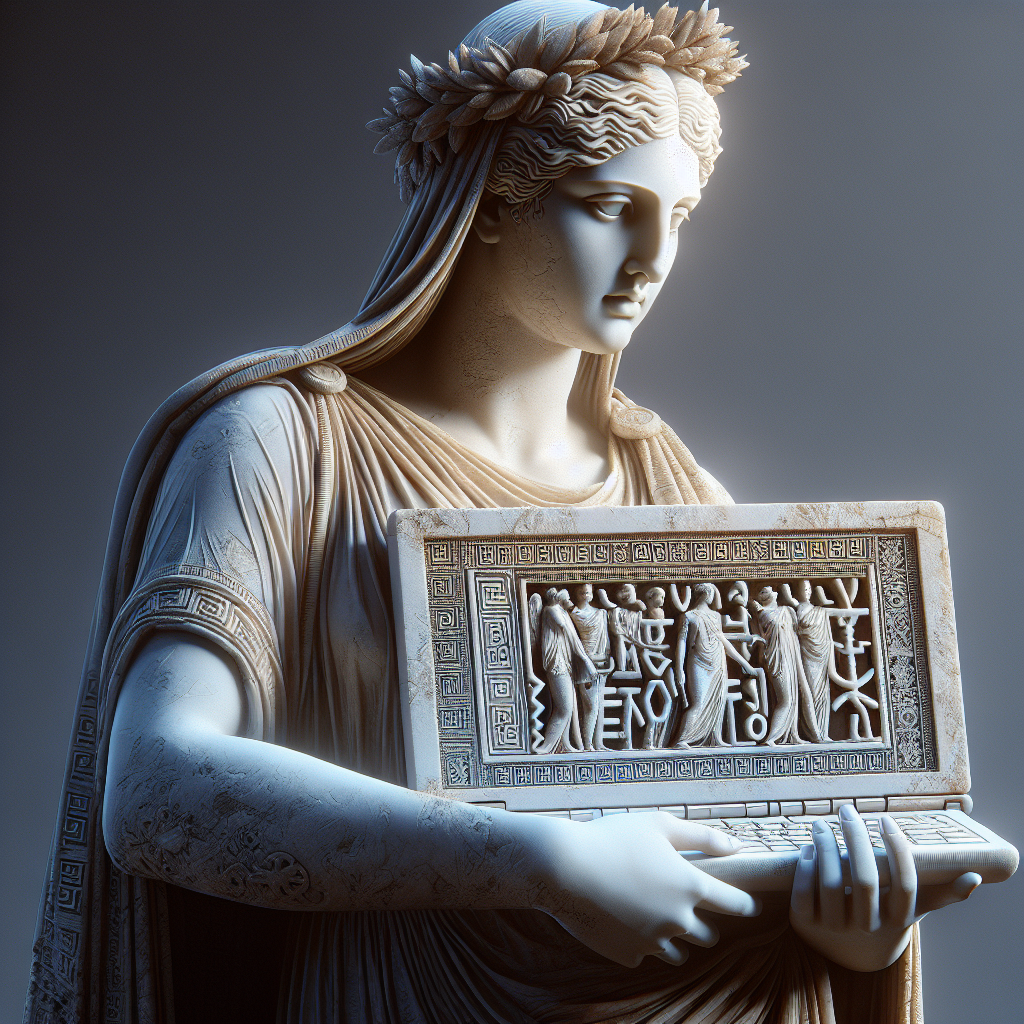
Time-Traveling Tech or Artistic Anachronism? The Greek Statue ‘Laptop’ Debate
In a world where the line between reality and science fiction blurs with every new technological advancement, a peculiar conspiracy theory has emerged from the annals of history. A viral claim suggests that an ancient Greek statue, which appears to depict a woman engrossed in what looks uncannily like a modern-day laptop, is irrefutable evidence of time travel. But is this a genuine glimpse into a chrono-crossed civilization, or just another case of the internet’s imagination running wild?
Summary of the ‘Laptop’ Statue Saga
- An ancient Greek statue has sparked online debate, with some claiming it shows evidence of time travel due to its resemblance to a modern laptop.
- Experts and skeptics alike have weighed in, offering explanations ranging from artistic representation to outright dismissal of the time travel theory.
- The statue in question is a funerary relief from around 100 BC, currently housed in the J. Paul Getty Museum in California.
Decoding the ‘Laptop’ Likeness
The statue that has set the conspiracy corners of the internet ablaze is a funerary relief dating back to around 100 BC, now residing in the J. Paul Getty Museum in California. At first glance, the figure of a servant girl seems to hold an object that bears a striking resemblance to a modern laptop, complete with what some insist are USB ports. Before we leap through the looking glass, let’s apply a dash of rational thought to this historical head-scratcher.
Art historians and those with a penchant for practicality suggest that the ‘laptop’ is more likely a shallow chest or wax tablet, common in ancient times for note-taking and record-keeping. The ‘USB ports’? Merely decorative elements or structural supports for the object in question. Yet, the theory persists, fueled by the human penchant for mystery and the seductive allure of time-travel tales.
Expert Explanations vs. Internet Intrigue
While experts have been quick to quash the time-travel theory with logical explanations, the internet has proven to be a fertile ground for such fantastical ideas to take root. It’s a testament to the creativity of netizens and a reflection of our collective fascination with the concept of time travel. However, it’s also a stark reminder of the ease with which misinformation can spread in the digital age.
It’s worth noting that the ancient Greeks were indeed ahead of their time, with inventions like the Antikythera mechanism showcasing their advanced understanding of mechanics and astronomy. But to leap from sophisticated ancient technology to time-traveling laptops is a jump too far, even for the most ardent of conspiracy theorists.
The NSFW Perspective
Here at NSFW, we appreciate a good yarn as much as the next reader, but we also value the importance of separating fact from fiction. The ‘laptop’ statue is a fascinating artifact that speaks to the artistic skill and daily life of the ancient Greeks, not a misplaced piece of future tech. It’s a reminder that sometimes, a chest is just a chest, even if it looks like it could fit the latest MacBook.
For our conservative readership in Jersey, the tale of the Greek ‘laptop’ serves as a cautionary one. It’s a reminder to question what we see online, to seek out expert opinions, and to maintain a healthy dose of skepticism. After all, in an era where the truth is often stranger than fiction, it’s our responsibility to discern one from the other.
In conclusion, while the idea of a time-traveling ancient Greek with a penchant for Apple products is amusing, it’s safe to say that this particular conspiracy theory doesn’t stand up to scrutiny. Let’s leave time travel to the realms of science fiction and focus on the real wonders of the ancient world, which are impressive enough without the need for fantastical embellishments.
And remember, dear readers, the next time you come across a historical ‘anomaly’ online, it might just be worth doing a little digging before you hit the share button. After all, the truth is out there, but it’s often buried under a pile of internet hoaxes.