Portuguese Man o’ War Invasion: A Cautionary Tale for Jersey Beachgoers
Summary: Jersey’s shores have recently become the landing site for an unwelcome visitor: the Portuguese man o’ war. Authorities are urging caution as these marine creatures, known for their painful stings, have been spotted washed up on local beaches.
Understanding the Man o’ War Threat
While the Portuguese man o’ war (Physalia physalis) may have the appearance of a wayward balloon with a taste for the dramatic, this siphonophore – not to be confused with a jellyfish, mind you – packs a venomous punch. Its long, trailing tentacles are armed with nematocysts, ready to unleash a sting that can be excruciatingly painful and, in rare cases, even life-threatening.
Jersey beachgoers are accustomed to the occasional seaweed clump or stray flip-flop, but the arrival of these floating menaces calls for a heightened sense of beach etiquette. The local authorities have been quick to spread awareness, not wanting anyone’s leisurely stroll to turn into an impromptu pain tolerance test.
Spotting and Avoiding the Menace
Spotting a Portuguese man o’ war is relatively simple: look for a colourful, balloon-like float above the water or on the sand, which may be accompanied by a ‘gift’ of up to 30 metres of venomous tentacles. However, the real trick is to avoid them without engaging in a seaside sprint. The recommended advice is to maintain a respectful distance – these creatures are best appreciated from afar, much like a piece of abstract art or your in-laws.
Response and Measures Taken
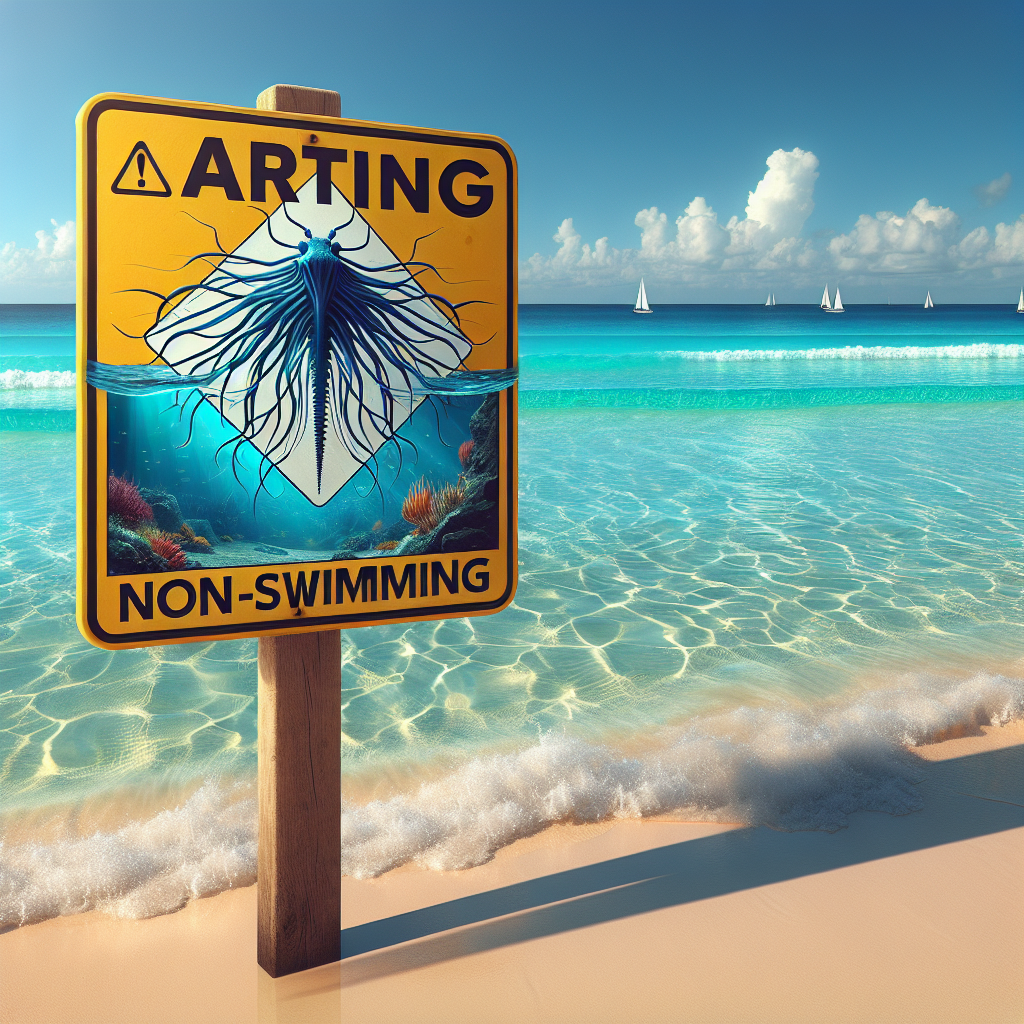
The local council, likely keen to avoid headlines featuring the words “tentacle” and “horror,” has been proactive in informing the public. Signs have been erected, and beach patrols increased, ensuring that both residents and tourists are kept in the loop about the potential hazards. While the man o’ war’s presence may be as welcome as a downpour at a barbecue, the community’s safety is the top priority.
Environmentalists and marine biologists are also taking an interest, as these occurrences can shed light on ocean currents and the health of marine ecosystems. It’s a scientific silver lining to an otherwise stinging situation.
What This Means for Jersey’s Summer Season
As Jersey gears up for the summer season, the Portuguese man o’ war’s arrival could be seen as nature’s version of a party crasher. Tourism officials might be sweating more than sunbathers at the thought of these creatures affecting beach attendance. However, with effective communication and safety measures in place, the impact on Jersey’s summer bliss should be minimal.