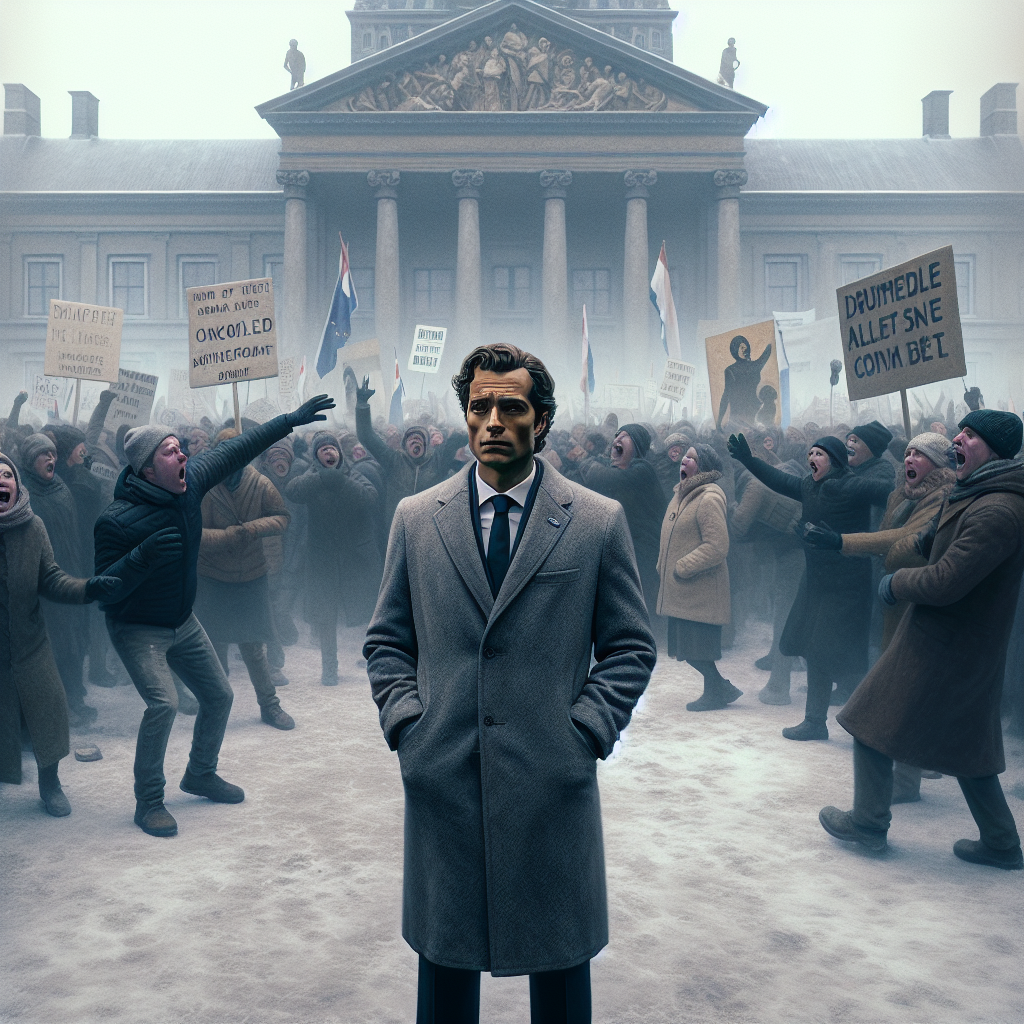
Prime Minister Dick Schoof’s Parliamentary Debut: A Rocky Start Amidst Opposition Critique
In his inaugural parliamentary debate, Prime Minister Dick Schoof of the Netherlands was met with a barrage of criticism from opposition parties. The contentious session saw parties such as GroenLinks-PvdA, D66, and DENK taking aim at what they perceived as Schoof’s tepid response to the inflammatory remarks made by members of the far-right PVV. The opposition’s dissatisfaction was prominently reported by NOS, highlighting a challenging commencement for the Prime Minister’s tenure.
Summary of Key Points
- Prime Minister Dick Schoof faced his first parliamentary debate with intense scrutiny from opposition parties.
- Opposition criticized Schoof for his “weak” responses to controversial statements by PVV Ministers.
- The debate signals a potentially tumultuous period for the new Prime Minister as he navigates the complexities of Dutch politics.
Opposition’s Discontent with Schoof’s Stance
The debate was a litmus test for Schoof, who had to defend his government’s position against a backdrop of divisive rhetoric from the PVV, known for its hardline stance on immigration and integration. The opposition’s discontent stems from what they consider a lack of firm condemnation from the Prime Minister, which they argue is necessary to uphold the Netherlands’ values of tolerance and inclusivity.
GroenLinks-PvdA, D66, and DENK, among others, have been vocal in their demands for a more robust response from the government. They contend that anything less than a strong rebuke of the PVV’s statements risks normalizing intolerance within Dutch political discourse.
Prime Minister Schoof’s Response
In the face of this criticism, Prime Minister Schoof has attempted to navigate a middle path, balancing the need to address the concerns of the opposition with the political realities of his position. His responses, which the opposition deems insufficient, reflect the delicate tightrope that leaders often walk in multi-party parliamentary systems.
Schoof’s approach may be seen as an attempt to maintain governmental stability while avoiding alienation of any potential allies in the Dutch House of Representatives. However, this strategy has evidently not resonated with the opposition, who seek a more assertive stance against the PVV’s controversial rhetoric.
Implications for Jersey and International Perspective
While the political skirmishes of the Dutch parliament may seem a world away from Jersey, the Channel Islands are no strangers to the ripple effects of European politics. The rise of far-right sentiments and the handling of such ideologies by political leaders can have far-reaching implications, including shifts in regional stability and potential impacts on international relations.
For Jersey, a jurisdiction that prides itself on its international financial services and its status as a crown dependency, the political climate in neighbouring countries is of particular interest. The handling of extremist views within governments can influence investor confidence and the broader socio-political environment that Jersey operates within.
NSFW Perspective
Prime Minister Dick Schoof’s parliamentary debut may not have been the triumph he hoped for, but it certainly provided a spectacle for political aficionados. The opposition’s critique, as sharp as a Dutch cheese slicer, slices through the veneer of political niceties, exposing the raw tensions beneath.
From an NSFW perspective, the situation serves as a reminder that leadership, especially in the face of extremism, is not for the faint-hearted. It’s a political high-wire act, where one must balance the winds of public opinion with the gravity of principle. Schoof’s balancing act, while not entirely graceful, is a dance that many a politician must learn.
For our conservative readership in Jersey, the takeaway is clear: the handling of extremist views within government is not just a Dutch issue, but a global concern that requires steadfast leadership and unambiguous condemnation. As we watch the Netherlands grapple with these challenges, we are reminded of the importance of maintaining a firm stance on our own values of tolerance and unity.
In conclusion, Prime Minister Schoof’s rocky start is a testament to the complexities of modern governance. It’s a juggling act of political, social, and ethical considerations, where dropping the ball can have international consequences. Jersey, while nestled in its own unique niche, must remain vigilant and informed, as the waves of international politics lap at our shores.



