“Fly Me to the Moon” Screenwriters Aim for Historical Accuracy Amidst Misuse Concerns
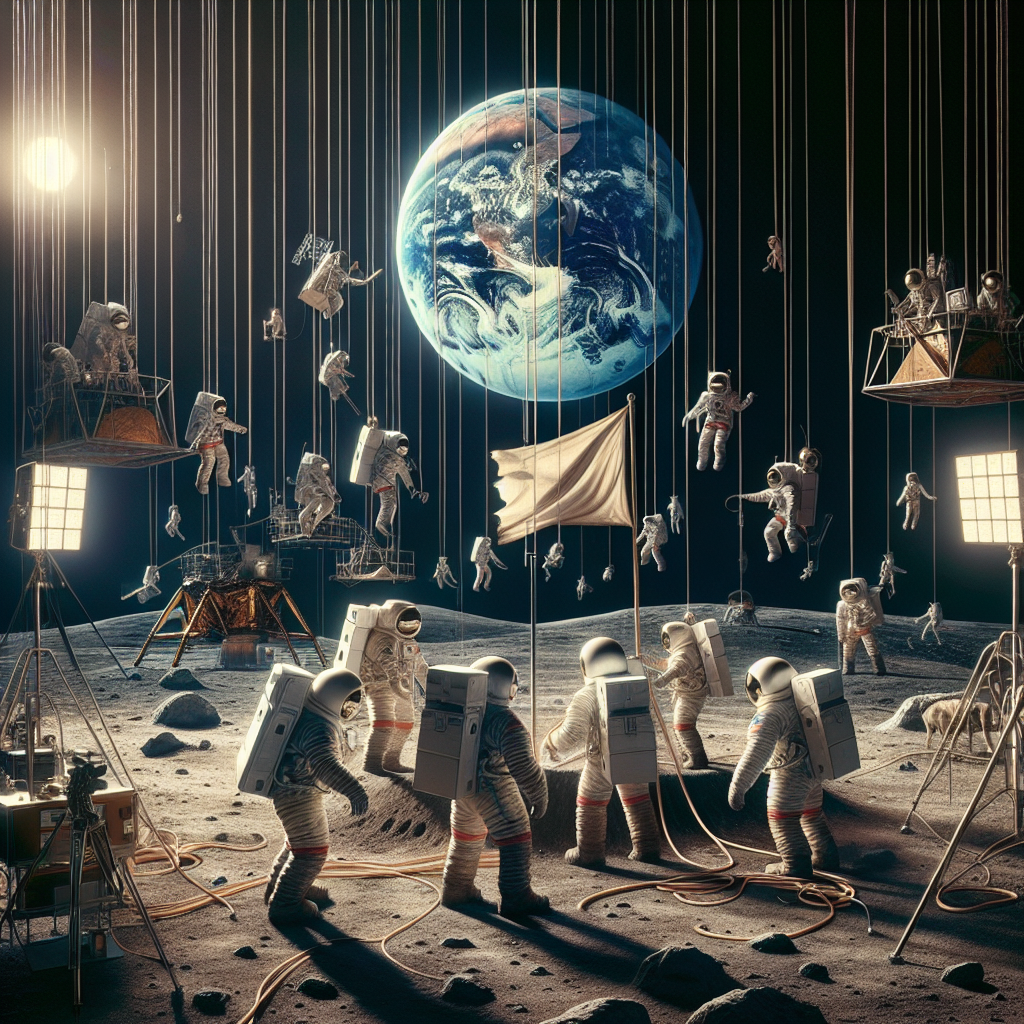
In the latest cinematic tribute to the Apollo 11 moon landing, the screenwriters of “Fly Me to the Moon” have taken a staunch stance on sticking to the facts. However, experts express concerns that out-of-context clips could distort the historical event’s portrayal.
Sticking to the Script of History
The Apollo 11 moon landing, a monumental moment in human history, has once again captured the public’s imagination through the lens of the silver screen. The creators behind “Fly Me to the Moon” have painstakingly endeavored to present an accurate depiction of this epic event. Their commitment to historical precision is commendable, especially in an era where creative liberties often eclipse factual storytelling.
Yet, the film’s noble pursuit of truth is not without its challenges. Historians and space experts are voicing concerns that, despite the screenwriters’ meticulous efforts, the film’s sequences could be misappropriated. In the age of social media, clips taken out of context have the potential to mislead audiences or fuel conspiracy theories that have long shadowed the Apollo missions.
The Double-Edged Sword of Cinematic Influence
Cinema has the power to educate and inspire, but it also bears the responsibility of shaping public perception. The creators of “Fly Me to the Moon” are acutely aware of this influence. They have navigated the delicate balance between dramatic storytelling and the duty to historical authenticity. However, the risk remains that snippets of the film could be used to propagate falsehoods, an issue that extends beyond the control of the filmmakers.
This concern is not unfounded. Previous films have faced similar issues, where their content, once fragmented, became fodder for misrepresentation. The potential for misuse is a testament to the pervasive impact of cinema and its role in either fortifying or fracturing our collective understanding of history.
Implications for Jersey Viewers
While “Fly Me to the Moon” may seem a world away from the shores of Jersey, the implications of its reception are closer to home than one might think. The Channel Islands have a rich history of celebrating scientific achievements and fostering educational initiatives. The accurate portrayal of such a significant event resonates with the values of Jersey’s community, which prizes historical integrity and intellectual curiosity.
Moreover, the conversation around the film’s potential misuse underscores a broader concern for Jersey residents: the critical evaluation of information. In an era where misinformation can travel as fast as a rocket launch, the ability to discern fact from fiction is more crucial than ever. The film serves as a reminder to viewers in Jersey and beyond to approach media with a healthy dose of skepticism and a commitment to seeking the truth.
The NSFW Perspective
At NSFW, we appreciate the gravity of “Fly Me to the Moon” and its attempt to faithfully recreate a pivotal moment in history. We also recognize the potential pitfalls that come with the territory of influential storytelling. As the film makes its rounds, we encourage our readers to watch with a discerning eye and to engage in discussions about the importance of context in understanding history.
For Jersey, a place where the community values are steeped in tradition and respect for the past, the film’s arrival could spark renewed interest in space exploration and historical research. It’s an opportunity to educate, to inspire, and to remind ourselves of the remarkable capabilities of humankind when united by a common goal.
In conclusion, while “Fly Me to the Moon” aims to cement the facts of the Apollo 11 landing in cinematic history, we must remain vigilant against the misuse of its content. Let’s embrace the film as a tool for education and reflection, not as a weapon for misinformation. After all, in Jersey and across the globe, the truth is our most valuable asset in the quest for knowledge and progress.