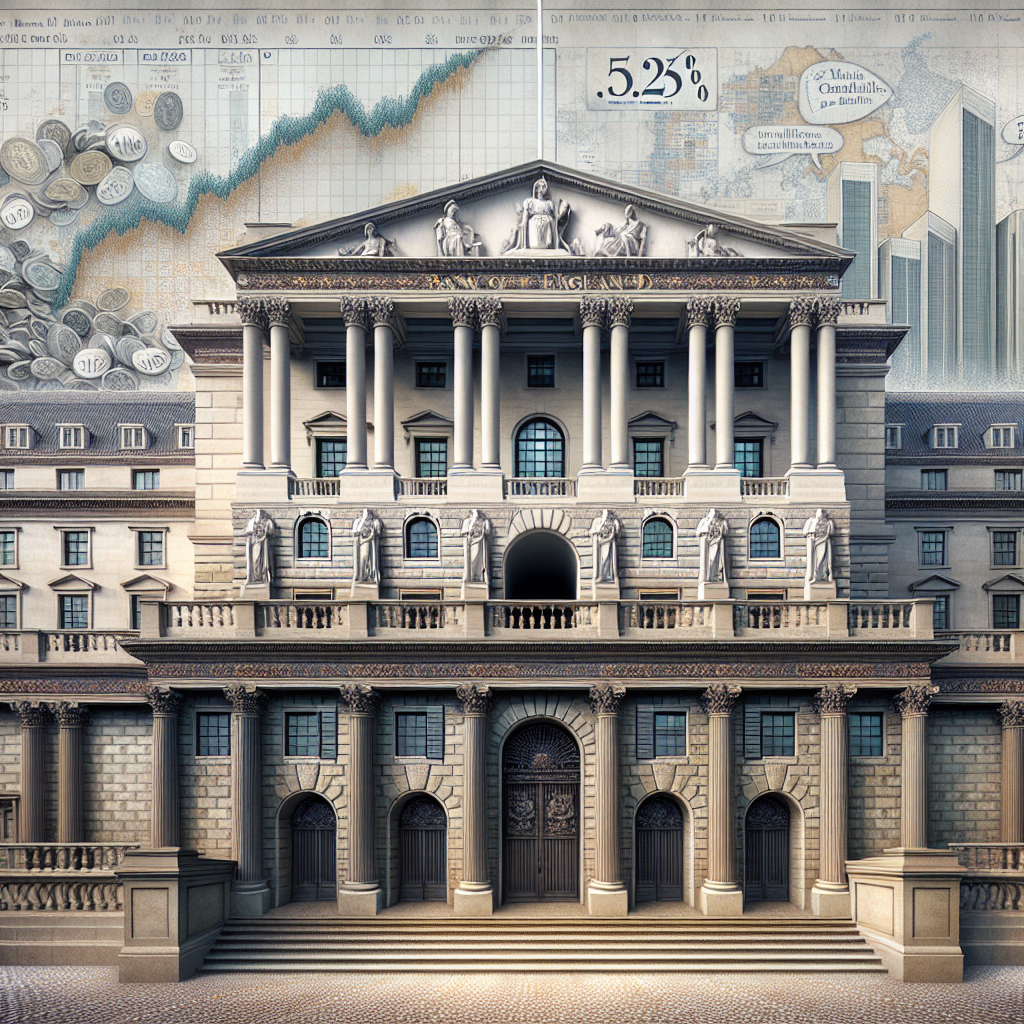
Bank of England Holds Rates Steady Amidst Inflation Targets
In a move that has left currency traders and economists reaching for their crystal balls, the Bank of England has opted to maintain its main interest rate at a robust 16-year peak of 5.25%. This decision comes as a surprise to some, given that inflation has graciously dipped its toes back to the government’s comfort zone of 2%.
Interest Rates: A Balancing Act
The Monetary Policy Committee (MPC) of the Bank of England, in what some might call a display of stoic restraint, has decided not to fiddle with the interest rate dials this time around. The rate, which is the highest it’s been since the days when flip phones were the height of technology, has been a topic of heated discussion in financial circles.
Interest rates are the central bank’s scalpel – a delicate tool used to perform surgery on the economy. Cut too deep, and you risk bleeding growth; not enough, and the inflationary pressure builds up. The MPC’s decision to hold rates steady is akin to a surgeon opting not to operate, confident that the patient’s condition will improve without further intervention.
Inflation Hits Target, But Uncertainty Looms
With inflation hitting the bullseye of the Bank’s target, one might wonder why the MPC is choosing to keep its powder dry. The answer, as with most things in economics, is not black and white. Inflation is a slippery beast, and while the target has been met, the future is as unpredictable as the British weather.
The global economy is currently juggling a variety of balls – from geopolitical tensions to supply chain disruptions. It’s a veritable circus act that makes forecasting inflation about as easy as predicting the winner of the Grand National.
Impact on Jersey: A Conservative Perspective
For the good folks of Jersey, the Bank of England’s decision is more than just a headline; it’s a matter that hits home, quite literally. Interest rates affect mortgages, savings, and the cost of borrowing – the lifeblood of personal and business finance on the island.
Conservative readers, who typically champion fiscal prudence, might nod approvingly at the Bank’s cautious approach. After all, why rock the economic boat when the seas have just calmed? However, there’s always the concern that holding rates could stifle growth or, worse, lead to a resurgence of inflation, turning today’s calm waters into tomorrow’s stormy seas.
The NSFW Perspective
As we wrap up our analysis with the NSFW perspective, let’s not forget that while the Bank of England’s decision may seem as exciting as watching paint dry, it’s these seemingly mundane choices that keep the wheels of the economy greased.
Our conservative readership, with their keen eye on government efficiency and economic stability, may find solace in the Bank’s decision. It’s a nod to fiscal conservatism, a belief in the power of the market to self-correct without the heavy hand of the central bank. Yet, the question remains: Is this a masterstroke of economic foresight or a missed opportunity to bolster growth?
In Jersey, where the tides of the global economy wash upon our shores, the impact of such decisions is felt by everyone from the fisherman to the financier. It’s a reminder that in the grand casino of global finance, the house always has the edge, but it’s the players who must live with the consequences of the bets placed.
So, as we continue to navigate the choppy waters of the economy, let’s keep a weather eye on the horizon. After all, it’s not the storms that define us, but how we sail through them. And in Jersey, we’ve weathered more than our fair share of gales.
Until the next economic forecast, keep your investments dry and your humour wet, dear readers.



