Divided States of America: A Tale of Two Congresswomen
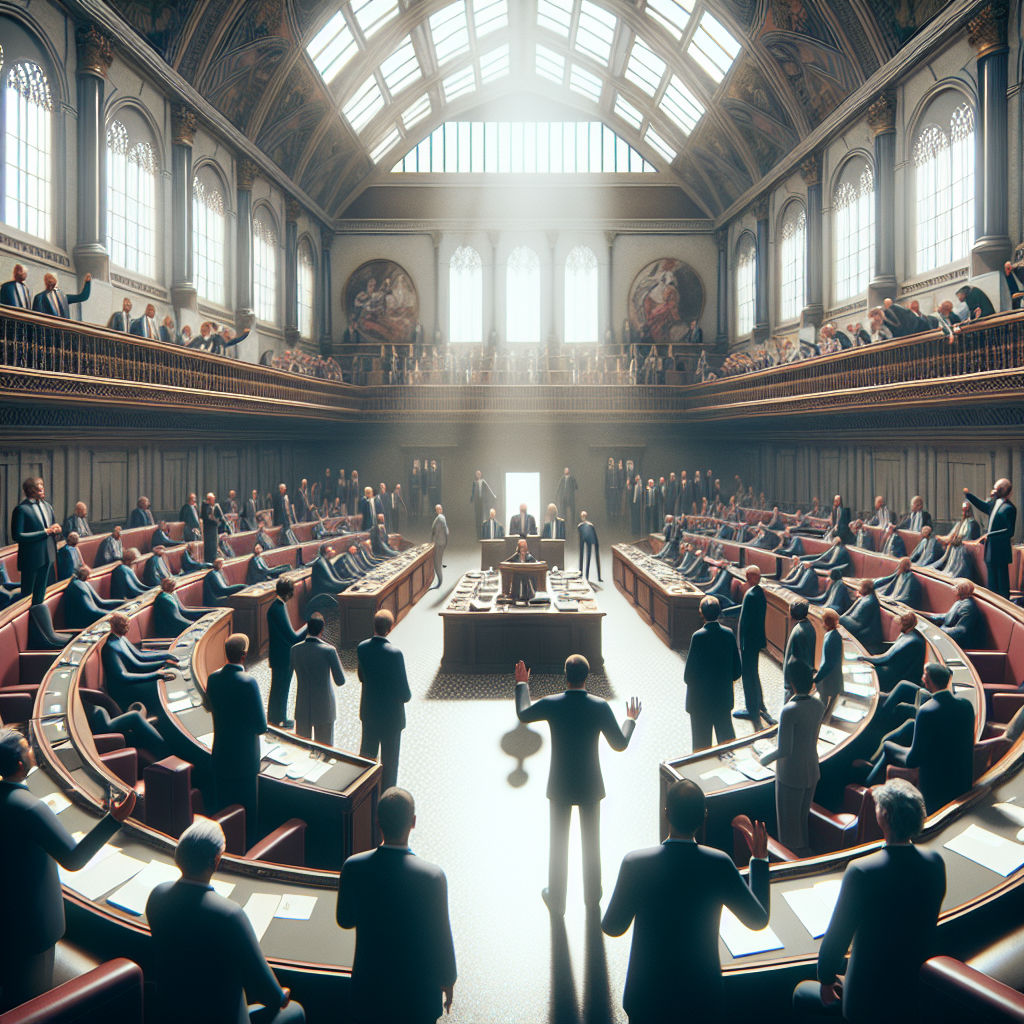
In the current political theatre of the United States, two congresswomen stand as polar opposites, emblematic of the ideological chasm that has split the Capitol—and the country—down the middle. On one side, we have Alexandria Ocasio-Cortez (AOC), the progressive darling of the Democratic Party, and on the other, Marjorie Taylor Greene (MTG), the Republican known for her endorsement of conspiracy theories. Their starkly contrasting views present a microcosm of the challenges facing U.S. political unity.
Summary: Ideological Battlefronts
– AOC champions progressive policies such as the Green New Deal and Medicare for All.
– MTG is known for her support of far-right conspiracy theories and staunch conservative stance.
– The ideological divide between the two congresswomen reflects the broader polarization in U.S. politics.
– This division poses significant challenges to political unity and effective governance.
AOC’s Progressive Crusade
AOC, the representative for New York’s 14th congressional district, has become the face of the progressive movement within the Democratic Party. Her advocacy for the Green New Deal, a comprehensive plan to address climate change and economic inequality, has sparked both admiration and controversy. Her push for Medicare for All, a single-payer healthcare system, aims to transform the American healthcare landscape. AOC’s policies are rooted in a vision of social justice and economic reform, aiming to reshape the U.S. into a more equitable society.
MTG’s Controversial Conservatism
In stark contrast, Marjorie Taylor Greene, the representative for Georgia’s 14th congressional district, has made headlines for her support of QAnon and other far-right conspiracy theories. Her statements and actions have often been divisive, leading to her removal from House committee assignments. MTG’s brand of conservatism is unapologetic and confrontational, appealing to a base that feels marginalized by the mainstream political discourse.
The Impact on Political Unity
The ideological gulf between AOC and MTG is symptomatic of the broader polarization plaguing American politics. Bipartisanship seems like a relic of a bygone era, with compromise and dialogue taking a backseat to partisan showmanship. The result is a legislative gridlock, where the business of governance is often overshadowed by political theatre.
Relevance to Jersey: Lessons in Unity
While the political landscape of Jersey, Channel Islands, is markedly different from that of the U.S., there are lessons to be learned from the American experience. Jersey’s own political debates, though less extreme, can still benefit from a commitment to civil discourse and a focus on common ground. The island’s governance should strive to avoid the pitfalls of polarization that have hampered effective decision-making across the pond.
NSFW Perspective: A Call for Cohesion
From the NSFW vantage point, the clash between AOC and MTG is more than just political theatre; it’s a cautionary tale of what happens when ideology trumps pragmatism. As Jersey residents, we may chuckle at the American spectacle from afar, but we must also take heed. It’s crucial for our local leaders to foster a political environment where differing views can be expressed respectfully and policies are debated on their merits, not dismissed on ideological grounds.
In conclusion, the ideological contrasts between AOC and MTG underscore the challenges in U.S. political unity. As Jersey observes from across the Atlantic, it’s essential to learn from these divisions and work towards a more cohesive political discourse. After all, in a world where extremes grab headlines, it’s the moderate voice that often holds the key to progress and unity.