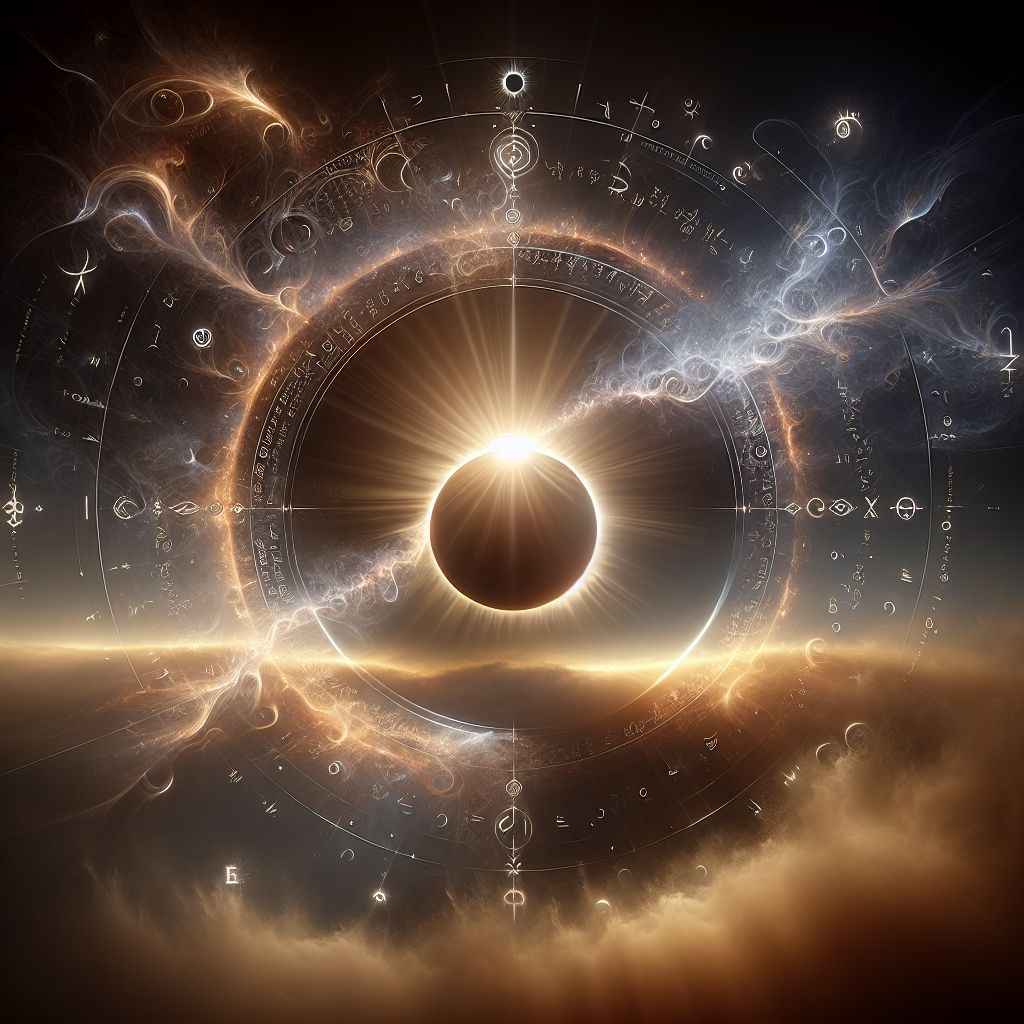
Eclipsing Doomsday: The Myths and Facts Behind Solar Phenomena
Summary: As the shadow of the latest solar eclipse creeps across North America, whispers of doomsday have been eclipsed by scientific reason. Despite the sensational myths, experts assure us that the only thing disappearing faster than the sun will be the unfounded fears of an impending apocalypse.
The Eclipse: A Celestial Event, Not a Catastrophe
It seems that every time the moon dares to dance in front of the sun, a corner of the internet lights up with prophecies of impending doom. Yet, as the celestial bodies align, the only significant fallout is likely to be a temporary dip in productivity as millions step outside to witness the spectacle with their eclipse-safe glasses firmly in place.
Historically, solar eclipses have been viewed with a mix of awe and anxiety. Ancient civilisations often interpreted these events as omens, with the darkness signifying the displeasure of the gods. Fast forward to the 21st century, and while we’ve traded in our sacrificial altars for science labs, the allure of doomsday predictions still holds a certain morbid fascination for some.
Debunking the Doomsday Prophecies
Let’s be clear: the only thing that eclipses are known to set off are waves of excitement among astronomers and Instagrammers alike. The North American doomsday scenario is as likely as finding a Jersey cow jumping over the moon. Scientists have repeatedly debunked any link between solar eclipses and natural disasters. Earthquakes, volcanic eruptions, and tsunamis operate on their geological schedules, indifferent to the moon’s shadow play.
Moreover, the idea that an eclipse could somehow trigger societal collapse is as dark as the event itself. In reality, these moments often bring communities together, as people gather in groups to share the experience. If anything, the eclipse is a reminder of our shared humanity and the wonders of the universe that we are still striving to fully understand.
Impact on Jersey: A Moment of Wonder, Not Worry
While Jersey residents may not be in the direct path of totality, the fascination with the eclipse is no less potent. It’s a moment that transcends borders, and the island’s community is as susceptible to the charms of the cosmos as anyone else. However, the impact on Jersey is more likely to be felt in the realm of education and community spirit than in any eschatological sense.
Local schools might use the event as a teaching moment, fostering a love for science and critical thinking in students. Community groups could organise viewing parties, reinforcing social bonds. And let’s not forget the potential for a small boost in tourism, as astronomy enthusiasts might decide to take in the sight from a different vantage point.
The NSFW Perspective
At NSFW, we understand that the line between entertaining speculation and baseless fear-mongering is as fine as the corona of the sun during an eclipse. We encourage our readers to enjoy the celestial show with the knowledge that the only thing being overshadowed is superstition by science.
As for the doomsday predictions, they’re about as credible as a cloudy day in Jersey – which, admittedly, might be more common than we’d like, but hardly a sign of the apocalypse. So, let’s put away the survival kits and instead, prepare our cameras and eclipse glasses for a spectacle that’s truly out of this world.
In conclusion, the eclipse is a natural, predictable event, and its occurrence should be a cause for celebration, not consternation. It’s a cosmic performance that deserves applause, not anxiety. And if there’s any lesson to be taken from this, it’s that in an age of misinformation, a little light of knowledge is all it takes to dispel the darkness of doomsday myths.



