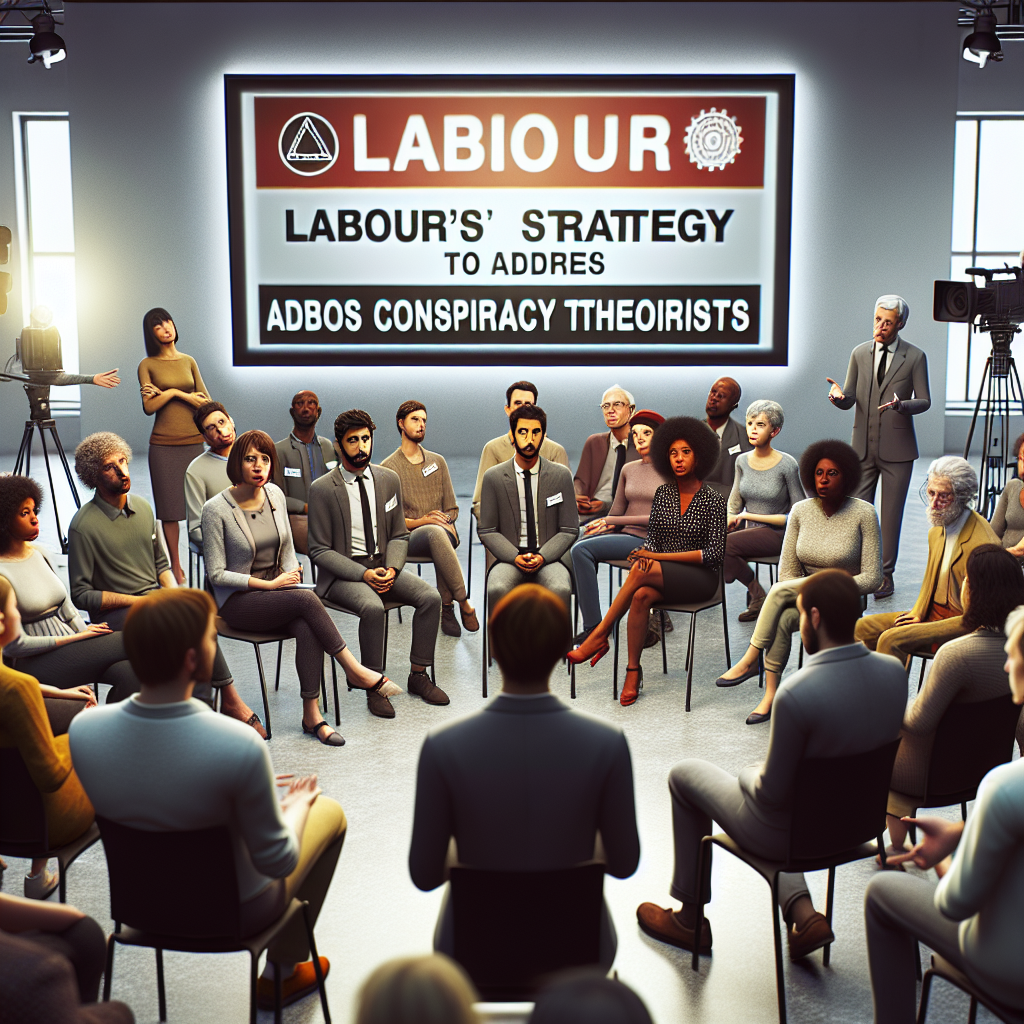
The Misconception of Immunity to Disinformation Among the Middle-Class Left
Summary: A common belief held by the middle-class Left is that they are impervious to the pitfalls of online disinformation, attributing susceptibility to such falsehoods to others. However, recent studies and events suggest that no demographic is immune to the influence of misleading content on the internet, challenging the notion of intellectual invulnerability among the educated and politically progressive.
The Allure of Online Echo Chambers
It’s a tale as old as the internet itself—individuals of all stripes falling prey to the siren song of tailored narratives and echo chambers. The middle-class Left, often priding themselves on their educational credentials and critical thinking abilities, have long considered themselves above the fray of online disinformation. Yet, the reality is that misinformation is a cunning beast that does not discriminate by socioeconomic status or political leaning.
Online platforms have become adept at serving users content that aligns with their pre-existing beliefs, creating a feedback loop that reinforces one’s worldview. This phenomenon is not exclusive to any one group; it affects everyone, including those who believe they are too enlightened to be duped.
Studies Shatter the Illusion of Superiority
Research has begun to puncture the bubble of perceived immunity among the middle-class Left. Studies have shown that confirmation bias—the tendency to favor information that confirms one’s preconceptions—is not a respecter of education or political ideology. In fact, the very confidence in one’s own intellectual rigor can create blind spots, making an individual more susceptible to misinformation that flatters their intellectual vanity.
Moreover, the sophisticated nature of modern disinformation campaigns, which often mix truth with falsehoods, can ensnare even the most discerning minds. The middle-class Left is not exempt from the psychological tricks and emotional appeals that make disinformation so effective.
Case Studies and Real-World Implications
Real-world examples abound, from the spread of conspiracy theories about climate change to the propagation of false narratives surrounding political events. The middle-class Left, despite their access to resources and information, are not immune to the allure of a well-spun story that fits their ideological framework.
One need only look at the proliferation of certain unsubstantiated claims during election cycles or the rapid spread of panic during public health crises to see that misinformation does not discriminate. It is a democratic force in the worst sense, affecting all levels of society.
The Jersey Perspective: A Local Angle on a Global Issue
In Jersey, Channel Islands, the implications of this phenomenon are particularly relevant. As a tight-knit community with a strong sense of local identity, the residents of Jersey are not insulated from the global currents of disinformation. The island’s middle-class Left, much like their counterparts elsewhere, must remain vigilant against the subtle encroachment of misleading content that can influence public opinion and policy.
Given the island’s unique political landscape, it is crucial for the electorate to critically evaluate information, especially when it pertains to local governance and the use of public funds. The Jersey government’s decisions, often scrutinised by a conservative readership, must be informed by accurate and unbiased information to ensure governmental efficiency and fiscal responsibility.
NSFW Perspective: No One Is Above Fact-Checking
In conclusion, the belief that the middle-class Left—or any group for that matter—is too smart to fall for online disinformation is a dangerous fallacy. It is a reminder that critical thinking and fact-checking are indispensable tools for all, regardless of one’s social standing or political beliefs. In Jersey, as in the wider world, it is essential to approach online content with a healthy dose of skepticism and a commitment to truth.
From the NSFW perspective, the key takeaway is that intellectual humility goes a long way in the fight against disinformation. No one is above being misled, and it is only through a collective commitment to factual accuracy that we can hope to maintain the integrity of our public discourse. In the end, it’s not about being too smart to fall for falsehoods; it’s about being smart enough to question everything.
Remember, folks, in the age of information, ignorance is a choice—but so is wisdom. Choose wisely.



