The Swift Conspiracy: A Melody of Mistrust in American Politics
Summary: The Curious Case of Taylor Swift and Election Intrigue
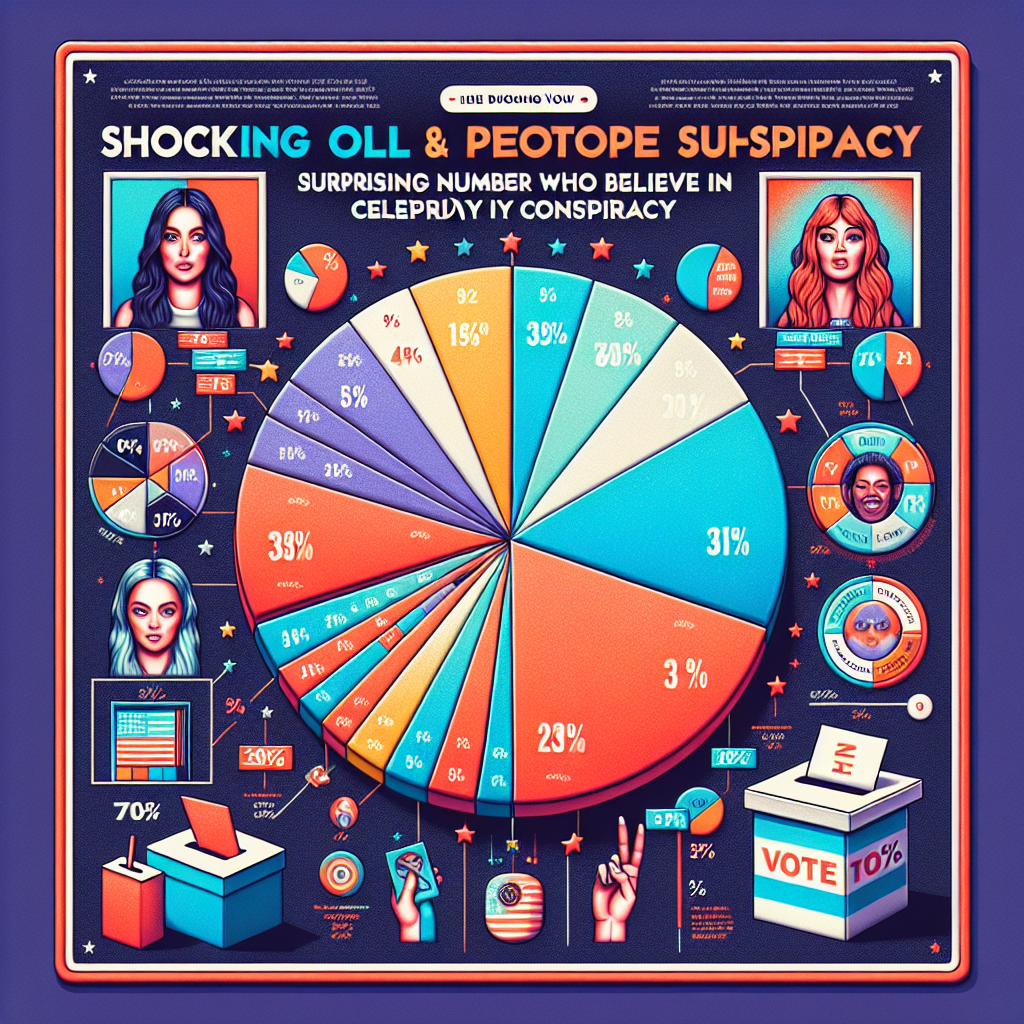
In a striking chord of political paranoia, a recent poll has unveiled that a baffling segment of the American populace—nearly 20%—harbours the belief that pop icon Taylor Swift is entangled in a conspiracy to manipulate the outcome of the U.S. presidential election. This melody of mistrust underscores a broader symphony of skepticism that resonates through the fabric of American democracy.
Unravelling the Narrative: How Did Taylor Swift Become a Political Puppeteer?
It seems that the boundary between celebrity influence and political conspiracy has been blurred to the point of abstraction. Taylor Swift, a singer-songwriter renowned for her chart-topping hits and a legion of loyal fans, has somehow been cast in the unlikely role of a political puppet master. The theory, as discordant as it may sound, suggests that Swift’s public endorsements and politically charged lyrics are not merely expressions of civic engagement but part of a grander scheme to steer the electoral ship.
While the notion may strike a humorous chord, it’s a stark reminder of the power of misinformation and the ease with which it can infiltrate the public consciousness. The question beckons: how did we arrive at a juncture where a celebrity’s political commentary is perceived as a covert operation?
The Impact of Celebrity on Political Tides
Celebrities have long held sway over public opinion, and their foray into political discourse is nothing new. However, the intensity with which certain factions cling to the idea of a Swift-led electoral conspiracy is indicative of a deeper unease—a fear that the traditional levers of power are being commandeered by those who command the spotlight.
It’s essential to consider the implications of such beliefs on the democratic process. When a significant portion of the electorate is tuned into a frequency of conspiracy, the harmony of rational political debate is at risk of being drowned out by a cacophony of baseless speculation.
Jersey’s Tune: Could Celebrity Conspiracies Strike a Chord Locally?
While the Taylor Swift conspiracy may seem a distant American reverie, the underlying currents of celebrity influence and misinformation are universal. In Jersey, Channel Islands, where the political landscape is often as dynamic as the tides, it’s worth pondering whether similar narratives could take root.
Could a local celebrity or public figure become the subject of such fantastical political theories? It’s a question that taps into the broader theme of trust in media and government—a tune that’s all too familiar to Jersey residents.
Scrutinising the Echo Chamber: Media Literacy and Public Discourse
The Swift saga serves as a cautionary tale for the importance of media literacy. In an age where information—and misinformation—flows as freely as the sea around Jersey’s shores, the ability to discern fact from fiction is paramount. It’s a skill that must be cultivated to ensure that public discourse remains anchored in reality, rather than adrift in a sea of conspiracy.
For Jersey’s conservative readership, the tale is a reminder to remain vigilant against the siren songs of sensationalism. It’s a call to uphold the values of critical thinking and reasoned debate, even as the currents of popular culture swirl with tales of intrigue and manipulation.
The NSFW Perspective: A Swift Lesson in Political Discernment
In conclusion, the Taylor Swift election conspiracy theory may be as far-fetched as they come, but it’s a symptom of a larger ailment afflicting the body politic. It’s a reminder that in the quest for truth, we must be wary of the allure of simple explanations for complex phenomena.
For the readers of NSFW, the story is not just a quirky anecdote from across the pond; it’s a prompt to reflect on the nature of influence, the susceptibility to misinformation, and the importance of maintaining a clear-eyed view of the political landscape. Whether in Jersey or in the broader international arena, the ability to separate the wheat from the chaff in the information we consume is more crucial than ever.
So let us take the Swift conspiracy as a light-hearted interlude in the serious business of political engagement, and let it reinforce our commitment to a well-informed and discerning electorate. After all, the health of our democracy may well depend on our ability to tune out the noise and listen to the music of truth.



