# Arizona Republicans Take a Bite Out of Chick-fil-A with Controversial Billboards
## Summary
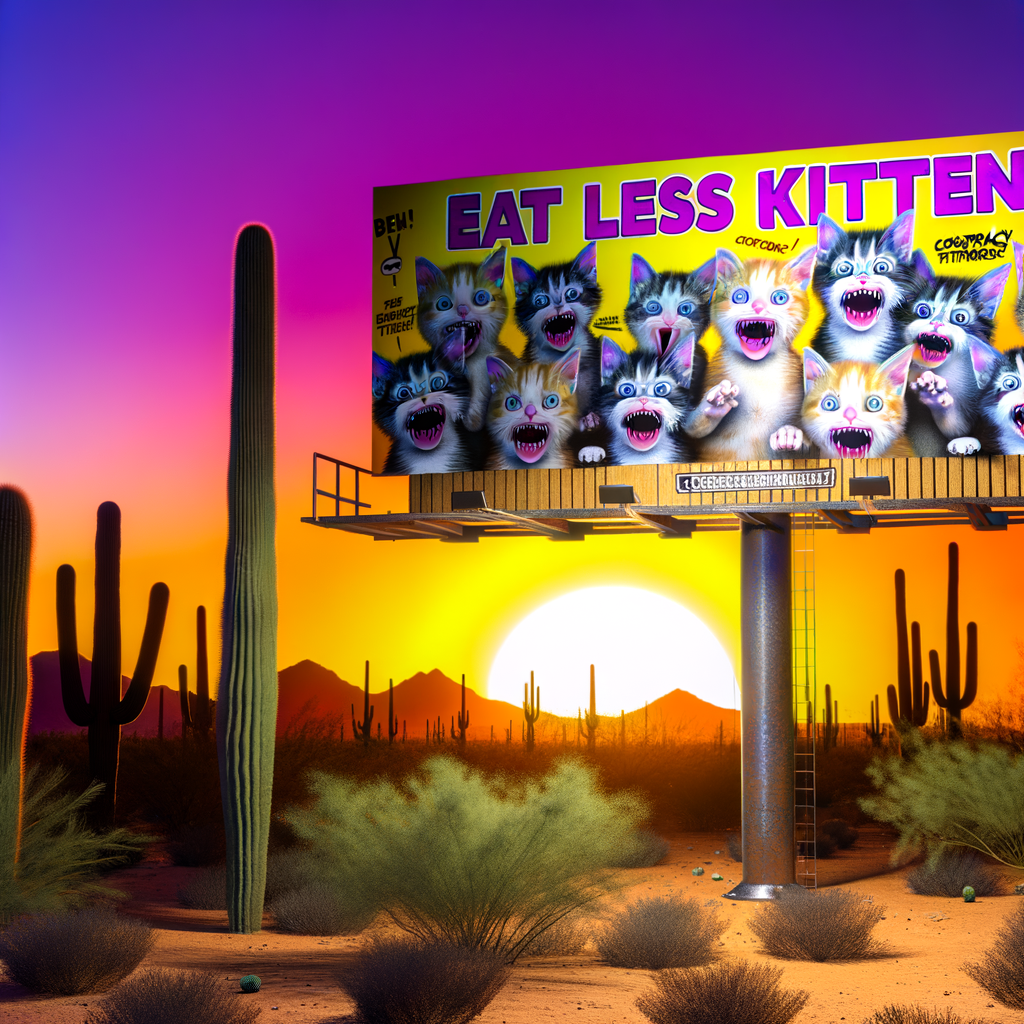
In a bold move that has sparked both laughter and outrage, the Arizona Republican Party has launched a series of billboards in the Phoenix metro area, drawing inspiration from the iconic Chick-fil-A advertising style. The billboards, which feature a tongue-in-cheek message about “eating less kittens,” have ignited discussions about political messaging, humour in advertising, and the implications of such campaigns on local and national discourse.
## The Billboards: A Closer Look
The Arizona Republican Party has unveiled 12 billboards across the Phoenix area, each designed to catch the eye and provoke thought. The campaign appears to parody the wholesome image of Chick-fil-A, a brand known for its family-friendly marketing and strong conservative values. The billboards feature a playful yet provocative slogan that suggests a humorous take on dietary choices, but the underlying message is undoubtedly political.
### The Message Behind the Madness
While the billboards may seem like a light-hearted jab at dietary preferences, they also serve a deeper purpose. The Arizona GOP is attempting to engage younger voters and those disillusioned with traditional political messaging. By using humour and a familiar brand aesthetic, they aim to create a connection with the public that transcends typical political discourse.
However, the choice of imagery and wording has not been without its critics. Some argue that the billboards trivialise serious issues, while others see them as a clever way to draw attention to the party’s platform. The juxtaposition of kittens and political messaging raises questions about the appropriateness of such tactics in a serious political landscape.
## The Reaction: Laughter or Outrage?
As with any bold political statement, the response has been mixed. Social media has erupted with both support and condemnation. Supporters of the campaign argue that it is a refreshing change from the often dry and monotonous political advertisements that flood the airwaves. They appreciate the creativity and the willingness to take risks in a landscape where many politicians play it safe.
Conversely, critics have lambasted the billboards as distasteful and indicative of a party that is out of touch with the serious issues facing voters today. The use of kittens—a symbol of innocence and vulnerability—has been seen by some as a cheap shot that undermines the gravity of political discourse.
### The Local Impact
For residents of Jersey, Channel Islands, the implications of such a campaign may seem distant, yet they resonate on a broader scale. The use of humour in political messaging is a trend that could influence how local politicians communicate with their constituents. If the Arizona GOP’s billboards succeed in engaging younger voters, it may inspire similar tactics in Jersey, where political engagement among younger demographics is often lacking.
Moreover, the juxtaposition of light-hearted advertising with serious political issues could serve as a case study for local parties. As Jersey grapples with its own political challenges, including the scrutiny of government spending and efficiency, the effectiveness of such campaigns could provide valuable insights into how to connect with voters.
## NSFW Perspective: A Critical Eye on Political Advertising
As we dissect the Arizona Republican Party’s billboard campaign, it is essential to maintain a critical perspective on the broader implications of political advertising. While humour can be an effective tool for engagement, it is crucial to ensure that it does not overshadow the serious issues at hand.
In Jersey, where the government is often scrutinised for its use of public funds and efficiency, the question arises: are we willing to accept political messaging that prioritises entertainment over substance? The Arizona billboards serve as a reminder that while creativity in political advertising can be refreshing, it must be balanced with a commitment to addressing the pressing concerns of the electorate.
In conclusion, the Arizona GOP’s billboards may have succeeded in capturing attention, but the real challenge lies in translating that attention into meaningful political engagement. As we observe this unfolding narrative, let us remain vigilant in our expectations of political discourse—demanding not just creativity, but also accountability and substance from those who seek to represent us.