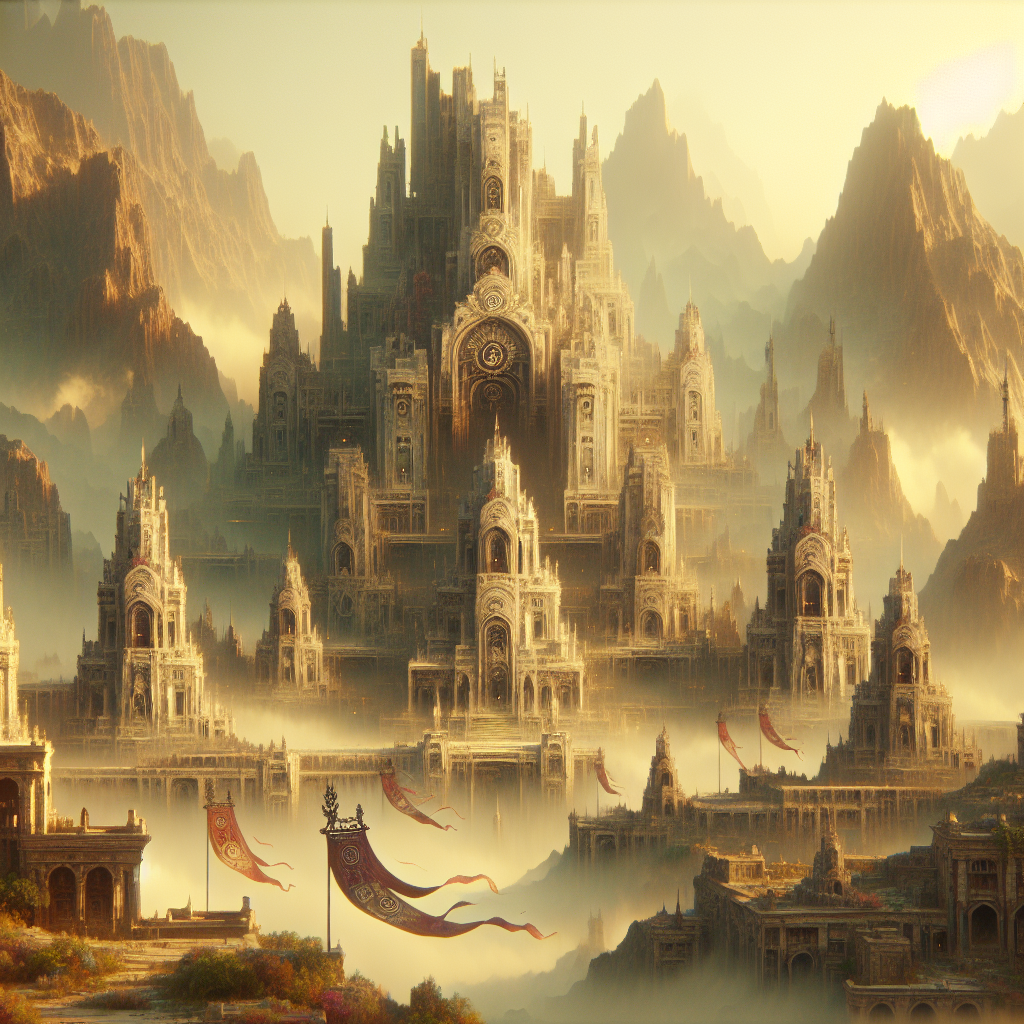
The Enigmatic Empire of Tartaria: Unraveling History or Unfounded Conspiracy?
Summary: The concept of a lost Empire of Tartaria has captured the imagination of conspiracy theorists and alternative history enthusiasts. Claims suggest that Tartaria was a vast and technologically advanced civilization, traces of which are allegedly found in modern architecture and historical anomalies. However, mainstream historians dismiss these theories as unfounded and lacking credible evidence. This article explores the Tartarian narrative, examines the evidence presented, and considers its implications for our understanding of history.
The Tartarian Tale: A Brief Overview
The story of Tartaria, or “Tartary” as it’s sometimes called, is a fascinating one. According to proponents of the theory, Tartaria was a colossal empire that spanned Eurasia, with cultural and technological advancements far beyond what history books tell us. They point to old maps and documents that reference Tartary and argue that the empire’s existence has been deliberately obscured by historians.
Architectural Anomalies and Historical Puzzles
Advocates for the existence of Tartaria often cite the grandeur of classical architecture found across Europe, Asia, and the Americas as evidence of a common, advanced Tartarian origin. They question how such structures could have been built with the technology known to be available at the time and suggest that these buildings are remnants of the Tartarian empire.
Scrutinizing the Evidence: Fact or Fiction?
Mainstream historians and archaeologists, however, have a different take. They argue that the references to Tartary in historical documents refer to a loosely defined region inhabited by various nomadic tribes, not a unified empire. The architectural styles celebrated by Tartarian theorists are typically attributed to the well-documented periods and cultures that created them, such as the Renaissance or the Islamic Golden Age.
The Power of Myth and Misinterpretation
It’s not uncommon for myths and legends to arise from misinterpretations of history. The Tartarian empire theory seems to be a modern manifestation of this phenomenon, where a combination of genuine historical mysteries and the human penchant for storytelling has given rise to an elaborate alternate history.
Implications for Historical Understanding
The debate over Tartaria’s existence raises important questions about how we interpret and understand history. It challenges us to consider the reliability of historical sources and the potential for biases in historical narratives. While the evidence for a Tartarian empire is scant, the discussion it generates can lead to a deeper engagement with historical research and critical thinking.
The NSFW Perspective
At NSFW, we appreciate a good historical puzzle as much as the next person, but we also know the importance of separating fact from fiction. The tale of the lost Empire of Tartaria, while intriguing, appears to be more of a conspiracy theory than a chapter of world history. It serves as a reminder that history is often not as cut-and-dry as we might like it to be, and that there’s always room for questioning and debate.
For our readers in Jersey, the Tartarian narrative, though likely a myth, underscores the value of scrutinizing the past and seeking truth amidst the noise. It’s a call to apply the same critical thinking to our local history and governance, ensuring that we base our understanding and decisions on solid evidence rather than fanciful tales.
In conclusion, while the lost Empire of Tartaria may offer an entertaining diversion, it’s essential to approach such theories with a healthy dose of skepticism. After all, in the pursuit of truth, evidence must always be king.