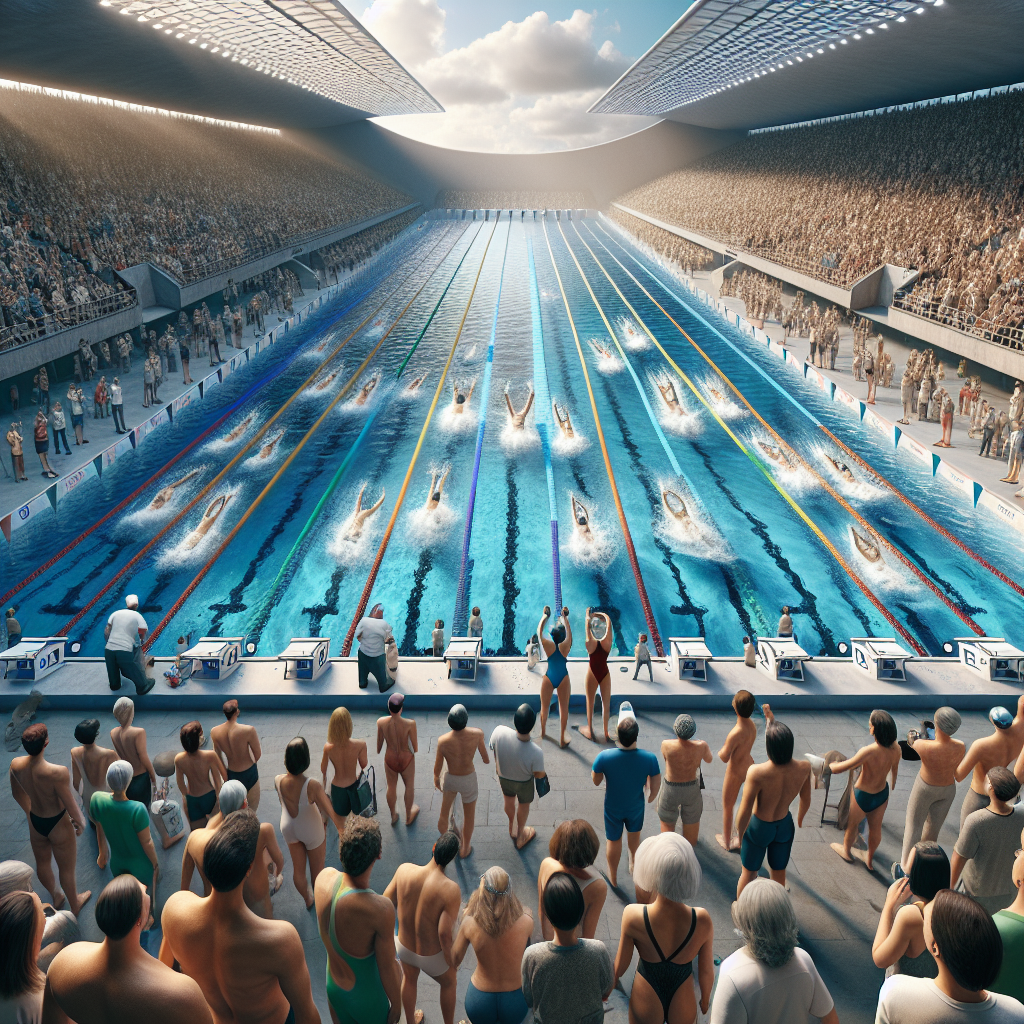
Paris Olympics’ Pools: A Dive into the “Slow” Conspiracy
In the world of competitive swimming, every millisecond counts. So, when whispers of the Paris Olympics’ swimming pools being deliberately slow surfaced, it was akin to suggesting the 100-metre track had been subtly coated in treacle. But before we dive headfirst into this pool of conspiracy, let’s wade through the facts.
Summary: The Ripple of Rumour
The rumour mill began churning with claims that the Paris Olympics’ swimming pools were designed to be slower than their predecessors. This theory suggests that certain design elements could be intentionally implemented to reduce the speed of swimmers, potentially affecting world records and athlete performances. However, the evidence for such claims remains as murky as an unfiltered plunge pool.
Analysing the Allegations
Firstly, it’s important to understand that pool design can indeed influence swim times. Factors such as pool depth, lane width, water circulation, and temperature can all play a role in how fast swimmers can glide through the water. But to suggest that a host city would intentionally sabotage its own venues to produce slower times seems counterintuitive, not to mention a PR nightmare.
The International Swimming Federation (FINA) sets stringent standards for competition pools, and it’s highly unlikely that the Paris Olympics would deviate from these specifications. Moreover, the idea of “slow pools” doesn’t hold water when considering the advancements in swimsuit technology and training methods that continue to propel athletes to break records.
Impact on Jersey’s Swimmers
For Jersey’s aquatic athletes, the notion of a slow pool in Paris could be a drop in the ocean of their concerns. Training regimes, personal bests, and the pursuit of excellence are the currents that truly drive these competitors. The island’s swimmers have historically punched above their weight on the international stage, and a pool’s pace is just another variable in the equation of competition.
The NSFW Perspective
While the “slow pool” conspiracy makes for a titillating tale, it’s likely nothing more than a damp squib. In the world of elite swimming, athletes and coaches are more focused on the minutiae of performance than the whispers of water resistance. And for our readers in Jersey, rest assured that your champions will cut through the water with the same vigour, whether in St. Helier or Paris.
As for the Paris Olympics, let’s reserve our judgement until the first starting pistol fires and the first records, if any, are broken. After all, in the realm of sports, it’s the human spirit, not the pool’s pace, that truly captivates us.



