Time-Traveling Tech or Artistic Anachronism? The Greek Statue ‘Laptop’ Debate
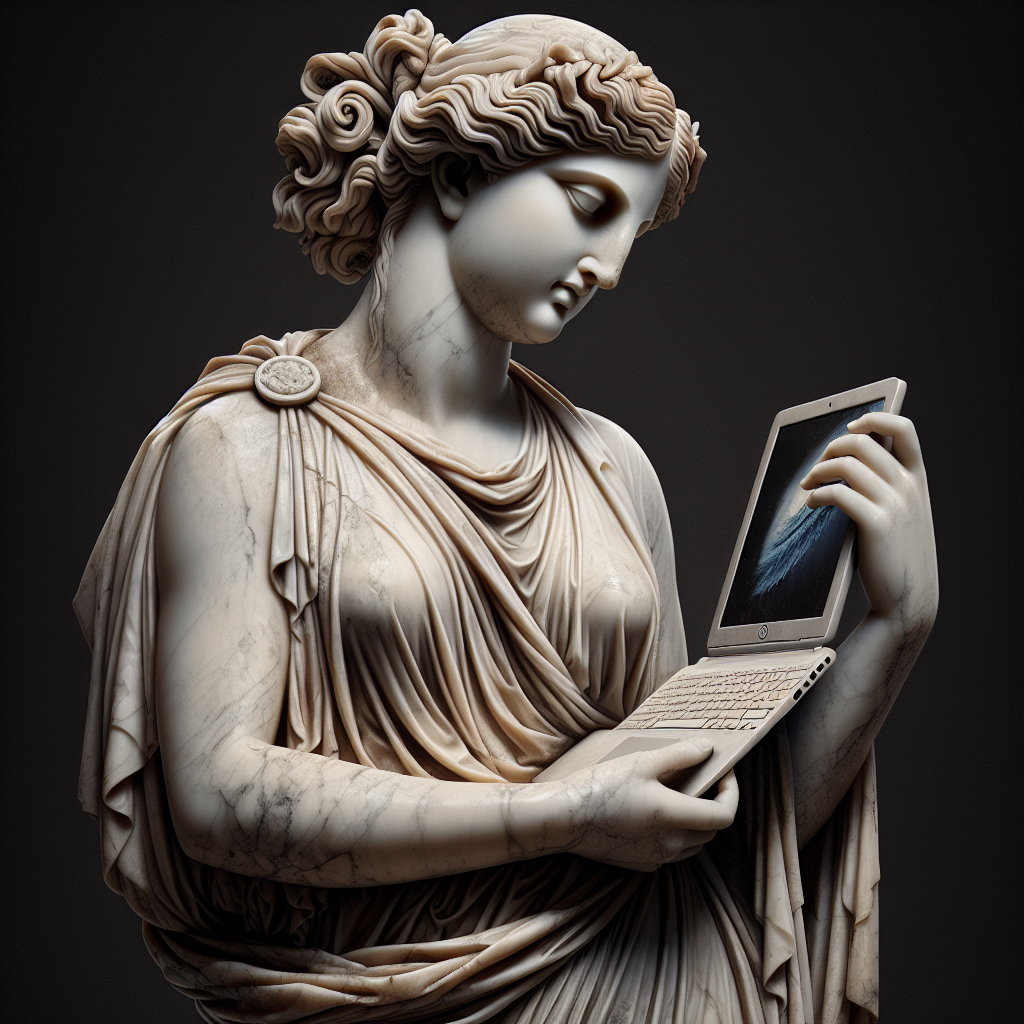
Summary: A Greek statue has sparked online debates and conspiracy theories with some claiming it depicts a woman using a laptop, suggesting evidence of time travel. The statue in question, often referred to as the “Grave Naiskos of an Enthroned Woman with an Attendant,” has become the center of a viral conspiracy theory. While some netizens are convinced of its futuristic implications, experts and skeptics provide more historically grounded explanations.
The Statue at the Center of Time-Travel Speculation
In the digital age, where the line between reality and fiction is often blurred by the clickbait culture, a new conspiracy has emerged from the depths of the internet. A viral image of an ancient Greek statue has set the online world ablaze with claims that it depicts a woman engrossed in what appears to be a modern-day laptop, complete with USB ports. The proponents of this theory suggest that this is irrefutable proof of time travel or an ancient civilization far more advanced than previously thought.
Debunking the Myth: Historical Context vs. Modern Misinterpretations
Before we jump on the time-travel bandwagon, let’s take a moment to consult the experts. Historians and archaeologists have weighed in, providing a less sensational but more plausible explanation. The statue, they argue, is more likely to be showing a woman touching the lid of a shallow chest or wax tablet, common in ancient times for writing and storage. The so-called ‘USB ports’ are explained as simple decorative elements, with no connection to modern technology.
Moreover, the concept of time travel, while a beloved trope in science fiction, remains firmly in the realm of fantasy according to our current understanding of physics and the constraints of the space-time continuum. The idea that an ancient Greek sculptor would have had the foresight to chisel a futuristic device into stone is a stretch, to say the least.
Why the Theory Gained Traction
The power of the internet to spread information—and misinformation—cannot be underestimated. In an era where sensational headlines often garner more attention than mundane truths, it’s no surprise that the ‘laptop’ statue has captured the imagination of many. It’s a testament to the human penchant for mystery and the allure of conspiracy theories that challenge our perception of history and reality.
The NSFW Perspective: A Jersey Take on the Greek ‘Laptop’
While the tale of the Greek ‘laptop’ statue is a delightful diversion, it’s important to approach such claims with a healthy dose of skepticism. Here in Jersey, we appreciate a good yarn, but we also value the importance of discerning fact from fiction. This story serves as a reminder that not everything we encounter online should be taken at face value, and that sometimes, a statue is just a statue.
From a conservative standpoint, the episode underscores the need for critical thinking and media literacy in an age where fake news can spread like wildfire. It’s a call to educate ourselves and others about the importance of context and evidence when evaluating extraordinary claims.
For our local readership, the Greek ‘laptop’ conspiracy might seem a world away from the concerns of Jersey, but it’s a prime example of how easily misinformation can cross borders. It’s a reminder to stay vigilant and informed, whether we’re discussing ancient artifacts or the latest developments in our own government.
In conclusion, while the idea of a time-traveling Greek laptop user is an entertaining notion, it’s one that belongs in the realm of science fiction rather than historical fact. As residents of Jersey, let’s continue to apply our critical thinking skills to all that we read and share, ensuring that our discussions are grounded in reality, even as we enjoy the occasional flight of fancy.
Remember, in a world brimming with myths and legends, the truth is often more fascinating than fiction. Let’s keep our feet on the ground, even as our imaginations soar.



