Unraveling ‘Conspiracyland’: The BBC’s Dive into the World of Disinformation
In an era where the line between fact and fiction is increasingly blurred, the BBC has taken a bold step by appointing Marianna Spring as its first-ever disinformation and social media correspondent. Spring’s mission is to navigate the murky waters of ‘Conspiracyland’, a realm where alternative facts and pseudo-realities reign supreme. But what does this mean for the average news consumer, and more importantly, how does it affect the residents of Jersey?
The Emergence of ‘Conspiracyland’
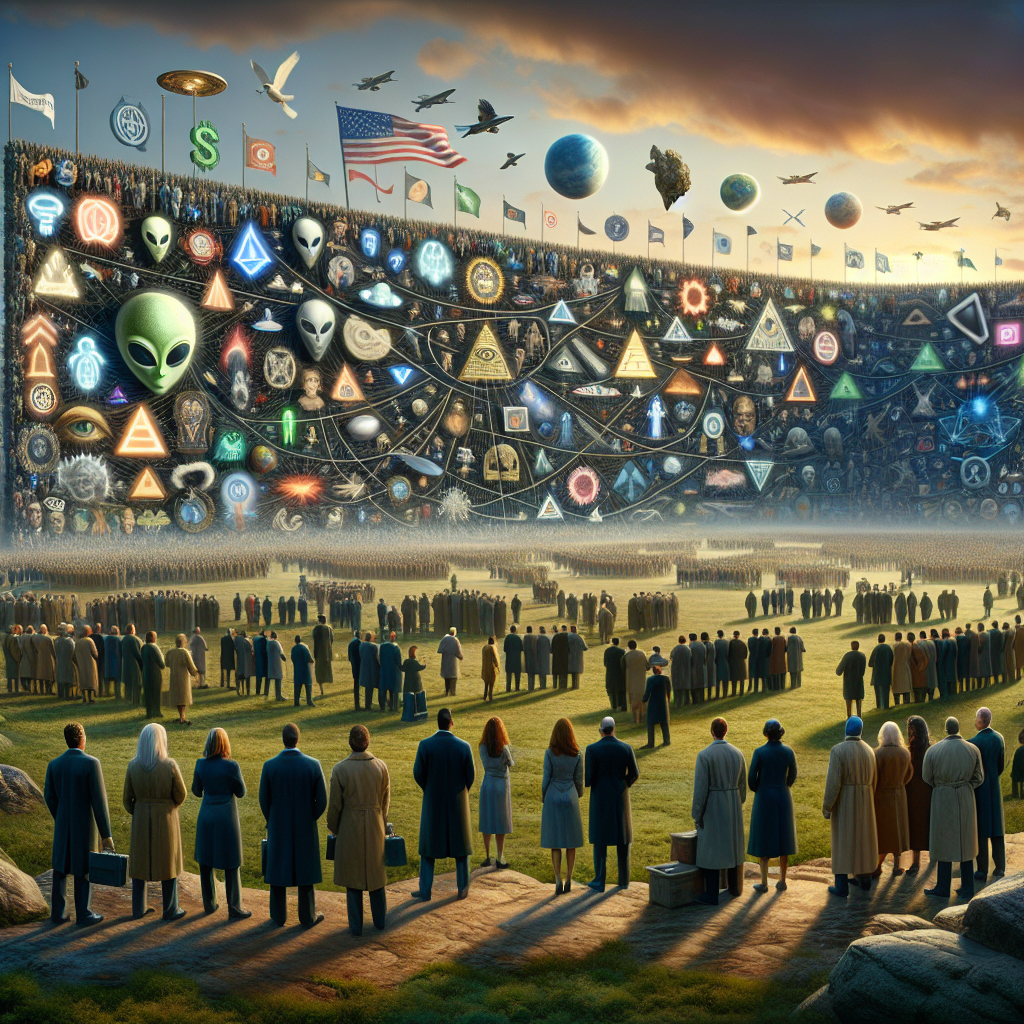
With the rise of social media, the spread of disinformation has become a global phenomenon. ‘Conspiracyland’ is not a physical place but a metaphorical landscape populated by theories that challenge the established narrative. It’s a place where the Earth can be flat, vaccines are seen as malevolent, and where 5G technology is accused of spreading viruses.
Marianna Spring’s role involves dissecting these theories, understanding their origins, and explaining their implications to the public. It’s a daunting task, given the vastness of the internet and the speed at which misinformation can spread.
Impact on Jersey’s Shores
While Jersey may be miles away from the epicentres of these conspiracies, the digital age ensures that no community is immune. The island’s residents are just as susceptible to the lures of ‘Conspiracyland’ as anyone else. The spread of disinformation can have real-world consequences, from influencing elections to causing public health crises.
For a conservative readership that values tradition and factual integrity, the BBC’s initiative is a double-edged sword. On one hand, it’s a commitment to truth in journalism. On the other, it’s an acknowledgment of the growing power of social media narratives, which can sometimes undermine traditional values and institutions.
Scrutinising the Scrutineer
As we critically analyse the role of the BBC’s disinformation correspondent, it’s essential to question the effectiveness of such a position. Can one correspondent truly combat the tidal wave of misinformation? Moreover, how does the BBC ensure that the fight against ‘Conspiracyland’ doesn’t become a tool for suppressing legitimate dissent?
For Jersey, the implications are significant. The island’s government and its use of public funds have often been under scrutiny. The spread of disinformation could either obscure genuine issues or, conversely, bring them to light in a distorted form. It’s a delicate balance between transparency and chaos.
The NSFW Perspective
From the NSFW vantage point, the BBC’s foray into the world of disinformation is a necessary response to a growing threat. However, it’s not without its pitfalls. The conservative reader might view this as a belated attempt to address a problem that has long been undermining traditional media’s credibility.
For Jersey, the impact of ‘Conspiracyland’ is not to be underestimated. It’s crucial for the island’s residents to remain vigilant and critical of the information they consume. The BBC’s initiative, while commendable, is but a single piece in the complex puzzle of modern media literacy.
In conclusion, while Marianna Spring’s journey through ‘Conspiracyland’ is a step towards combating disinformation, it’s a journey that requires the participation of all. For the residents of Jersey, it’s a reminder that in the digital age, the waves of misinformation know no borders, and the defence against them must be both local and global.
As we continue to monitor the effectiveness of the BBC’s efforts, let’s not forget the power of critical thinking and the importance of verifying information. After all, in ‘Conspiracyland’, the truth is often stranger than fiction, but it’s the truth that we must seek, with a healthy dose of scepticism and a commitment to facts.