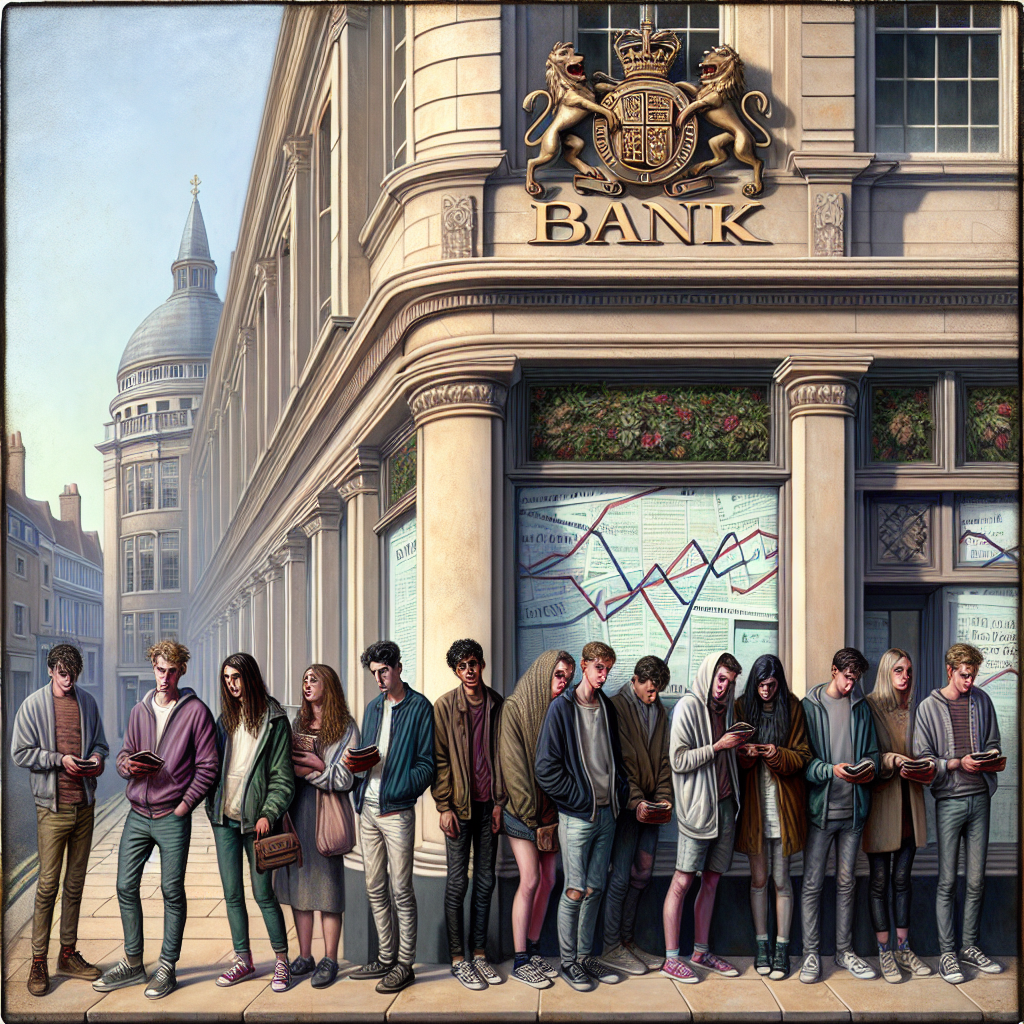
Bank of England’s Rate Hike: A Tight Squeeze on Gen Z Wallets
In a move that’s sure to send shivers down the spines of spendthrift youths, the Bank of England has cranked up interest rates, ostensibly to grapple with inflation. This fiscal tightening is poised to pinch the pockets of Generation Z, potentially leading to a cascade of consequences for retailers and the hospitality sector, which have long relied on the ‘live for the moment’ ethos of younger consumers.
The Interest Rate Conundrum
The Bank of England’s decision to hike interest rates is a classic economic manoeuvre aimed at curbing inflation by encouraging saving over spending. However, this move comes with a side dish of challenges for the younger demographic. Gen Z, already navigating the choppy waters of student loans and entry-level jobs, now faces higher costs for borrowing. This could mean a cutback on non-essential spending, which spells trouble for businesses that thrive on discretionary purchases.
Impact on Retail and Hospitality
As the purse strings tighten, the first casualty may well be the retail and hospitality industries. These sectors, which have been the playground for young adults with disposable income, could see a downturn in patronage. The ‘experience economy’, driven by Gen Z’s penchant for dining out and unique experiences, may take a hit as this demographic reassesses their financial priorities in the face of increased borrowing costs.
Jersey’s Youth: Caught in the Crossfire?
On the home front, Jersey’s own Gen Z population could feel the ripple effects of the Bank’s decision. The island’s economy, with its robust finance sector, may be more insulated than most, but local businesses catering to young people could find themselves facing a downturn in sales. This is particularly pertinent for Jersey’s retailers and hospitality venues, which have only just begun to recover from the economic impacts of the pandemic.
Adapting to the New Economic Landscape
Businesses may need to pivot, adopting strategies to retain their young clientele. This could include loyalty programs, targeted discounts, or even a shift towards more affordable products and services. Innovation will be key as these sectors strive to maintain their appeal to a demographic that is suddenly much more conscious of where and how they spend their money.
NSFW Perspective: A Penny Saved or a Pound Foolish?
While the Bank of England’s decision is a textbook response to inflationary pressures, one must ponder if the cure might be worse than the disease for certain sectors. The potential decline in spending by Gen Z could have a domino effect, impacting employment and growth in industries that cater to them. Jersey’s businesses, while resilient, are not immune to these trends and will need to demonstrate agility to navigate this new economic reality.
From the NSFW vantage point, it’s clear that while the Bank’s move may be prudent on a macroeconomic level, the microeconomic implications for Jersey’s youth and the businesses that serve them are less than rosy. It’s a delicate balancing act between fiscal responsibility and economic vitality, and only time will tell if this interest rate hike will be a masterstroke or a misstep in the grand scheme of things.
In conclusion, the Bank of England’s interest rate hike is a double-edged sword. It’s a measure designed to temper inflation, but it also threatens to dampen the spending habits of an entire generation. For Jersey, a conservative approach to personal finance has always been in vogue, but even the most prudent of islanders must acknowledge the potential for a knock-on effect on local businesses. As we watch this economic drama unfold, let’s hope that the resilience of our youth and the adaptability of our industries will see us through what could be a rather lean period for the ‘Instagrammable’ economy.