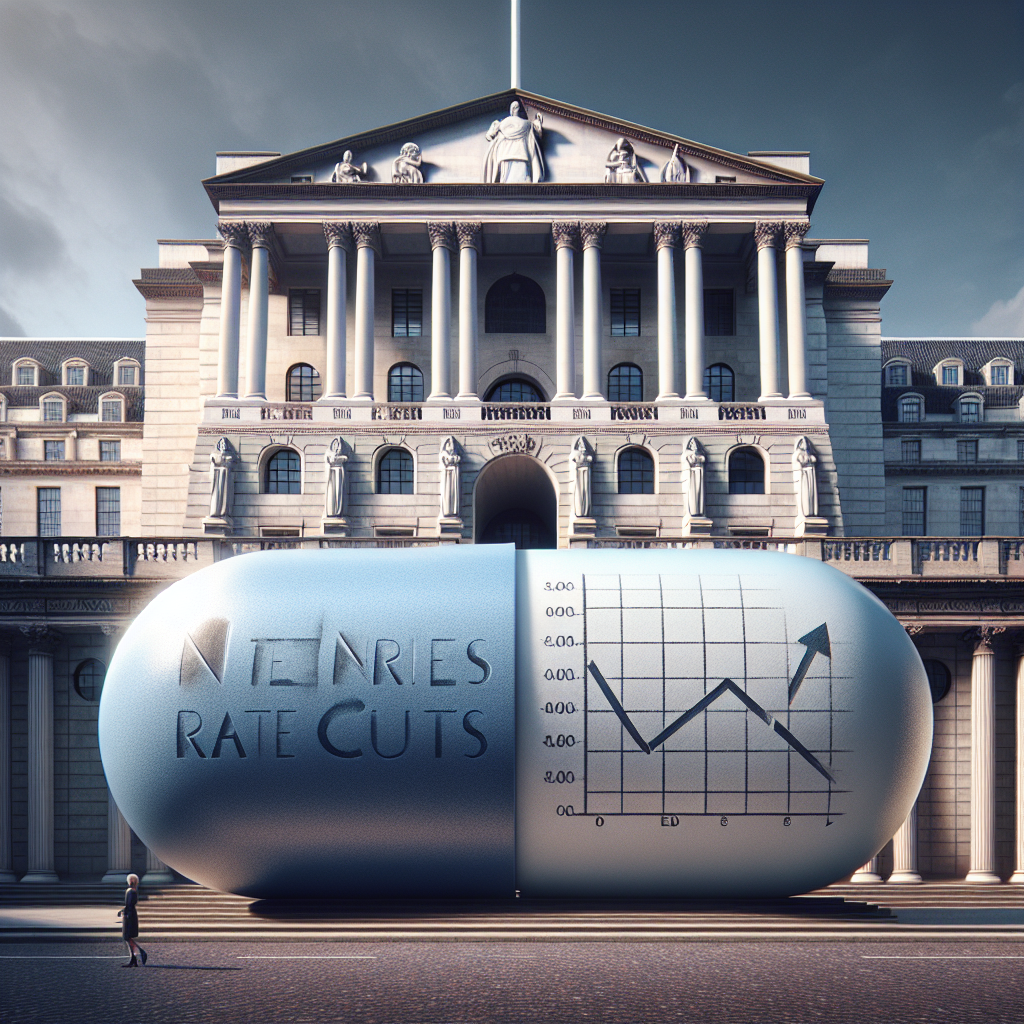
# The Balancing Act: Bank of England’s Interest Rate Conundrum
In the ever-tightrope walk of economic policy, the Bank of England’s Chief Economist, Huw Pill, has recently made a statement that could have tightrope walkers nodding in sympathy. Pill suggests that when it comes to adjusting interest rates, it’s better to err on the side of caution and cut them too late rather than too early. This cautious approach reflects the central bank’s current balancing act between curbing inflation and not stifling economic growth.
## Key Points:
– Bank of England’s Chief Economist, Huw Pill, prefers a cautious approach to cutting interest rates.
– The decision reflects the challenge of managing inflation without hampering economic growth.
– Pill’s stance may have implications for both the UK and Jersey’s financial stability.
### Interest Rates: A Tool for Economic Stability
Interest rates are the central bank’s scalpel, delicately used to perform surgery on the economy. Cut too deep or too soon, and you risk a haemorrhage in economic activity; too late, and the patient—our economy—might suffer from the inflationary pressure build-up. Pill’s recent comments suggest that the Bank of England is acutely aware of these risks.
### The Implications for Jersey
While Jersey operates its own fiscal policy, it is not immune to the ripples from the Bank of England’s decisions. The island’s economy, with its strong financial services sector, is particularly sensitive to interest rate changes. A delayed cut could mean more expensive borrowing costs for a while longer, potentially impacting everything from business investments to mortgage rates in Jersey.
## The NSFW Perspective
From the NSFW vantage point, Pill’s cautious approach to interest rate cuts is akin to a captain navigating through a foggy strait. It’s a conservative strategy, one that our readership can appreciate. After all, who rushes to remove their winter coat at the first hint of spring? Patience is a virtue, especially when the economic weather is as unpredictable as the Channel’s tides.
However, we must also consider the potential impact on Jersey’s own economic climate. A delayed cut in interest rates by the Bank of England could mean that local businesses and consumers face tighter financial conditions for longer than necessary. It’s a delicate balance, and one that requires the steady hand of a skilled economist at the helm.
In conclusion, while Pill’s conservative stance on interest rate cuts may resonate with the cautious, it’s essential to keep a watchful eye on the horizon. After all, in the world of economics, as in sailing, the conditions can change swiftly, and what was once a cautious approach can quickly become a reactionary one. Jersey, with its unique economic landscape, will need to be prepared to adjust its sails accordingly.



